


Published: May 8, 2026
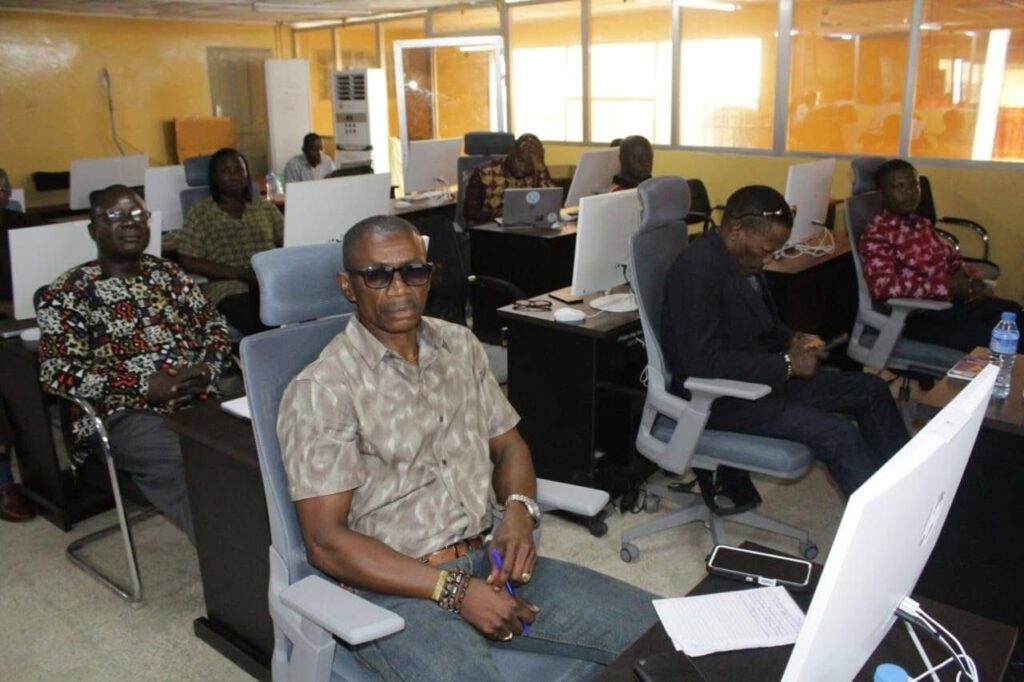
MONROVIA — Liberia’s Finance Ministry convened government officials, revenue authorities and development partners Thursday to advance a strategy targeting nearly US$3 billion in national budget expansion between 2025 and 2029, with officials warning that the country can no longer rely on foreign aid to finance its development priorities.
The consultations dialogue, held at the Finance Ministry and organized by Korea Eximbank and the African Development Bank under its Knowledge Sharing Program, centered on domestic resource mobilization reforms that officials say are critical to Liberia’s long-term fiscal survival.
Assistant Finance Minister for Revenue and Tax Policy Andrew N. Ngolloe framed the push in stark terms. “Domestic resource mobilization is not merely a fiscal issue; it is about building national resilience and ensuring Liberia finances its own development priorities,” he said. He added that the reform agenda includes digitizing revenue collection systems, modernizing tax administration, improving taxpayer compliance and strengthening public-private sector collaboration, measures designed to reduce leakages and improve the efficiency of public financial management.
The urgency behind the consultations reflects decades of structural vulnerability. Foreign aid has played a central role in supporting Liberia’s post-war recovery, infrastructure development and governance programs, but recurring economic shocks, rising public spending demands and global financial uncertainty have exposed how narrow that foundation is. Economic experts have consistently pointed to a limited tax base, a large informal sector, corruption and weak compliance mechanisms as the primary obstacles to sustainable domestic revenue generation.
Ngolloe said stronger internal revenue systems would enable direct government investment in roads, healthcare, agriculture, education and energy infrastructure — sectors where public demand is high and current capacity is severely constrained. That pressure is acutely felt by ordinary Liberians contending with unemployment, rising living costs and limited access to public services, all of which increase the political stakes around both revenue collection and spending accountability.
The consultations align with the Boakai administration’s ARREST Agenda for Inclusive Development, which prioritizes economic recovery, institutional reform and infrastructure expansion. Officials acknowledged, however, that delivering on those goals depends almost entirely on whether Liberia can dramatically strengthen domestic revenue generation while also addressing persistent concerns about transparency and public confidence in how state resources are managed.






Discussion about this post