


Published: May 8, 2026
By Masefane Konneh
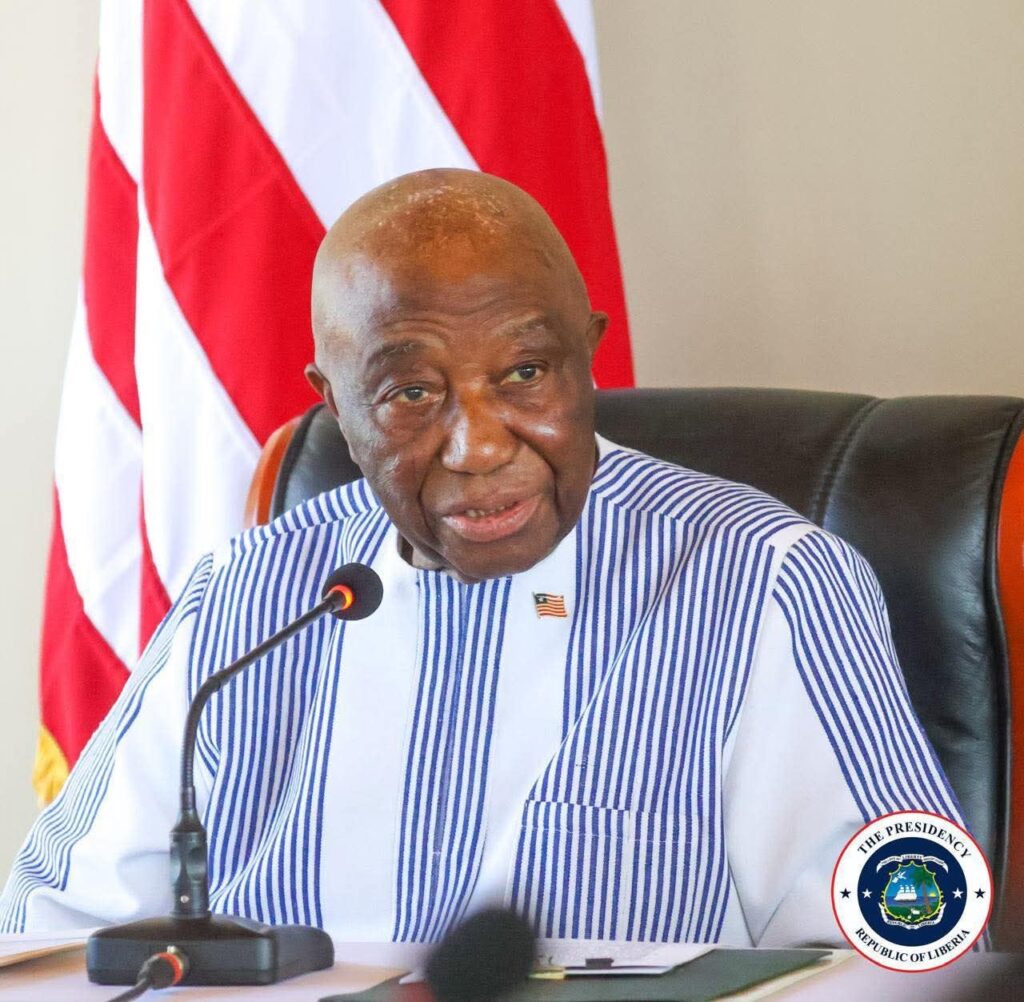
MONROVIA — President Joseph Nyuma Boakai on Tuesday received draft legislation proposing the establishment of a Special War Crimes Court and a National Anti-Corruption Court, advancing two of the most politically sensitive institutional reforms in Liberia’s post-conflict governance debate and signaling that his administration intends to push the measures through the National Legislature.
The bills were presented at the Executive Mansion by the Office of the War and Economic Crimes Court for Liberia, whose mandate Boakai extended for another year under Executive Order No. 164, signed May 1. The presentation marks a concrete legislative step toward implementing recommendations made by Liberia’s Truth and Reconciliation Commission, which called for prosecutions of individuals accused of atrocities during the country’s civil wars — recommendations that successive governments have acknowledged and repeatedly shelved.
“I didn’t come to this position to look for precedence. We came on a rescue mission,” Boakai said during the ceremony. He insisted the proposed courts are not designed to target political opponents or specific groups but to strengthen Liberia’s justice system and restore public confidence in its institutions. “This exercise is to make our country respected again,” he added.
The proposed War Crimes Court is the more politically charged of the two measures. Victims’ groups, civil society organizations and international partners have pressed successive Liberian governments for years to act on the TRC’s accountability recommendations, while opponents have warned that prosecutions risk reigniting divisions, enabling selective justice and reopening wounds that remain raw in many communities. The Boakai administration’s decision to move the process toward formal legislation will almost certainly revive that debate, particularly over which individuals could face investigation for wartime abuses.
The proposed National Anti-Corruption Court arrives against a backdrop of persistent concerns about public sector accountability. Corruption remains among Liberia’s most entrenched governance challenges, sustained by recurring allegations of resource misuse, weak transparency systems and limited prosecution of graft offenses. Political analysts say a specialized court could tighten enforcement and increase pressure on public officials, though questions about its independence, funding and operational capacity will need to be resolved before it can function effectively.
Boakai tied both proposals directly to his administration’s ARREST Agenda for Inclusive Development, arguing that sustainable development cannot take hold while corruption, unresolved wartime justice and weak institutions continue to erode public confidence. He acknowledged that the decisions carry political risk but maintained that accountability is necessary for long-term national stability. He called on lawmakers, civil society, international partners and ordinary Liberians to support the bills once they reach the Legislature.






Discussion about this post