


Published: July 3, 2026
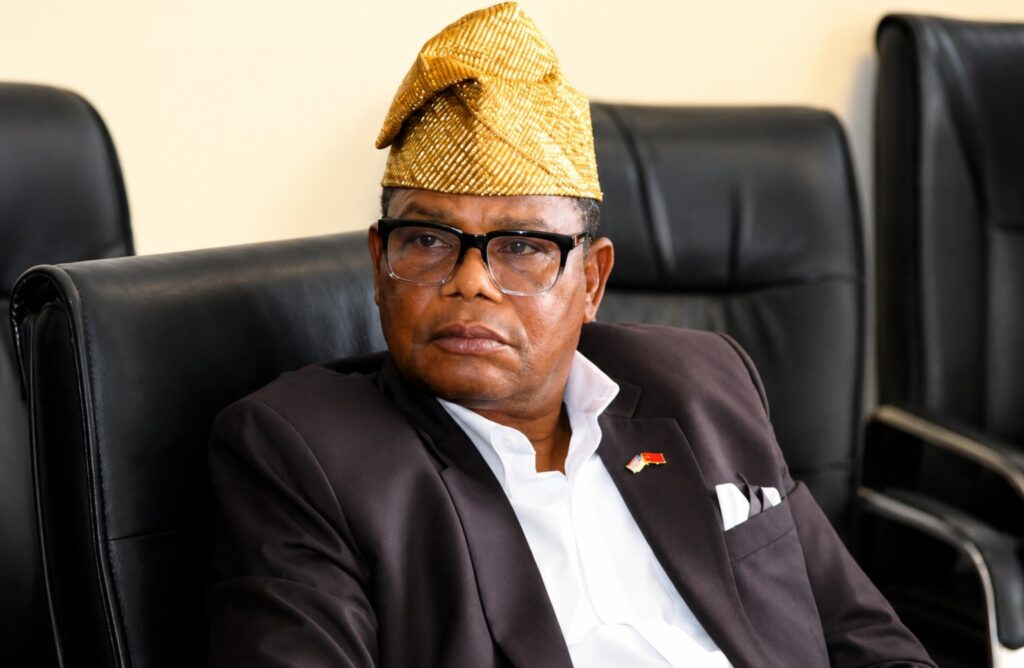
MONROVIA — Liberia may be losing as much as US$1.6 billion worth of gold to illegal cross-border smuggling, Mines and Energy Minister R. Matenokay Tingban warned Wednesday, calling illicit mining one of the gravest threats to government revenue, the environment and the management of the country’s mineral wealth.
Appearing before the House of Representatives Joint Committee on Mines, Energy and Natural Resources, Environment, Hydrocarbon and Judiciary, Tingban said the figure remains preliminary and has not been independently verified. He said, however, that growing evidence of illegal mining and unrecorded mineral exports points to significant losses that demand urgent government action.
“Our promise to you was to make sure that we conduct an assessment of the sector to know exactly what is happening,” Tingban told lawmakers.
According to the minister, the Ministry of Mines and Energy launched a nationwide assessment after the current administration took office to better understand the challenges confronting Liberia’s mining industry, particularly illegal mining and mineral smuggling across the country’s borders.
He said preliminary information gathered by the ministry suggests that substantial quantities of gold are leaving Liberia illegally, though the clandestine nature of smuggling makes it difficult to verify the exact amount.
“Based on the information coming to us with respect to illegal mining activities and the smuggling of minerals across the border, rough information coming to us which has to be verified is that minerals leaving our country, more specifically gold, are estimated at about US$1.6 billion,” Tingban said.
“Because what they are smuggling is very difficult for us to determine. It is theft of property, and if somebody is stealing, you won’t know.”
The minister stressed that the government must establish stronger monitoring and reporting systems to accurately determine the volume of minerals extracted and legally exported from Liberia.
“It is our responsibility to put mechanisms in place to make sure what is being recovered from the country and what is leaving the country,” he said.
As part of those efforts, Tingban disclosed that the ministry has introduced a new reporting template for artisanal and small-scale miners, particularly Class B operators, to improve production reporting, accountability and traceability throughout the mineral supply chain.
He noted that many of the sector’s compliance challenges originate from artisanal and small-scale mining operations, where production and exports often occur with little documentation or regulatory oversight.
The minister said ministry officials recently conducted inspections in several mining communities to assess activities on the ground and verify reports of illegal operations. The findings, he added, have already been presented to President Joseph Nyuma Boakai as part of broader efforts to strengthen governance in the sector.
Tingban also expressed concern over the increasing use of excavators in unauthorized mining operations, warning that the proliferation of heavy equipment is accelerating environmental degradation across several parts of the country.
He cited illegal river dredging as another major challenge, noting that despite an existing government ban, some operators continue the practice in remote areas where enforcement remains difficult.
“Before I got there, there had been a ban on dredging in our rivers, but there are still violators who go into the middle of the forest where it is very difficult to get to them,” he said.
The minister further warned about the continued use of mercury in artisanal mining, describing it as a serious threat to public health and the environment. He called for stronger environmental compliance and enforcement to curb the practice.
Tingban also raised concerns about the growing involvement of foreign nationals in artisanal and small-scale mining without authorization from the ministry.
According to him, some foreign operators gain access to mining communities through arrangements with local residents and authorities before engaging in mining activities outside Liberia’s regulatory framework. He alleged that minerals recovered through some of these operations are often exported without being reported to the ministry.
Addressing the broader issue of resource governance, Tingban reminded lawmakers that Article 23 of Liberia’s 1986 Constitution vests ownership of all mineral resources in the Republic of Liberia, underscoring the government’s responsibility to ensure those resources are managed transparently and in the national interest.
He reaffirmed the ministry’s commitment to strengthening inspections, improving compliance, enhancing mineral traceability and working with the Legislature to enact stronger legal and institutional measures to combat illegal mining, mineral smuggling and environmental degradation.
The public hearing was part of the Joint Committee’s ongoing oversight of Liberia’s mining sector and brought together representatives of the Environmental Protection Agency, the Central Bank of Liberia, the Ministry of Finance and Development Planning, the Governance Commission, the Law Reform Commission, the Liberia Chamber of Mines and other key stakeholders to discuss reforms aimed at promoting transparency and the sustainable management of the country’s mineral resources.






Discussion about this post