


Published: November 28, 2025
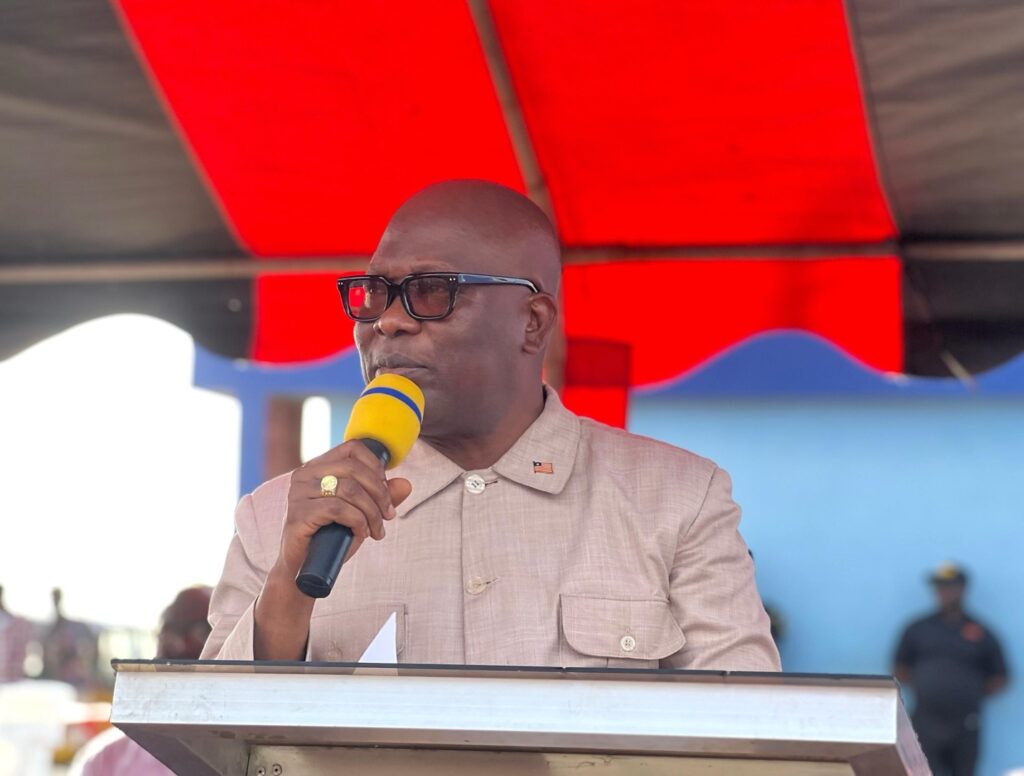
Kpakio’s signature helped produce a deed that undermined all those national priorities
When a nation entrusts a public institution with the authority to determine who owns land, it demands more than routine administrative competence. It demands integrity, sobriety and an uncompromising respect for the law. In Liberia, a country where land remains one of the most combustible triggers of conflict, those demands are existential. That is why the Liberia Land Authority’s recent attempt to defend the issuance of a fraudulent development grant deed is a breach of public trust, a threat to national stability, and an indictment of an institution still struggling to rise above Liberia’s historic land-tenure chaos.
Two separate investigations, one by The DayLight and another by The Liberian Investigator, dismantled the Authority’s narrative long before the agency issued a defensive press release. Both inquiries exposed the startling fact that Chairman Samuel Kpakio, the very individual charged with upholding the President’s moratorium on public-land transactions, signed a deed that facilitated an illegal 500-acre land arrangement between Grand Gedeh authorities and a Burkinabe businessman. Evidence showed that the Chairman was not “misled,” as the Land Authority claimed, but instead presided over decisions that directly contravened the moratorium President Joseph Nyuma Boakai announced earlier this year.
The agency’s response, dismissive, contradictory, and anchored in selective interpretation of the law, only deepened public suspicion. It insisted that a “development grant deed” did not violate the moratorium because the moratorium did not use those exact words. But Liberia’s land governance framework is not a word-game. A development grant deed exists only in the context of public land. And a moratorium on public land necessarily freezes every derivative action within that domain. This is not a gray area. It is Land Law 101.
Liberians and international observers alike should be troubled by how easily senior officials attempted to recast a clear legal prohibition as a linguistic loophole.
The Land Authority’s press release appeared designed less to clarify the record and more to create distance between Chairman Kpakio and the wrongdoing. The agency sought to shift responsibility onto lower-level officers — Grand Gedeh Land Administrator Paye Freeman, county land dispute officer David Togbasie, and Superintendent Alex Grant — accusing them of misleading the Chairman. All three declined to comment, which itself is telling. But even if they were complicit, they could not “mislead” a chairman into signing a deed two days before the land survey was completed.
The timeline alone eviscerates the Authority’s defense.
Standard procedure demands a completed, verified survey, documentation of the land’s classification, community consultations, and, for public land, competitive processes that guard against abuse. Instead, the deed was issued prematurely; the land’s status (public or customary) was never determined; affected towns and villages were not consulted; and the surveyor, according to official records, did not even hold the license required to conduct a public-land survey.
The law was not bent. It was broken.
The President’s moratorium was not an idle political gesture. It was enacted to halt rampant land grabbing, stop unregulated land sales, prevent conflicts between communities and investors, and allow the Land Authority time to develop proper regulations. Those objectives were well-known to every senior official at the Authority.
Yet Kpakio’s signature helped produce a deed that undermined all those national priorities.
Land experts interviewed by both newspapers echoed the same conclusion: a development grant deed is inseparable from the public land domain. When the moratorium stopped all public-land transactions, it automatically halted development grant deeds, regardless of whether the moratorium’s text spelled out every subtype of public-land instrument.
The Authority’s insistence otherwise insults not only public intelligence but also Liberia’s legislative intent. The 2018 Land Rights Act was crafted specifically to correct decades of arbitrary state land deals that dispossessed communities and fueled conflict. Violating that Act and then defending the violation is not just poor governance. It is an affront to Liberia’s post-war land-reform journey, a process heavily supported by international partners who expect transparency and professionalism.
What is most troubling is that the deed bore the hallmarks of coordinated fraud. The deed listed two grantees — the Grand Gedeh Local Government Reserved Farmland and Moore Agro Inc., co-owned by former Public Works Minister Gyude Moore. Mr. Moore has denied any knowledge of the deed, and experts suggest his company’s name may have been copied from an old document in a rush — a “hasty work” error typical of forgeries.
Whether that theory holds or not, the presence of a politically connected name in a fraudulent deed should alarm the public. Land corruption in Liberia has long involved networks, not isolated actors. Shielding senior officials while sacrificing junior staff only reinforces the perception that Liberia’s institutions remain vulnerable to internal capture.
This editorial is not about one chairman or one deed. It is about protecting a fragile land-management system at a moment when Liberia’s development ambitions depend heavily on investor confidence, community stability and transparent institutions. The Liberia Land Authority cannot credibly lead a national land-reform process while simultaneously violating the very laws it was created to enforce.
Liberia deserves, and must insist on, the following:
- A fully independent investigation into the deed’s origin, processing, approvals and beneficiaries.
- Public release of all internal communications tied to the deed’s preparation, including directives, emails and chain-of-custody documents.
- Disciplinary action not limited to junior officers but extending to any senior official involved, regardless of rank.
- A fast-tracked overhaul of the development-grant-deed system, including stricter thresholds, transparent review panels and mandatory community disclosure.
International partners should also take note. Liberia’s land-governance architecture remains one of the most donor-dependent in the region. If the Authority cannot police itself, it cannot assure the world that land-based investments, from agriculture to mining to renewable energy, will be governed fairly.
The Liberia Land Authority plays a crucial role in a country where land is more than just soil — it represents identity, power, and future prosperity. Its credibility must be absolute and cannot be based on convenience. The attempt to justify the unjustifiable has crumbled under the weight of evidence. The deed was illegal. The defense was dishonest. And the Liberian people deserve much better than shifting stories and scapegoats.
This scandal offers Liberia a choice: confront institutional rot now or allow it to metastasize into yet another cycle of land disputes, broken communities and shattered investor confidence.
The dirty deed may have died. But the fight for integrity in Liberia’s land sector must live on.






Discussion about this post