


Published: August 10, 2026
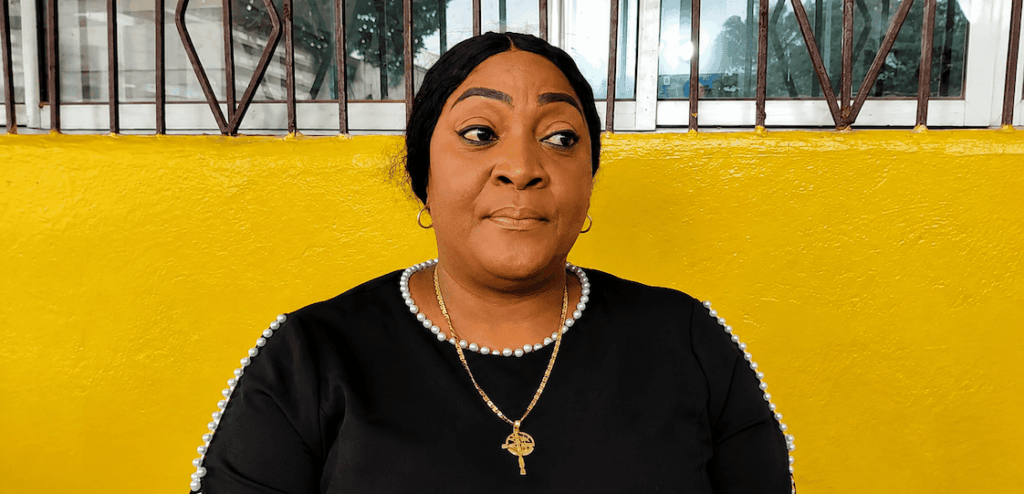
GBARNGA, Bong County — Bong County gave up the strongest hand it has ever held in a Liberian government when it helped vote the Coalition for Democratic Change out of power in 2023, former Vice President Jewel Howard Taylor said, rejecting Sen. Prince Moye’s account that the county acted to free her from a vice presidency he described as bondage.
Taylor, who served as vice president under former President George Weah and represented Bong in the Senate before that, said Moye’s characterization was an opinion contradicted by the record, and she used an appearance before reporters in Gbarnga to answer it point by point.
“Senator Moye is entitled to his opinion,” she said, but “opinions should not rewrite the historical record.”
Asked directly whether she had been in bondage, she said she had not. “That is not true. I was not in bondage,” she said, arguing that a vice president under the constraints Moye described could not have delivered the projects she went on to list. She said her tenure brought her difficulties, but that the question for voters is not how she was treated. “Bong County was not marginalized,” she said.
Moye, speaking at the Bong Athletic and Social Intellectual Center in Gbarnga over the weekend, said he had no regrets about the 2023 outcome, framing the removal of the CDC as an effort to liberate Taylor and the county. He said his assessment was political rather than personal, and predicted Taylor would eventually acknowledge she had been poorly treated.
Taylor’s answer was that the arrangement Moye helped dismantle was unprecedented for the county. She said Bong held the vice presidency and the deputy speakership at the same time under Weah, a combination she said the county had never had, and that presidents normally reserve legislative leadership for their own partisans. She credited Weah with backing both placements.
She said the two positions were squandered by rivalry. Had the vice president and the deputy speaker worked together, she said, more would have come to the county and the current argument would not be taking place.
She also seized on Moye’s own framing. “I’m happy that he admitted that they worked very hard to remove us from power,” she said, adding that the stated justification did not survive scrutiny. “Did I come to the county and ask for freedom? I was elected to work and bring benefits to the people of Bong County.”
Taylor’s rebuttal rested on a list of interventions she attributed to the Weah administration. She said the president traveled to Gbarnga shortly after inauguration and ordered the Public Works Ministry to rehabilitate Broad Street, that the Gbarnga corridor of the Lofa road was completed, that Bong County Technical College received budget support to upgrade its programs, that a new market was built in Gbarnga, that doctors’ salaries were increased and health workers placed on payroll, and that the government covered more than 90 percent of the operating bill at Phebe Hospital, a private facility.
She said Weah announced the tuition-free policy for public universities while standing at Bong County Technical College, and that every other county benefited from a decision made in Bong.
On the new school dedicated in Gbarnga recently, Taylor said the groundbreaking and construction were completed before the end of 2023, and that she had personally lobbied the Ministry of Education to site one of five such projects in Bong rather than in a smaller county. She invited reporters to check the record. “There’s a group in Monrovia that is doing something very important. It’s called fact-checking,” she said.
She offered the clinic in Moye’s home area as her sharpest example, saying she had promised the community the facility during her 2014 Senate campaign, that it was built but left unfinanced under the Unity Party government, and that she moved it onto the Ministry of Health budget as her first act as vice president, after which it was furnished, equipped and staffed.
Turning to the present administration, Taylor said the county has little to show for the past three years. She said most of what has been dedicated since 2024 was started under Weah, and challenged reporters to compare the two records. She said the silence on Liberia’s drug crisis was the clearest example, arguing that her government answered the criticism it received by deciding at cabinet level to build voluntary rehabilitation centers, two of which she said she visited during the 2023 campaign, finding almost 300 young people at them.
Taylor said she does not regret that her name was left off the colleges when Bong County Technical College was restructured. She said she conceived the institution in consultations at Suakoko, authored the legislation as senator and considers it her legacy project. “The history and the legacy can never be spoken about the Bong County Technical College without the name of Jewel Howard Taylor,” she said.
On the National Patriotic Party, Taylor said the party has moved past the internal crisis that consumed it for years and is preparing county conventions in December, to be followed by a national convention. She said a new national headquarters will be dedicated within weeks. Asked whether she will be on a ballot in 2029, she did not answer directly, saying her responsibility now is to rebuild party structures across the country and that she will take part in the 2029 conversation in a meaningful way.
She framed that election as a comparison of two six-year records, Weah’s and President Joseph Boakai’s, and said Bong will have to decide whether it again takes its hand from in front of itself and places it in front of Nimba and Lofa, invoking a local proverb about a naked man covering his neighbor instead of himself.
Taylor also said Bong voted for the CDC in 2023 despite what she called heavy bombardment, and that the ticket won the county without winning enough nationally to stay in power.





Discussion about this post