


Published: February 18, 2026

By Contributor
Liberia has taken a decisive step toward modernizing its sports ecosystem following high-level talks in Paris between the Liberian diplomatic mission and France’s premier high-performance sports institution, National Institute of Sport, Expertise and Performance (INSEP).
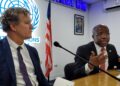
On Feb. 16, 2026, Ambassador Yorlay, accompanied by members of his delegation, met with INSEP Director General Fabien Canu at the institute’s headquarters in Paris.
The discussions focused on expanding structured sports cooperation between the Republic of Liberia and the French Republic, with emphasis on youth development, elite athlete training and institutional capacity building.
A strategic pivot toward high-performance sports
Founded in 1945, INSEP has played a central role in France’s sporting success, producing Olympic and world-class athletes across more than 20 disciplines.
Ahead of the 2024 Summer Olympics and the 2024 Summer Paralympics, more than 80% of France’s Olympic medalists trained or received support through INSEP’s system, underscoring its reputation as one of the world’s leading sports performance centers.
Against that backdrop, the Liberian delegation expressed interest in leveraging French technical expertise to strengthen Liberia’s emerging sports structures. Particular focus was placed on collaboration through Liberia’s Ministry of Youth and Sports, as well as partnerships with INSEP and other French training institutions.
Canu welcomed the initiative, reaffirming INSEP’s commitment to international cooperation, particularly with African nations seeking to modernize their sports systems.
France currently maintains sports development partnerships with more than 30 countries worldwide, combining athlete training, coach education, sports medicine and governance support.
Laying groundwork for long-term cooperation
During the meeting, Bâbak Amir-Tahmasseb Oly, INSEP’s director of international relations and coordinator of the Grand INSEP Network, invited the Liberian Embassy to submit Liberia’s national sports development strategy for technical review.
He said the review would enable INSEP to identify concrete and sustainable areas of cooperation, including elite athlete preparation, coaching certification, sports administration and performance analytics.
Oly also presented INSEP’s institutional structure, training models and administrative systems, offering insight into how high-performance sports programs are managed, financed and evaluated in France.
Such frameworks are increasingly vital as countries compete not only for medals but also for youth engagement, job creation and national branding through sports.
Ministerial visit slated for April 2026
In a move signaling strong political backing, Ambassador Yorlay proposed an official visit to France by Liberia’s minister of youth and sports, Cornelia Wonkerleh Kruah, along with senior sports administrators.
The proposal was positively received, with a tentative schedule set for April 2026, pending final arrangements.
The visit is expected to include engagements with France’s Ministry of Sports, INSEP and other sports and youth development institutions, as well as technical and vocational training centers. The goal is to translate diplomatic dialogue into actionable programs to strengthen Liberia’s sports infrastructure and youth empowerment agenda.
Canu confirmed INSEP’s readiness to work closely with the Liberian Embassy to ensure the success of the ministerial visit and to help shape a partnership roadmap aligned with Liberia’s national priorities.
Sports as a tool for youth empowerment
With more than 60% of its population under age 25, Liberia views sports as a critical tool for youth empowerment, social cohesion and international engagement.
While the country has produced notable football talent, limited infrastructure and technical capacity have constrained broader development across disciplines.
Analysts say a structured partnership with France could help Liberia address key challenges by accessing modern training methodologies, sports science and governance models.
Globally, the sports industry contributes more than $500 billion annually to the world economy, and countries that invest strategically in sports development increasingly benefit from employment growth, tourism and enhanced national visibility.
The Paris meeting highlights a growing dimension of Liberia–France relations, where sports diplomacy complements traditional political and economic engagement.
By anchoring cooperation in youth development and institutional capacity building, both sides signaled a shared belief that sports can serve as a catalyst for sustainable development.
As preparations begin for the anticipated April 2026 ministerial visit, expectations are rising that the engagement could mark the beginning of a long-term partnership aimed at nurturing Liberian athletes and strengthening the country’s broader youth and development agenda through sport.





Discussion about this post