


Published: June 8, 2026
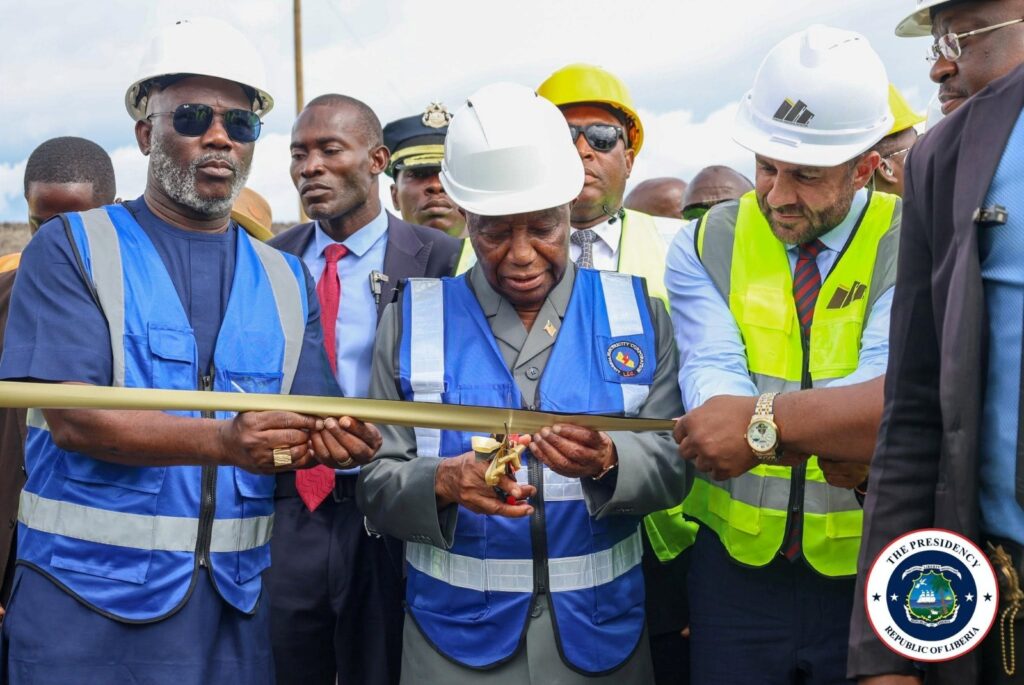
HARRISBURG — Liberia brought its first utility-scale solar power plant online over the weekend, a US$16 million, 20-megawatt facility that government officials cast as the opening move in a financed, multiyear push to lift national electricity access from roughly 30 percent to 75 percent.
President Joseph Nyuma Boakai dedicated the Solar Photovoltaic Power Facility at the Mount Coffee Hydropower Complex less than two years after breaking ground on Oct. 11, 2024, and used the ceremony to announce that his administration secured an additional US$57 million in World Bank financing in March 2026 to deepen the country’s energy investment. World Bank Liberia Country Manager Georgia Wallen, delivering a special statement, reaffirmed the institution’s commitment to financing Liberia’s shift from costly oil-based generation to solar and hydropower.
The plant is Liberia’s largest solar investment to date and was developed under the Regional Emergency Solar Power Intervention Project, a World Bank initiative launched in April 2022 to address electricity shortages and accelerate renewable energy across West Africa. The new financing will expand the solar facility from 20 to 30 megawatts within a year, install a 12-megawatt battery storage system and fund further upgrades at Mount Coffee.
Boakai framed the facility as far more than a power project, tying it to his administration’s ARREST Agenda for Inclusive Development. “Increased electricity generation is essential for industrialization, value addition, private-sector growth, and the development of a vibrant 24-hour economy capable of creating opportunities for young Liberians,” he said. He noted that inadequate and costly electricity has long constrained Liberia’s development, limiting investment and straining hospitals, schools, businesses, agriculture, mining and manufacturing.
The president disclosed that 22 megawatts of previously lost generation capacity at Mount Coffee have been restored and that a further 42-megawatt expansion of the hydropower facility is planned.
Liberia Electricity Corporation Managing Director Mohammed M. Sherif confirmed that the 22 megawatts damaged in 2021 have been fully rehabilitated, restoring Mount Coffee to its full 88-megawatt capacity. Procurement for the 42-megawatt expansion is already underway, with contractors expected to mobilize by January 2027. “This event marks the beginning of a new phase in expanding energy access rather than a final destination,” Sherif said, crediting the World Bank’s financing and what he called the growing capability of Liberia’s domestic technical workforce.
Wallen said the project now spans a four-country partnership, linking Liberia, Sierra Leone, Chad and Togo under RESPITE, and that the World Bank Group and the International Finance Corp. are backing competitive procurement to draw independent power producers into the market. She pointed to a pipeline of expansions ahead, including 22 megawatts from Mount Coffee Hydro Unit 1, another 42 megawatts planned by 2029, and the Saint Paul 2 Hydropower Project, which she said could more than double Liberia’s installed generation capacity within six years.
Finance and Development Planning Minister Augustine Kpehe Ngafuan said the government is targeting the country’s “binding constraints to growth,” with energy as the central pillar. He disclosed that following commitments at the African Energy Summit in Tanzania, Liberia aims to raise national access from about 30 percent to 75 percent, with coverage already climbing to nearly 40 percent. He stressed that the investments reach all citizens “regardless of political or religious affiliation.”
Mines and Energy Minister R. Matenokay Tingban said Liberia must move from importing electricity to producing its own and eventually supplying the region, lamenting that Africa’s oldest republic still depends on neighboring states for part of its power. He cited an “overwhelming number” of letters of intent being processed in the RPP corridor as a sign of investor interest in the sector.
Bomi County Sen. Edwin Melvin Snowe, who chairs the Senate Standing Committee on Hydrocarbon, Energy and Environment, hailed the project as a model of executive and legislative cooperation and pledged continued support for measures to sustain the sector’s growth. “Electricity is a non-partisan utility that benefits all Liberians regardless of political affiliation or religion,” he said.





Discussion about this post