


Published: May 16, 2026
GBARNGA, Bong County — Liberia’s National Cadet Program expanded to all 15 counties Friday, enrolling nearly five times as many graduates as its inaugural cohort in what the government called the cornerstone of President Joseph Boakai’s youth empowerment agenda.
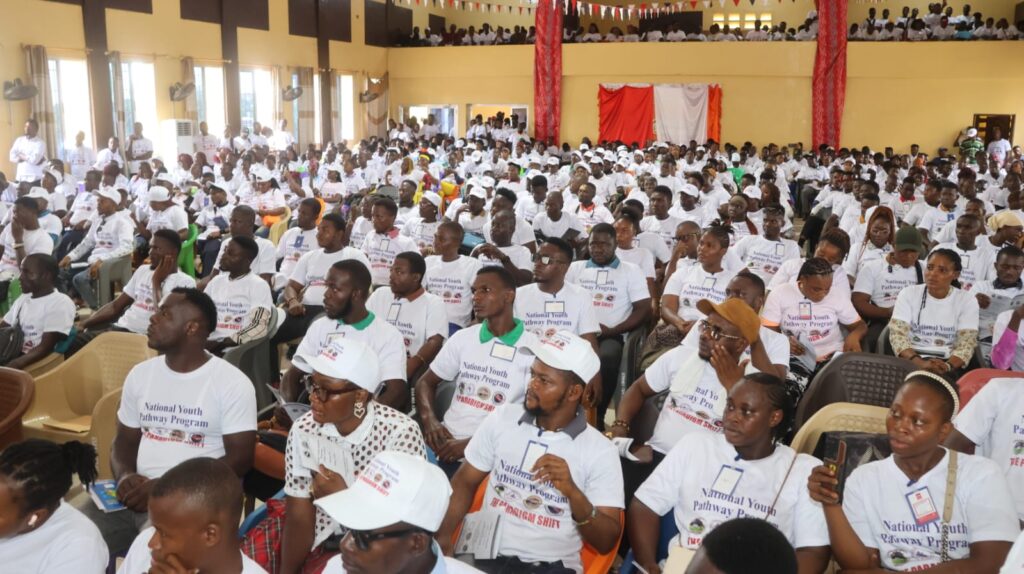
The second cohort places 1,100 university graduates and graduating seniors selected from more than 3,500 applicants into six-month public-sector assignments, nearly quadrupling the 235 cadets deployed across eight counties for three months in the program’s first batch. Youth and Sports Minister Cornelia Kruah said the expansion was deliberately inclusive, with participants drawn from all 15 counties regardless of economic background, physical ability or political affiliation.
“We are building a programmatic framework that moves Liberian young people from exclusion to productivity,” Kruah said at Friday’s launch ceremony in Gbarnga.
Kruah said the ministry selected cadets through an open, competitive process that drew applicants from across Liberia’s social spectrum, including persons with disabilities and young mothers. She described interacting with a nursing mother on Friday morning who transferred her infant to a bystander so she could sign the attendance sheet.
“When you go to these institutions, not everybody will embrace you immediately,” Kruah told the graduates. “But when you get your opportunity to prove yourself, make sure you do it to the best of your abilities.”
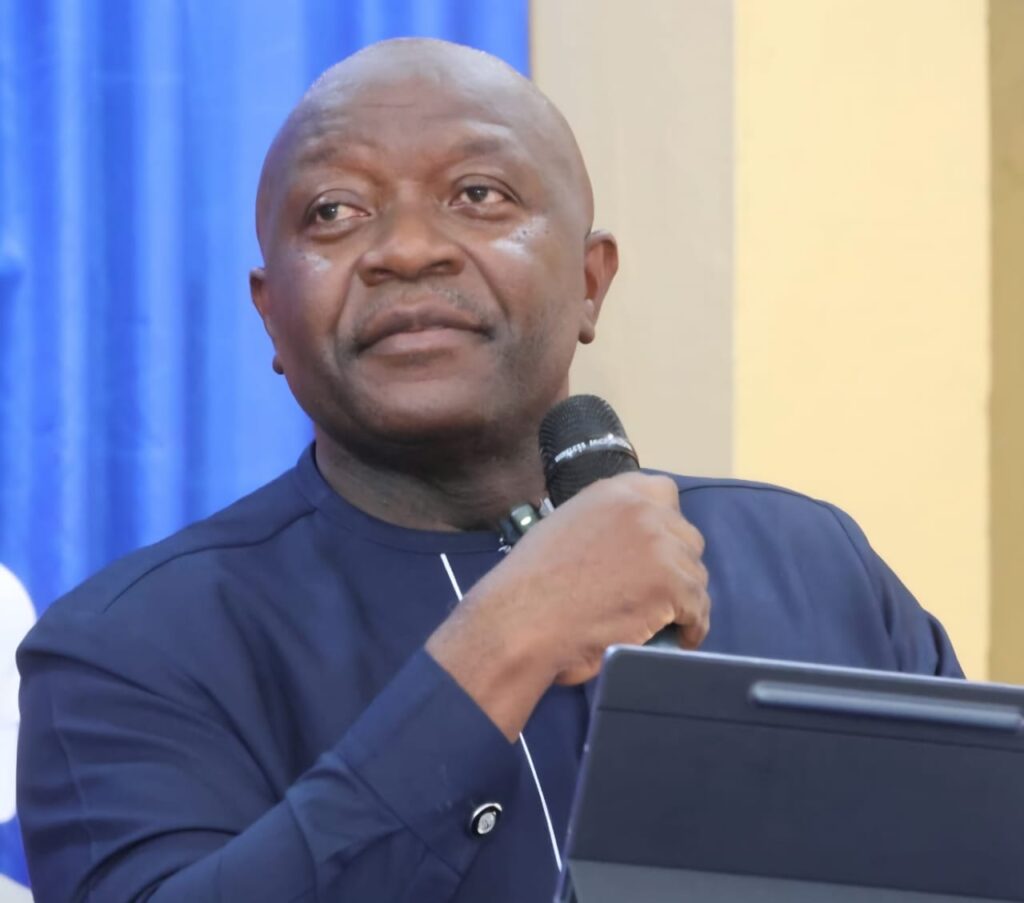
Finance Minister Augustine Ngafuan, who served as chief launcher, said the program is fully funded through the national budget under the Public Sector Development Investment Program and will place cadets across government ministries, agencies and state-owned enterprises. He urged host institutions to absorb high-performing cadets as permanent employees at the end of their placements, repeating a commitment he said he first made at the December 2025 graduation ceremony for a separate cohort of nearly 300 interns deployed through his own ministry.
“We pose absolutely no objection to employing exceptional young people who complete these programs because our greater intention is to leave no one behind,” Ngafuan said.
The minister drew on his own experience as a six-month intern at the Liberia Petroleum Refining Company in 1988, telling cadets the placement transformed him professionally before he completed his senior year at the B.W. Harris Episcopal High School.
“Later in life, I would work and succeed in multiple jobs, thanks in no small measure to the solid professional experience I acquired as an intern or cadet during that formative, impressionable period of my life,” he said.
Ngafuan also highlighted two related government initiatives. The Youth Entrepreneurship Investment Bank, launched in July 2025 jointly with former African Development Bank President Akinwumi Adesina, is a $18 million project targeting 30,000 youth-led businesses and projected to generate more than 100,000 jobs. The minister said the project is under the Ministry of Commerce and is weeks away from full implementation following the completion of project management staff recruitment.
He also noted that Liberia secured the relocation of the ECOWAS Youth and Sports Center from Burkina Faso to Monrovia. The government has fully funded the acquisition and rehabilitation of a facility in Monrovia that President Boakai dedicated in late 2025 as the center’s new headquarters.
The U.N. Development Programme’s country representative, Galiou Diaz, said UNDP helped establish the cadet program and described it as more than a job placement scheme.
“If we reduce it to job placement alone, then I think we are underestimating its true purpose and its transformative potential,” Diaz said, adding that the program should become a national platform for shaping leadership, discipline and civic consciousness.
Dr. Mady Biaye, the U.N. Population Fund’s resident representative, noted that roughly 70 percent of Liberia’s population is under 35, making youth investment both an economic imperative and a demographic opportunity.
“Young people are not tomorrow’s problem; they are today’s solution,” Biaye said. “You are not just the leaders of tomorrow, but the co-architects of today.”






Discussion about this post