


Published: June 3, 2026
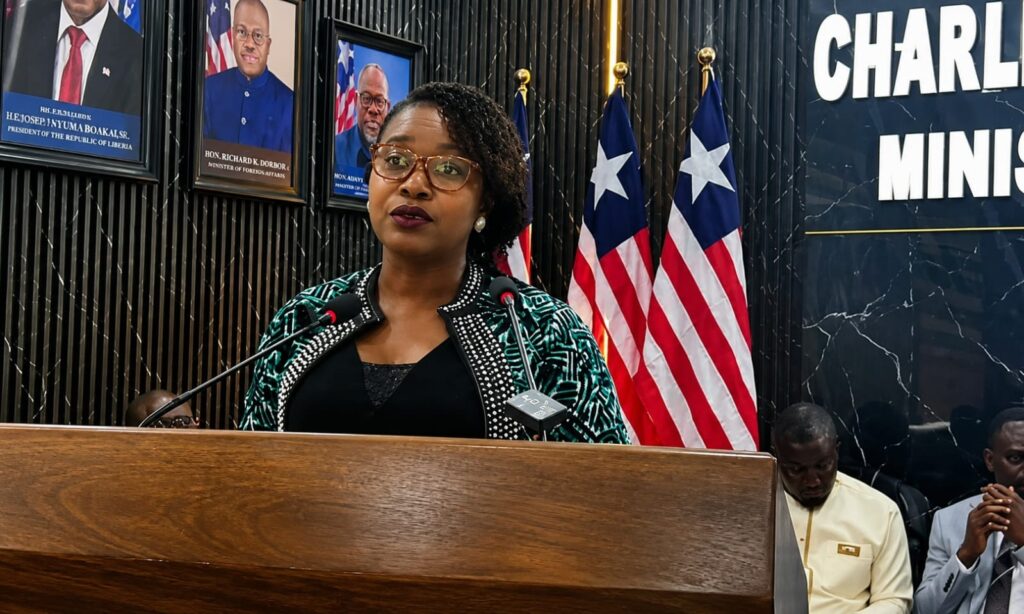
NPHIL Interim Director General Dr. Sia Wata Camanor
MONROVIA – Liberia has activated a national emergency response team and deployed health screeners across all entry points after international health authorities declared a regional Ebola outbreak a global health emergency, even as officials confirmed the country has recorded no cases.
NPHIL Interim Director General Dr. Sia Wata Camanor made the disclosure Tuesday at the Ministry of Information’s regular press briefing, saying the National Public Health Institute of Liberia has placed the country on high alert following the spread of the Sudan Ebola Virus Disease in Uganda and the Democratic Republic of Congo.
“Liberia remains vigilant in light of the regional Sudan Ebola Virus Disease outbreak affecting the Democratic Republic of Congo and Uganda,” Camanor said, stressing that Liberia has recorded no confirmed cases, no suspected cases and no identified contacts.
The heightened response followed the World Health Organization’s May 17 declaration of the outbreak as a Public Health Emergency of International Concern, and a similar designation by the Africa Centres for Disease Control and Prevention as a Public Health Emergency of Continental Security. Enhanced screening of all incoming travelers began the same day, with the public informed two days later.
Camanor said the WHO has classified Liberia as a medium-risk country, a designation that reflects the potential threat posed by international travel and cross-border movement rather than any domestic transmission.
“While DRC and Uganda are considered high-risk countries, Liberia’s medium-risk classification reflects the potential impact of international travel and cross-border movement,” she said.
As part of the activated response, NPHIL has deployed digital thermal scanners at ports of entry and rolled out temperature checks, travel history assessments and symptom screenings for all arriving travelers. Non-contact infrared thermometers have been installed at both border crossings and health facilities, with hand sanitizing and handwashing stations set up at airports and land borders. Personal protective equipment is also being procured and distributed to frontline healthcare workers.
Camanor noted that Ebola, unlike COVID-19, can only be transmitted after an infected person develops symptoms, making temperature monitoring a frontline tool.
“Fever is the first symptom in more than 90 percent of cases, making temperature monitoring a critical component of our screening process,” she said.
NPHIL’s national call center is now operating around the clock. Citizens can reach it by dialing 4455 to report concerns, seek guidance or obtain information. The institute, working with the Ministry of Information, has also prepared educational materials including banners, flyers and radio messages for nationwide distribution.
Beyond Ebola, Camanor offered updates on several other diseases under active surveillance.
Liberia recorded no new Mpox cases for the third consecutive week. The country’s last Mpox patient was discharged two weeks ago. Since the outbreak began in August 2024, Liberia has recorded 1,676 Mpox cases, with 1,668 recoveries and eight deaths, a case fatality rate of less than 1%.
Lassa fever, which remains endemic in Liberia, continues to claim lives. Since 2022, the country has recorded 238 cases, 168 recoveries and 72 deaths, a case fatality rate exceeding 30%. Two active cases are currently being treated in Bong and Grand Bassa counties. Camanor said the country maintains an adequate supply of Ribavirin, the antiviral treatment proven effective against the disease.
Measles also remains a public health burden. Liberia has recorded 20,642 cumulative cases, 20,367 recoveries and 113 deaths, with 162 active cases currently under management, down from 185 the previous week.
Camanor credited the Ministry of Health for donating an ambulance to support operations at Roberts International Airport and thanked President Joseph Nyuma Boakai, the Legislature and the Ministry of Finance and Development Planning for backing the institute’s preparedness work. She also acknowledged the WHO, the U.S. Centers for Disease Control and Prevention and Africa CDC for technical and logistical support.
She closed with a public health appeal that doubled as a statement of institutional purpose.
“Prevention is better than cure. Prevention is cheaper than cure, and prevention has fewer complications than treatment. Please stay calm and vigilant,” she said.





Discussion about this post