


Published: April 24, 2026
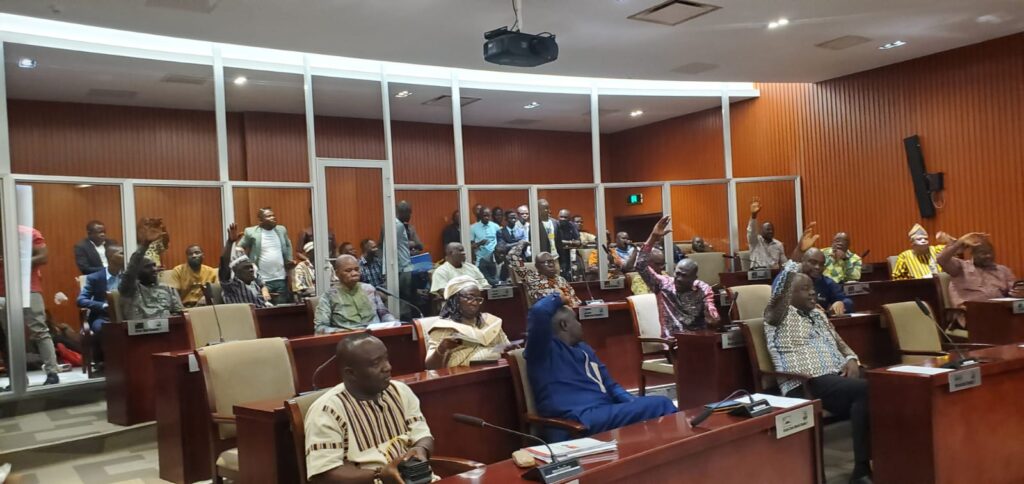
CAPITOL HILL, Monrovia — The Liberian Legislature has passed a $53 million supplementary budget for Fiscal Year 2026, boosting funding for national security, public administration, health, and education, but not before a voting dispute triggered a walkout in the Senate over transparency in the passage of major fiscal legislation.
The House of Representatives cleared the budget in a late-night session on Thursday. The Senate concurred shortly after, with Senate Ways, Means, Finance and Budget Committee Chairman Prince K. Moye presenting the report and Maryland County Sen. J. Gbleh-bo Brown introducing the motion for passage.
The budget is funded primarily by $40 million in World Bank budgetary support recorded in Fiscal Year 2025, supplemented by $5 million in excess domestic revenue and an additional $8 million from the World Bank. The figure shifted during deliberations; the initial proposal stood at $45 million before adjustments linked to confirmed revenue figures and partner commitments pushed the final envelope to $53 million.
Public administration received the largest single allocation at $14.55 million, directed at maintaining core government operations, supporting fiscal management systems, meeting international obligations, and clearing arrears. Security and rule of law followed at $8.43 million, covering the Armed Forces of Liberia, the Liberia National Police, and other security institutions. Infrastructure and basic services received $9.57 million for public transport improvements, heavy equipment deployment, and rehabilitation works. Health received $8.32 million, and education received $7.25 million. Smaller appropriations cover social development at $1.7 million, local government at $1.3 million, and energy, environment, agriculture, municipal services, and transparency initiatives.
The security allocation drew the most attention on the Senate floor. Gbarpolu County Sen. Amara M. Konneh praised the decision to increase the AFL budget from just over $600,000 to more than $3 million, framing it as an overdue response to the border standoff with Guinea.
“When the draft budget came with mere $600,000, when the Guinean soldiers took over our border and when the President came here, that was paramount,” Konneh said. “Guinea has military capacity more than us, including ammunition, aircraft, and more.”
Senate Pro-Tempore Nyonblee Karnga-Lawrence confirmed that security remained the administration’s top priority, noting that the Ministry of National Defense plans to recruit 1,000 personnel into the army, while an additional $1 million was approved for the Liberia National Police to recruit another 1,000 officers.
Not all senators were satisfied. Grand Gedeh County Sen. Thomas Yaya Nimely questioned a $5 million allocation to the Ministry of State for Presidential Affairs for the operation of heavy equipment, arguing the responsibility belonged with the Ministry of Public Works or the Ministry of Local Government.
“Throughout my lifetime, I have never seen yellow machines be under the Ministry of State for Presidential Affairs,” Nimely said. “There are other counties that have not gotten better budgetary support and instead of giving them this money, we’re sending it to a ministry that has no technical know-how to run the affairs of yellow machines.”
The session turned sharply tense when Montserrado County Sen. Abraham Darius Dillon accused the chamber of moving to pass the budget without properly reviewing the House version, arguing the process violated constitutional requirements that all revenue bills originate in the lower chamber.
“Madam Pro-Tempore, you’re proceeding wrongly and undermining the integrity of your leadership,” Dillon said. “I will not vote for this budget because the constitution is clear that all revenue bills must begin from the House and be sent here for concurrence.”
Dillon walked out. Senators Edwin Melvin Snowe, Numene T.H. Bartekwa and Konneh backed his position. Pro-Tempore Karnga-Lawrence rejected the claims, displayed the House version of the budget, and insisted that the Senate had acted in full compliance with legislative procedures.
The chamber then passed the budget by a show of hands. The Senate has recently committed to recorded votes on major national instruments, and the decision to revert to a hand-raising system for a $53 million spending bill raised eyebrows.
In the House, Rep. P. Mike Jurry, chairman of the Committee on Ways, Means, Finance and Budget, defended both the process and the substance of the budget. He pushed back against public skepticism about supplementary budgets, which critics have questioned as vehicles for discretionary spending.
“When we say supplementary, it means there was excess from previous performance,” Jurry said. “That excess must be incorporated into the current fiscal framework to address pressing needs.”
He also pointed to improved revenue collection as a signal of broader fiscal progress. “With the work being done by the Ministry of Finance and the Liberia Revenue Authority, we expect continued growth,” he said. “This is just the beginning.”
The passage closes the Legislature’s special session, which was convened specifically to address the fiscal adjustments.



Discussion about this post