


Published: August 17, 2026
MONROVIA – Liberia will try to return 250,000 out-of-school children to classrooms by 2029, beginning with 80,000 across seven counties this year, in a country where roughly half of school-age children are not in school, under a program that will track children individually and reward counties on how many stay enrolled rather than how many sign up.
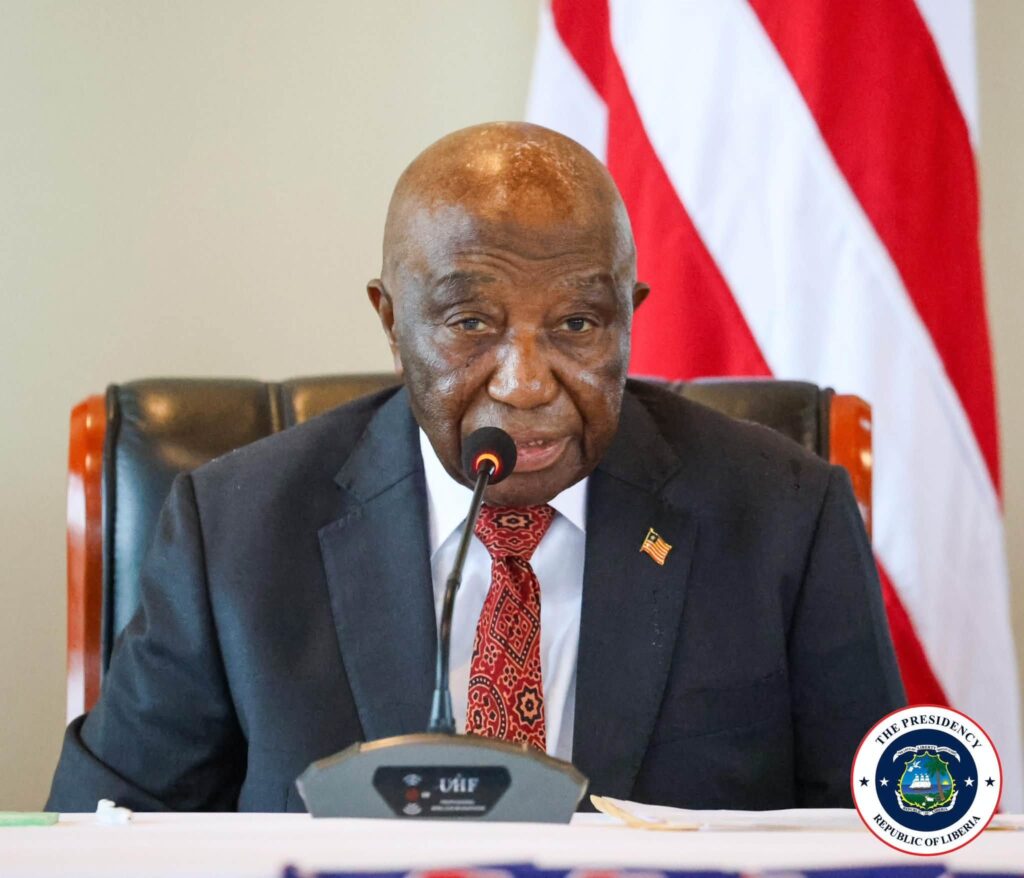
President Joseph Nyuma Boakai, who chairs the initiative, proposed at the Executive Mansion over the weekend that counties be incentivized on their enrollment and retention performance, with allowance made for population size, and said the best performers should serve as models as the campaign expands.
Boakai said enrollment figures alone would not solve the problem unless government agencies, teachers, parents, communities and development partners worked together to keep children in class. He urged teachers to deepen their engagement with students and strengthen their professional commitment, and said parents without formal education could still contribute through spelling competitions and other community programs. He also noted the decline of the vacation schools that once kept students engaged during breaks and gave teachers development opportunities.
“To prevent ‘idle time,’ I suggest community-led initiatives, such as computer programming, to keep children occupied and focused,” Boakai said.
Education Minister Jarso Jallah said the Back to My Classroom initiative moves away from enrollment-focused interventions toward a coordinated system to identify, enroll and retain children outside the classroom. The government aims to reintegrate 250,000 children by 2029, with an initial target of 80,000 across seven counties in 2026.
Jallah said the strategy addresses the barriers keeping children out, including poverty, disability and lack of documentation, and requires the Education, Health, Gender and Local Government ministries to work as one to remove overlapping obstacles. She said it also calls for a real-time, child-level tracking system to replace fragmented lists, a national secretariat, a UNICEF-supported coordinator and formal memorandums of understanding between ministries.
Gender, Children and Social Protection Minister Gbeme Horace-Kollie said her ministry is leading mobilization, identification and documentation through a dedicated secretariat with the Education Ministry. She said a pilot in Bomi County has already documented and enrolled children, that documentation will expand to Gbarpolu County, and that a separate intervention targeting street children is being prepared.
UNICEF Officer-in-Charge and Deputy Country Representative Amadou Cisse said approximately half of school-age children in Liberia are out of school, and that adolescent girls face the heaviest barriers, with pregnancy and early motherhood accounting for a third of the obstacles facing that group.
“Over the last two years, the Ministries of Education, Health, and Gender have established an integrated intersectoral strategy and a shared data system,” Cisse said.
Cisse said substantial investment and partnerships would be needed to sustain the campaign and reach the target, and called for county authorities and community leaders to be given clear national guidance so local actors can drive the work.
Boakai reaffirmed his administration’s support for the initiative and challenged county authorities to take ownership of it.
“I want to thank the women in our leadership who continue to do well for the country and also our international partners for the support; this is about the Liberian children,” Boakai said.
Neither the government nor UNICEF disclosed what the program will cost or how it will be financed.





Discussion about this post