


Published: June 12, 2026
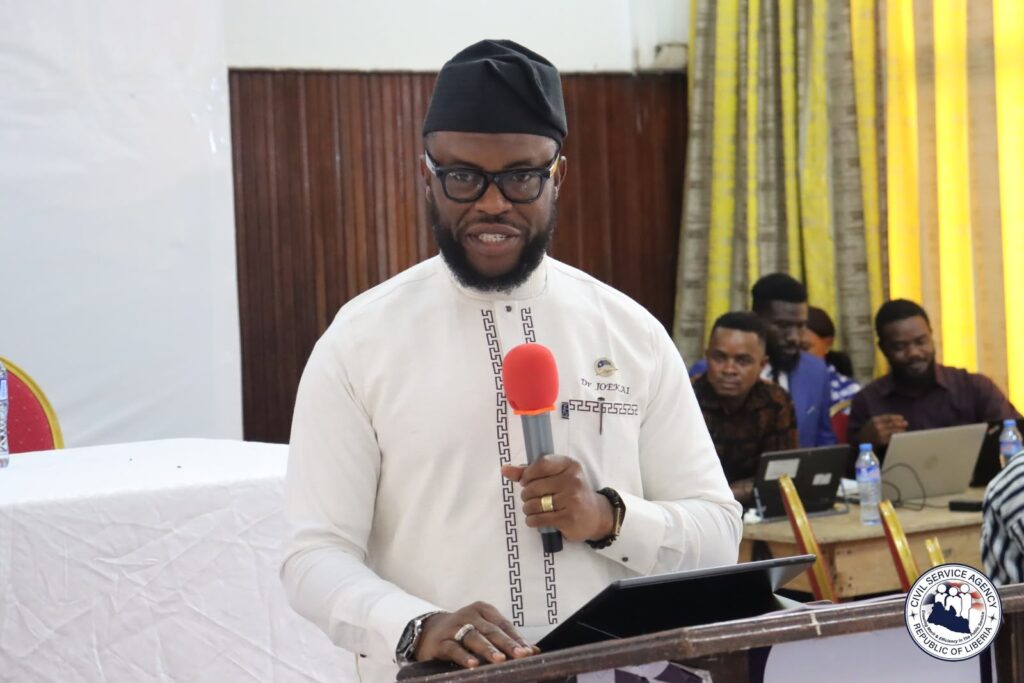
MONROVIA — Civil Service Agency Director-General Dr. Josiah F. Joekai Jr. on Thursday called for a sweeping overhaul of Liberia’s 1986 Constitution, arguing that the charter, written before the civil war and before decentralization, no longer fits the country’s governance, development priorities or citizens’ expectations.
Joekai made the case in a scholarly paper, “Constitutional Reform in Liberia: An Assessment of the Gloria Scott Committee Report,” presented during a Public Policy Dialogue on Constitutional Reform at Monrovia City Hall. The two-day forum, organized by the Governance Commission with the Law Reform Commission, was held under the theme “Review of the 1986 Constitution of Liberia: Imperatives, Challenges and Prospects.”
He shared the platform with several of the country’s leading legal minds, including former Chief Justice Cllr. Gloria Musu-Scott, former Associate Justice Cllr. Philip A.Z. Banks, Liberia School of Law President Cllr. Kwame Clement, Cllr. Pearl Brown Bull and Law Reform Commission Chairman Cllr. Bornor Varmah.
Joekai argued that the Constitution was crafted before the national decentralization agenda and before major technological and governance shifts reshaped modern societies, leaving the country without structures capable of supporting responsive administration, economic competitiveness and broader citizen participation.
“Constitutional reform is essential for strengthening democratic accountability by ensuring that public officials remain responsive to citizens and subject to effective oversight,” he said.
He linked reform to growth as well, saying stable constitutional frameworks raise investor confidence, improve policy predictability and strengthen property rights. “For a nation seeking to consolidate peace and accelerate development, constitutional reform is not optional but a strategic necessity,” he said.
Drawing on the Constitutional Review Committee consultations and the Gloria Scott Committee Report, Joekai identified several priority areas. He pointed to Article 54, which empowers the president to appoint county superintendents and other local officials, a system many citizens want replaced with elections, and to the length of political terms set by Article 50, which fixes a six-year presidency, and Articles 45 and 48, which establish nine-year terms for senators and six-year terms for representatives. Many Liberians, he said, favor shorter tenures to make officials more accountable to voters.
He also revisited Article 27, which restricts citizenship largely to persons of Negro descent and continues to drive debate over inclusion, diaspora engagement and investment, and called for wider access to justice, including regional appellate courts. While Article 11 guarantees equal protection, he said stakeholders want stronger constitutional safeguards for women and persons with disabilities, expanded political participation and inheritance and economic rights.
Joekai further targeted Article 97, which shields lawmakers from liability for statements made in legislative proceedings, and criticized the broader centralized framework he said concentrates excessive authority in the executive at the expense of local democracy. He noted that the Constitution remains largely silent on emerging concerns such as digital governance, cybersecurity, environmental sustainability and access to information.
To advance the process, Joekai proposed a National Constitutional Reform Roadmap led by the Governance Commission with support from the Legislature, Judiciary, civil society, traditional leaders, academia and development partners. He called for a technical review of the Gloria Scott Committee Report, nationwide civic education, consultations across all 15 counties and major diaspora communities, and a National Constitutional Conference to build consensus.
He urged lawmakers to begin the amendment procedures under Article 91 and to submit any proposed changes to the people through a referendum, as required by Article 92.
Joekai commended the Governance Commission and its partners for convening the dialogue and pressed stakeholders to turn the discussions into concrete action, saying meaningful reform remains critical to strengthening democracy and positioning Liberia for lasting peace and development.





Discussion about this post