


Published: March 18, 2026
MONROVIA — In Liberia, the war is never very far away.
Sometimes it returns in a place name. Sometimes in a face. Sometimes in a sentence so blunt and cruel that it seems to drag the past into the present all over again.
That is what happened when Liberian political commentator Samuel P. Jackson, during a live social media outburst as police surrounded his home, allegedly pointed to a police officer and said: “We killed his father during the f***ing war. He’s a Sirleaf.”
The remark, directed at Aven Sirleaf Jr., the son of the late Aven V. Sirleaf Sr., landed like a stone in old water. It spread quickly online, but the real shock was not just the vulgarity of it. It was the ease with which it appeared to invoke a killing from Liberia’s violent past, as though a wound that never healed could still be used in anger decades later.
For many Liberians, the statement was horrifying. For others, it was hauntingly familiar.
Among the strongest reactions were those of Michael T. Biddle and Sen. Amara Konneh — two men who responded with memories of their own.
The contrast is striking.
On one side is Jackson’s alleged statement — hard, unapologetic, almost casual in its reference to death. On the other are Biddle and Konneh, speaking from grief, memory and the long burden of living in a country where the dead were never fully accounted for and the living were often left to carry on as though nothing happened.
Biddle’s response was deeply personal. In a reflection titled “Crime Does Not Pay,” posted to Facebook, he wrote that hearing Jackson speak about the killing of another man’s father brought him face-to-face with his own memories from 1990.
“Hearing Samuel Jackson recount to a gentleman how they (government or invaders) killed his father decades ago, I was pierced by the memory reminding me of my own ordeal in 1990,” Biddle wrote. “Thrice that year, men of the NPFL confronted me with words that still echo in my soul.”
What followed was a survivor’s memory, vivid and unadorned.
He recalled Aug. 11, 1990, in Soul Clinic Community, when an NPFL official demanded to know where his father, Patrick Biddle, was.
“My trembling reply was, ‘I don’t know,’” he wrote.
The response, he said, was chilling: “When I see him, I will kill him, because he refused to support the revolution and condemned Charles Taylor.”
A few weeks later, Biddle said, he faced another encounter in Ganta, this time at a police station, with a man who had once known his family in Sanniquellie.
“Small Biddle, that’s why we (NPFL) arrested your pa, Patrick Biddle, and we cut off his head,” the man allegedly told him before drawing a silver pistol and firing. By what Biddle described as divine mercy, the bullets missed.
Then came Dec. 2, 1990, another memory that still clings to him. He was fleeing with his mother when they reached a gate near Teacher Joseph Coleman’s house on the main street in Sanniquellie. There, he spotted an old classmate from St. Mary’s Elementary School and innocently called out to him.
“That innocent gesture placed me in grave peril,” Biddle wrote.
The boy he remembered, he said, was no longer just a childhood friend. He had become the G-2 Commander in Sanniquellie. According to Biddle, the man ordered that their vehicle be stopped and made his intention plain.
“I want to see Michael Biddle’s dead body on this main street,” Biddle recalled him saying. “Their parents were the big, big people in the Krahn Government.”
Biddle pointed out that he was not even Krahn, but Gio. But the point, in war, was rarely accuracy. It was power. It was suspicion. It was the ease with which identity could become a death sentence.
He survived, he said, only because a group of determined women, including his mother, his aunt and others in Sanniquellie, intervened until he was released.
His essay carries the kind of detail that only someone who has lived through terror can give, not just names and dates, but the emotional texture of fear, shame, and survival. He ends not with vengeance, but with restraint.
“These memories remain carved into my being,” he wrote. “At times, I am tempted to seek revenge. Yet, in the stillness of my spirit, a whispering voice returns: ‘Let it be.’”
Konneh’s reaction came from another angle, but it carried the same weight of loss.
“I have just finished my morning prayer, so I need to say this…” he began.
He then laid bare the scale of his own family’s suffering.
“I still grapple with the unanswered question of who murdered my father, three brothers, my favorite uncle, his two wives, and his eldest son in 1990, during the savage rampage of NPFL rebels across our homeland,” Konneh wrote.
He saw in Jackson’s alleged words not just a disturbing outburst, but a reminder of Liberia’s deeper tragedy, that so many of the country’s wartime dead remain unmourned in any official sense, and so many of those responsible were never made to answer.
He wrote that the viral video “fills me with sorrow” because it shows how Liberia continues to live with killings that were never acknowledged, never prosecuted and never truly resolved.
“As a country, it feels like looking at a version of ourselves that no longer exists,” he wrote. “Now called nostalgia, with perpetrators and victims living side by side, pretending nothing ever happened here and calling it peace. There is a quiet sadness in that.”
That line may be one of the clearest descriptions of postwar Liberia. The war ended, but the moral and emotional disorder it created did not. Victims and alleged perpetrators still move through the same towns, the same institutions, the same public life. The country has learned how to coexist. It has not yet learned how to reckon.
Konneh pushed the point further, linking Liberia’s unresolved past to the vulnerability of its younger generation.
“And what about the younger generation?” he asked. “They are vulnerable to manipulation. We use them to do our bidding against each other. Our schools don’t teach them enough civics and history to help them become model citizens.”
He also singled out the police officer at the center of Jackson’s remark, describing him as calm, dignified and professional.
“The young police officer, the son of the man Mr. Jackson confessed to killing, along with others, in a live social media video, is a model human being,” Konneh wrote. “Calm and professional. An officer and a gentleman. He deserves recognition.”
Then came the central demand: justice.
“We need leaders courageous enough to stand firm and deliver justice for the victims of the senseless killings that have tarnished our land,” he wrote.
That call lands with force because Liberia’s wars were not simply episodes of political instability. They were national catastrophes.
The country’s two civil wars, the first commonly dated from 1989 to 1996 and the second from 1999 to 2003, left behind a level of destruction that still shapes public life. The Truth and Reconciliation Commission later estimated that more than 250,000 people were killed, over a million displaced, and countless others brutalized in ways that remain difficult to fully measure.
Massacres, torture, rape, mutilation, forced recruitment of children, summary executions and disappearances were not isolated events. They formed part of a broader pattern of violence that hollowed out trust, distorted politics and turned everyday survival into a gamble.
And the wars were not sustained only by fighters in the bush or commanders at checkpoints. They were also fed by money, minerals, smuggling, arms trafficking and the broader machinery of what later became known as Liberia’s war economy. That is why the current push is not only for a war crimes court, but for a war and economic crimes court — a recognition that wartime brutality and wartime profiteering were deeply intertwined.
The TRC, in its 2009 final report, recommended an extraordinary criminal court to prosecute those bearing the greatest responsibility for gross human rights abuses and serious violations of humanitarian law. Yet for years, that recommendation sat largely untouched, blocked by politics, hesitation and fear of reopening old wounds.
Only in recent years has the issue regained momentum. In 2024, Liberia’s Senate backed the creation of a war crimes court, and President Joseph Boakai later issued Executive Order No. 131 to begin developing the framework for both a special war crimes court and a national anti-corruption or economic crimes court.
Still, the process remains fragile. Funding questions persist. Draft legislation has been discussed, but public confidence remains cautious. Many Liberians have seen too many promises made in the language of justice that never reached the courtroom.
That is why Jackson’s alleged statement hit so hard.
Aven V. Sirleaf Sr. was reportedly taken from his home in Stephen Tolbert Estate in 1985 and never returned. His body was never recovered. For more than four decades, his family lived with that emptiness.
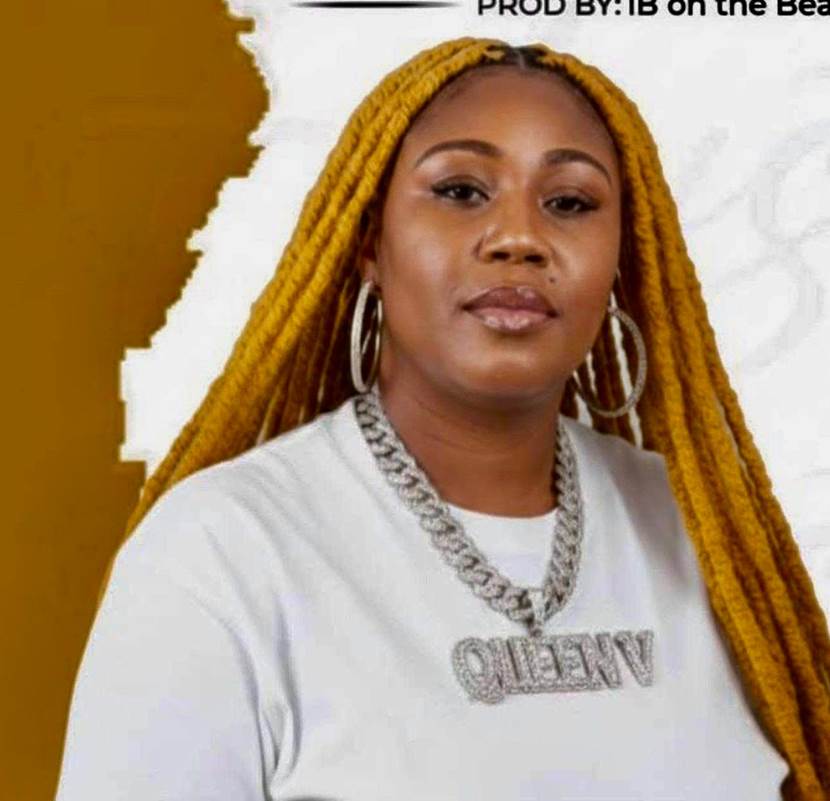
His daughter, Queen V, said Jackson’s alleged statement was “the best thing that happened after 41 years” because, painful as it was, it amounted to an acknowledgment of what the family had long lived with in silence.
She wrote of her mother’s grief, of searching for answers, of being handed her husband’s watch, wallet and wedding ring after his killing, and of a life lived without closure. Her account, like those of Biddle and Konneh, reminds the country that behind every broad debate about reconciliation and justice is a family that kept waiting for someone to tell the truth.
That is what makes this moment bigger than one man’s outburst.
Jackson’s alleged words sounded like bravado. The responses from Biddle and Konneh sounded like Liberia itself answering back.
Biddle answered with memory — the kind that survives in the body long after the event. Konneh answered with mourning and moral urgency. Queen V answered with the grief of a daughter who grew up in the shadow of an unanswered disappearance.
Together, they expose the uncomfortable truth at the center of Liberia’s postwar life: that the country has achieved a measure of peace, but not closure; coexistence, but not accountability; calm, but not justice.
And so a single sentence spoken in anger can still shake the nation because the ground beneath it was never fully settled.
For all the years that have passed, Liberia remains a place where the past is not dead language. It is living memory. It is unfinished business. It is the silence in a family that never got a body back, the fear in a survivor who still remembers the sound of a gun, the sadness in a senator who can list the names of those his family lost and still ask who will answer for them.





Discussion about this post