


Published: April 16, 2026

A recent private screening of World Without Cows: The Pasture Paradox brought together leaders from across the Irish agri-food industry at the Alltech European Headquarters in Dunboyne, Ireland. Left to right: Tom Cronin, executive director, Our Food Roots; Niall Moore, farmer; Dr. Lisa Koep, chief ESG officer, Tirlán; Dr. Laura Burke, former director general, EPA; and Tara McCarthy, vice president of ESG at Alltech.
DUNBOYNE, IRELAND—In the rolling green fields of Ireland, where grass grows generously under a mild climate and steady rainfall, a quiet but powerful story is unfolding, one that sits at the intersection of food security, environmental responsibility, and the future of farming.
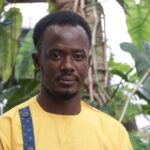
By Nukanah Kollie, IFAJ–Alltech Fellow and Young Leader, [email protected]
This story is brought to life in World Without Cows: The Pasture Paradox, a compelling mini-documentary that places Ireland’s dairy producers at the center of a global conversation about how we feed the world sustainably.
Produced as a companion to the upcoming feature-length documentary World Without Cows, The Pasture Paradox goes beyond statistics and policy debates, offering an intimate look at farmers, scientists, and industry leaders grappling with a difficult question, how can one of the world’s most efficient dairy systems continue to grow without compromising the environment it depends on?
A Global Dairy Leader with Deep Local Roots
Ireland’s dairy sector is often celebrated as a global model. Its pasture-based system, powered largely by grass rather than imported feed, has made it one of the most carbon-efficient milk producers in the world. With approximately 1.6 million dairy cows converting lush grass into milk, the country sustains a €7.3 billion export industry and supports around 60,000 jobs.
In a world where demand for animal protein is expected to rise by 20% per capita by 2050, Ireland is uniquely positioned to contribute responsibly, yet as the documentary reveals, this success comes with mounting pressure.
At a recent private screening held at the Alltech European Headquarters in Dunboyne, key voices from across the agri-food sector gathered to reflect on both the promise and the challenges facing Irish dairy.
Among them was Tara McCarthy, vice president of ESG at Alltech, who emphasized the dual reality confronting the sector.
“Grass-based production, family farming and strong assurance systems are real assets to Irish dairy,” she noted, adding that having a low global footprint does not exempt the sector from local accountability, particularly when it comes to water quality.
The Paradox Beneath the Pasture
At the heart of The Pasture Paradox is a tension that is as scientific as it is human.
Ireland’s fertile soils and long growing season allow farmers to rely heavily on grass, but maintaining this productivity often requires nitrogen inputs, essential for plant growth yet increasingly linked to declining water quality in rivers and streams.
This creates a paradox, a system praised globally for its efficiency is now under scrutiny locally for its environmental impact.
Dr. Lisa Koep, chief ESG officer at Tirlán, highlighted the complexity of navigating this balance.

Dr. Lisa Koep, Chief ESG Officer at Tirlán, speaks on the importance of incentivizing sustainable solutions in Ireland’s dairy sector.
“Incentivizing change is very important for sustainable solutions,” she said, explaining that many of these solutions come with costs and require support from co-ops, policymakers, and governments to become viable for farmers.
Farmers at the Center of Change
For farmer like Niall Moore, the conversation is deeply personal, touching on livelihoods, family traditions, and the future of rural communities.
“Farming does face challenges,” he acknowledged, adding that science and innovation continue to provide solutions, and expressing confidence in the quality of the milk they produce.

Irish dairy farmer Niall Moore reflects the human side of agriculture, where farming is deeply personal, shaping livelihoods, family traditions, and the future of rural communities.
This optimism reflects a broader truth captured in the documentary, farmers are not just part of the problem, they are central to the solution.
Their adaptability, innovation, and willingness to embrace new practices, whether through improved nutrient management, technology, or policy engagement, offer hope for a more sustainable path forward.
Beyond Ireland, A Global Conversation
While The Pasture Paradox is rooted in Ireland, its message resonates far beyond its borders. Countries across Africa, including Liberia, are also navigating the complex relationship between agricultural productivity and environmental sustainability.
For journalists, policymakers, and development practitioners, the film serves as both a mirror and a guide, highlighting the importance of context-specific solutions while encouraging global collaboration.
The broader documentary, World Without Cows, expands this conversation by examining the cultural, economic, and environmental roles cattle play worldwide, from nutrition and livelihoods to climate impact.
A Call for Balanced Storytelling
As someone reporting from a developing country where agriculture remains the backbone of rural life, the story of Ireland’s dairy sector feels both distant and familiar.
It is a reminder that sustainability is not a one-size-fits-all concept, it is a journey shaped by local realities, global demands, and the people working tirelessly to bridge the two.
The Pasture Paradox challenges us to move beyond simplistic narratives, beyond labeling agriculture as either hero or villain, and instead embrace a more nuanced understanding.
Because in the end, the question is not whether we can afford to produce food sustainably, it is whether we can afford not to.





Discussion about this post