
Published: July 3, 2026
MONROVIA – Witness Protection Agency Director Teklo Maxwell Grigsby said Thursday the agency will push amendments to Liberia’s Whistleblower Protection Law that would penalize noncompliant employers and blacklist officials who retaliate against whistleblowers, closing loopholes he said have weakened enforcement since the law took effect in 2022.
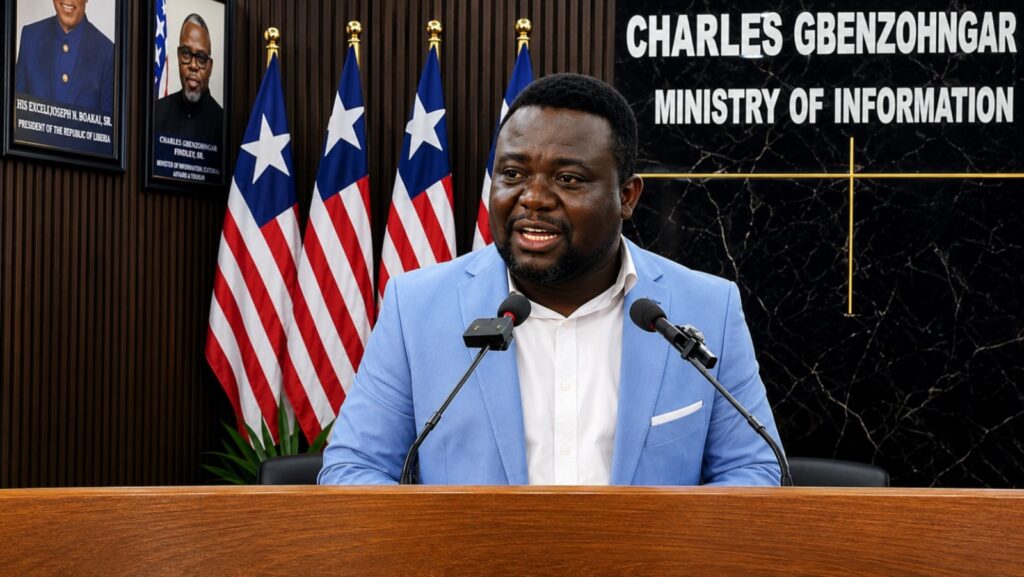
Speaking at the Ministry of Information’s regular press briefing, Grigsby said the agency has completed a technical review of the law and will meet Friday with civil society organizations and journalists at City Hall to discuss the proposed changes.
Grigsby said retaliation against whistleblowers already constitutes a crime under Liberian law, but prosecutions have been rare because the statute lacks enforcement teeth in key areas.
“We rely on people with credible information to come forward. If you provide information and your employer dismisses or punishes you because of that disclosure, it is considered retaliatory action. Under Liberian law, retaliatory action is a crime,” Grigsby said.
He said legal protection applies only when whistleblowers report through authorized channels, including the Witness Protection Agency, the Liberia National Police or the Liberia Anti-Corruption Commission, and not through social media.
“If an official reveals the identity of a whistleblower, that official has also committed a crime,” Grigsby said.
Grigsby identified Section 16 of the law as a central weakness. The provision requires employers to display the Whistleblower Protection Law prominently in the workplace but sets no penalty for employers who fail to comply. The proposed amendments would attach penalties to that requirement for the first time.
The revisions would also toughen sanctions against officials who retaliate against whistleblowers, including a recommendation that offending officials be barred from future government positions.
“We have already received cases in which individuals who testified in major corruption investigations were suspended indefinitely after cooperating with authorities. We consider such actions unlawful,” Grigsby said. “We believe those who punish whistleblowers should not hold public office.”
Grigsby separately raised concern about unauthorized leaks tied to the investigation into the alleged misuse of US$19.2 million, saying such disclosures risk compromising the probe and endangering witnesses. He said the agency has issued a public statement urging President Joseph Nyuma Boakai to address the leaks.
“Some individuals are already under investigation, and we trust that President Boakai will address the matter appropriately. This is a serious issue and must be treated as such,” Grigsby said.
He said witness protection extends beyond courtroom testimony to cover the investigation, pre-trial and trial stages whenever a person’s safety is threatened, citing drug trafficking cases as an example of information the agency evaluates for credibility before extending protection.
Grigsby tied the agency’s mandate to Liberia’s obligations under the United Nations Convention Against Corruption, ratified in 2007, and the United Nations Convention Against Torture, both of which require protections for witnesses and victims in criminal investigations.
“The Witness Protection Agency is an autonomous institution of the Government of Liberia. While we do not prosecute criminal cases, we work closely with the Ministry of Justice, the Liberia Anti-Corruption Commission and other law enforcement agencies to support criminal investigations and prosecutions,” Grigsby said.



Discussion about this post