


Published: July 3, 2026
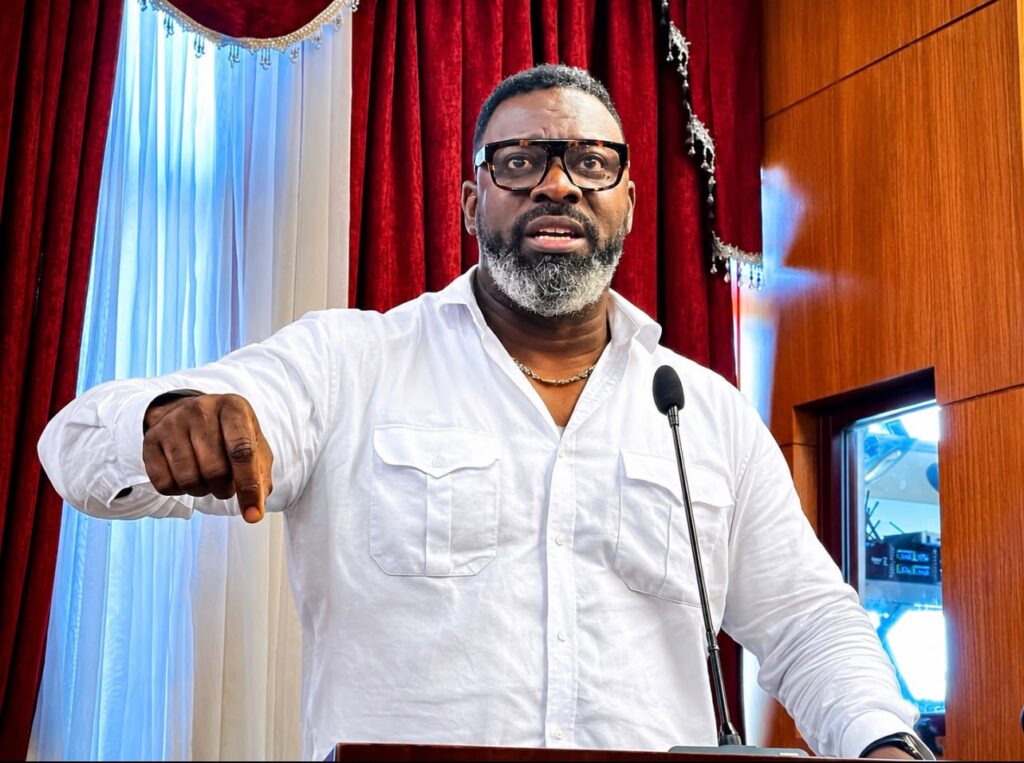
CAPITOL HILL, Monrovia – Monrovia City Mayor John-Charuk Siafa has blamed the capital’s growing sanitation challenges on decades of inadequate waste management infrastructure, telling members of the House of Representatives that Liberia’s only engineered landfill has long exceeded both its intended lifespan and capacity.
Appearing before lawmakers Thursday during a hearing on sanitation, Siafa said the resurgence of waste in parts of Monrovia is the result of structural deficiencies that can no longer be addressed through routine street cleaning alone.
“The issue is scientific,” Siafa told lawmakers. “The Whein Town Landfill, Liberia’s only engineered landfill, was constructed in 2011 with a lifespan of five years. It should have been closed by 2016. We are now in 2026.”
According to the mayor, the Whein Town Landfill was designed to accommodate approximately 378,000 tons of waste but currently contains an estimated 1.22 million tons—more than three times its intended capacity.
He said the cities of Monrovia and Paynesville now generate an estimated 1,250 tons of waste every day, while existing transfer stations can accommodate only 200 tons, leaving the system overwhelmed.
Using a family analogy to illustrate the challenge, Siafa said, “If you have a family of 1,000 children and you build a house with 200 rooms, the first 200 will have somewhere to sleep. The other 800 will remain outside. That is the situation we face with waste.”
While acknowledging improvements in street cleaning, Siafa said the inability to properly process and dispose of collected waste remains the city’s greatest obstacle.
“There’s visible improvement in the day-to-day cleanliness of the City of Monrovia,” Siafa told lawmakers. “We’ve been cleaning the streets day and night, but we have a challenge to host the waste and to process the waste.”
Siafa disclosed that the Monrovia City Corporation and the Paynesville City Corporation have signed a public-private partnership framework with private waste collection companies that shifts door-to-door garbage collection to the private sector while government focuses on regulation and oversight.
Under the arrangement, both cities have been divided into collection zones based on electoral districts, with multiple waste management companies assigned to each district to promote competition. The agreement also requires each company to recruit at least 25 percent of its workforce from within the district it serves.
The initiative is expected to be launched this month following an ongoing public awareness campaign.
However, the mayor warned that expanding waste collection without increasing disposal capacity would only worsen pressure on existing facilities.
He said private waste collectors will pay an average of US$50 per ton to dispose of waste at transfer stations, while potential investors have estimated that waste processing and recycling projects would require investments ranging from US$75 million to US$100 million, with many seeking long-term concession agreements.
To address the financing gap, Siafa urged lawmakers to establish a dedicated National Sanitation Fund, similar to Liberia’s Road Fund, to provide sustainable financing for waste management and sanitation infrastructure.
He proposed introducing modest environmental levies on imported plastics, lubricants and other products that generate waste, while adopting the internationally recognized “polluter pays” principle to ensure those producing more waste contribute more toward the cost of disposal.
Siafa argued that a dedicated sanitation fund would also enable the government to subsidize waste collection services in low-income communities and public markets, where residents and vendors often struggle to pay collection fees.
“Waste is generated every single day,” the mayor said. “There has to be sustainable funding that allows us to invest in sanitation instead of depending solely on annual budget appropriations.”
He noted that Monrovia alone spends an average of US$12,000 each week managing waste, underscoring the need for long-term investment to prevent the sanitation crisis from worsening.
The mayor’s appearance before lawmakers came amid continued concerns over recurring waste accumulation in parts of Monrovia, despite ongoing cleanup efforts by city authorities. While acknowledging visible improvements in street cleanliness, Siafa maintained that the city’s sanitation challenges cannot be resolved without significant investment in modern waste disposal and processing infrastructure.






Discussion about this post