


Published: October 14, 2026
MONTSERRADO COUNTY, Liberia — The Government of Liberia has announced plans to renovate, reconstruct and expand the historic June L. Moore Public School in Gbengbar’s Town along the Robertsfield Highway, as Vice President Jeremiah Kpan Koung Sr. commits to addressing longstanding challenges involving education, road infrastructure and access to safe drinking water in the community.
The proposed intervention, expected to receive support through the World Bank-backed Excellence in Learning in Liberia (EXCEL) project, follows growing concerns over overcrowding and inadequate infrastructure at the institution, which has served the community for more than five decades.
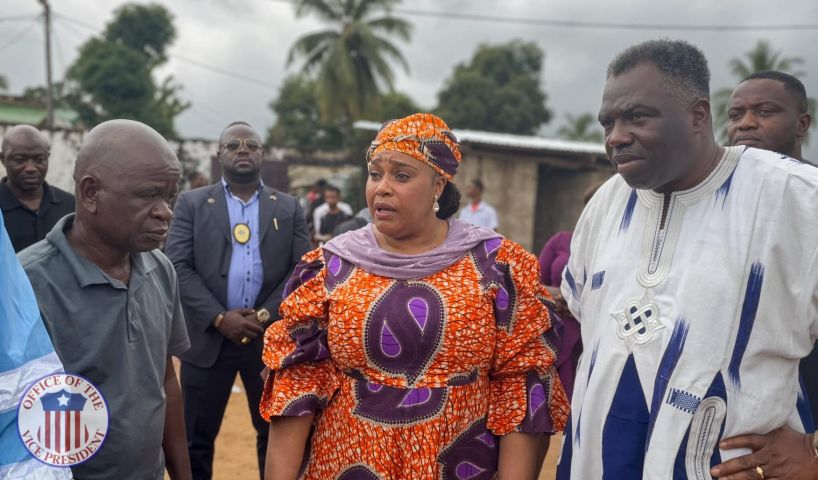
Vice President Koung, accompanied by Education Minister Dr. Jaso Marley Jallah, visited the school during the week to assess its deteriorating facilities and engage residents on practical measures to improve teaching and learning conditions.

Students of June L. Moore Public School gathered to welcome VP Jeremiah Kpan Koung and others
Established in 1969 by Baptist missionaries, June L. Moore Public School is currently operated by the Government of Liberia. However, increasing enrollment has placed considerable pressure on its existing facilities, limiting the institution’s ability to accommodate additional students and provide a conducive learning environment.
During a community engagement Wednesday, Oct. 14, Koung and Jallah met with traditional chiefs, elders, youths and other residents of Gbengbar’s Town to discuss the school’s infrastructure needs and the government’s proposed intervention.
The vice president disclosed that the government intends to undertake construction and renovation works through the World Bank-supported EXCEL project, with additional assistance expected from philanthropists to expand the school’s facilities and provide essential educational equipment.
According to Koung, the intervention is intended to address the institution’s capacity challenges while improving access to quality education for children in Gbengbar’s Town and surrounding communities.
As part of the proposed arrangement, community members have been asked to formally turn over the school property to the government to allow the state to assume full possession and authority over its development.
The request is expected to facilitate the planned reconstruction and expansion, although details of the proposed transfer and implementation timeline were not disclosed.
The planned investment represents a significant development for the institution, which has operated since 1969 and continues to serve an expanding student population.
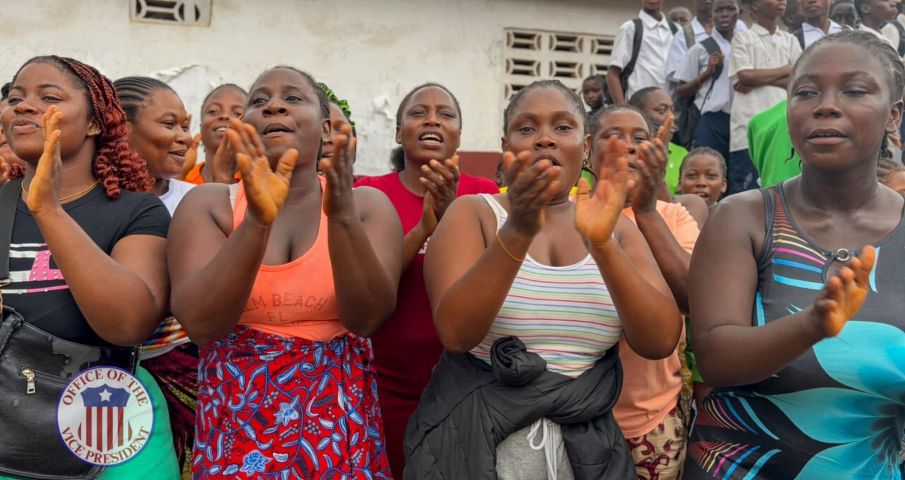
Jubilating parents welcome VP Koung’s intervention
Beyond the school’s infrastructure challenges, residents used the meeting to draw the government’s attention to the poor condition of roads connecting Gbengbar’s Town to surrounding communities.
They appealed for immediate intervention, emphasizing the importance of improved road connectivity to transportation, economic activities and access to essential public services.
Responding, Vice President Koung assured residents that the Ministry of Public Works would undertake rehabilitation of the community’s roads during the upcoming dry season.
He explained that the government had initially concentrated its road development efforts on major highways, particularly in southeastern Liberia and other areas where deteriorating road conditions had disrupted transportation.
“We could not start on the road in this community when major roads in the southeast and other areas were cut off and impassable. Now that these roads are in better condition, we can focus our attention on this road and roads in other communities,” the Vice President stated.
Koung maintained that improvements to major road corridors would allow the government to extend attention to smaller community roads, including those serving Gbengbar’s Town.
The vice president also announced plans to address the community’s water supply challenges, disclosing that the Liberia Water and Sewer Corporation (LWSC) would conduct an assessment to determine the feasibility and requirements for extending pipe-borne water services to residents.
The proposed assessment will examine the community’s water infrastructure needs and identify measures necessary to improve access to safe and reliable drinking water.
Access to clean water remains an important concern for communities where inadequate infrastructure can affect public health, sanitation and household welfare.
The commitments announced during the engagement cover three essential areas of community development: education, transportation and water supply.


Discussion about this post