

Published: April 24, 2026
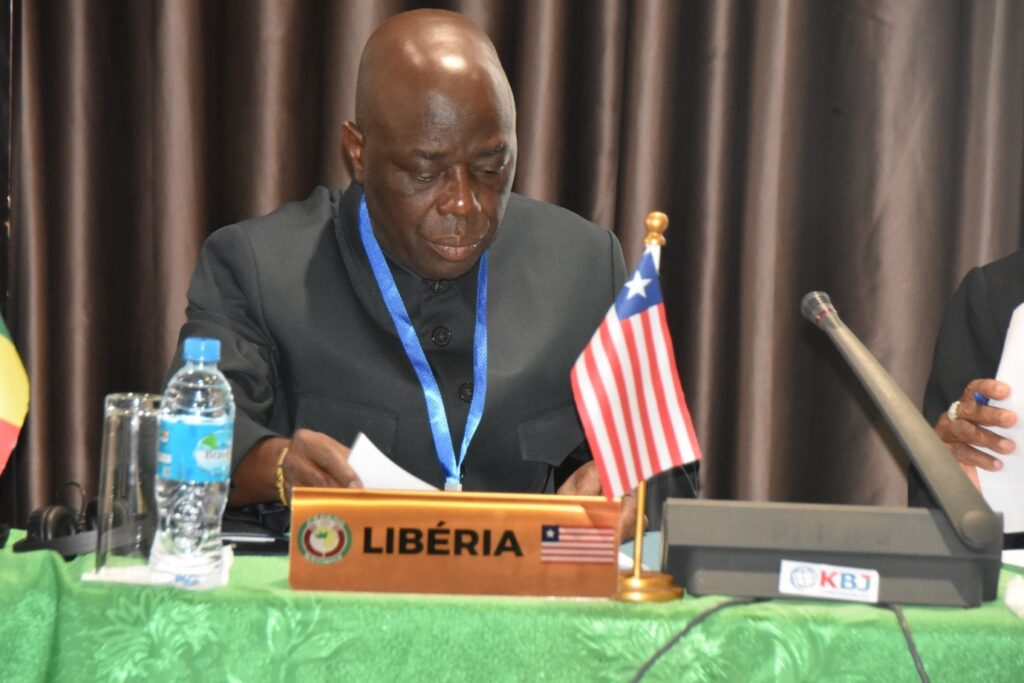
FREETOWN, Sierra Leone — Liberia’s Chief Justice Yamie Quiqui Gbeisay Sr. has called on ECOWAS heads of state to put binding enforcement mechanisms in place for the regional court’s judgments, warning that the community court’s inability to compel compliance is undermining the rule of law across West Africa.
Gbeisay made the call April 23 during a courtesy visit by ECOWAS Chief Justices on Sierra Leone President Julius Maada Bio, who currently chairs the Authority of ECOWAS Heads of State and Government. The visit came on the sidelines of the ECOWAS Statutory Meeting in Freetown, scheduled to run from April 20 to 24.
The Liberian Chief Justice acknowledged that the ECOWAS Community Court has made significant gains since its establishment, particularly in advancing human rights protections across the region. But he said those gains are being eroded by a fundamental structural weakness — the court’s lack of enforcement authority over its own rulings.
“The essence of a court is to render judgment, and the essence of judgment is enforcement,” Gbeisay said. “When judgment is enforced, justice is served.”
He pressed Bio directly, urging him to use his influence as chairman of the regional authority to establish concrete mechanisms that would compel member states to comply with court rulings. Gbeisay was pointed in his assessment of what continued inaction means for the institution. “A court without authority to enforce its judgment is a waste of time, resources, and energy,” he said.
The ECOWAS Community Court of Justice, established as an organ of the Economic Community of West African States, has jurisdiction over human rights cases and disputes involving member states and community institutions. While it has issued rulings on significant cases involving freedom of expression, arbitrary detention and other rights violations, the absence of a binding enforcement mechanism has long been identified by legal experts and civil society groups as its most critical weakness. Member states have in several instances ignored or delayed compliance with court orders without facing meaningful consequences.
By raising the issue directly with the ECOWAS chair during a statutory meeting of the region’s top judicial officers, Gbeisay elevated the enforcement question to the highest political level available, signaling that the judiciary across the region views the gap not as a procedural inconvenience but as a threat to the court’s legitimacy and long-term viability.
The Freetown meeting brings together chief justices and senior judicial officials from across the 15-member bloc to address legal and institutional matters affecting the regional community.





Discussion about this post