


Published: June 19, 2026
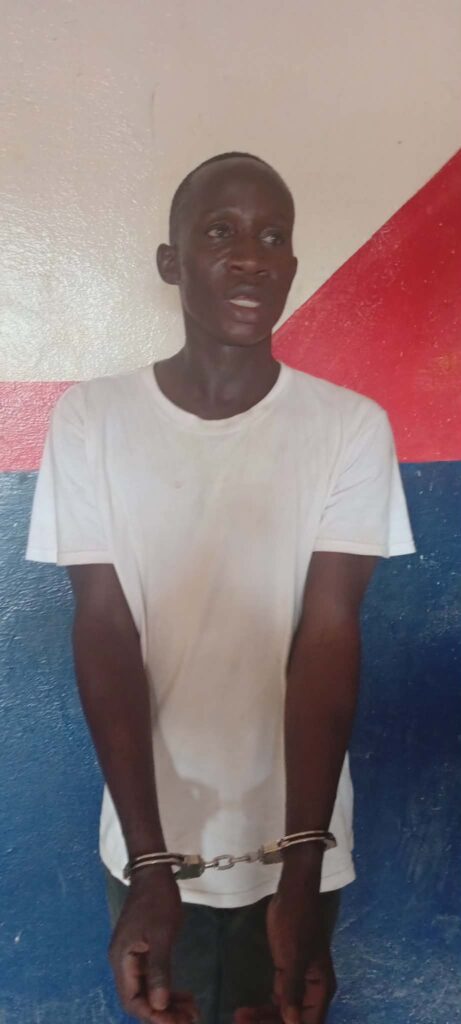
GBARNGA, Bong County – A man accused of posing as a senior Armed Forces of Liberia officer to interfere with a police investigation in Gbarnga has been charged with impersonation and forwarded to court, in a case authorities say underscores a wider threat of identity fraud to public trust and the rule of law.
The Liberia National Police in Bong County charged Sampson Sumo after investigators alleged that he falsely presented himself as a senior AFL officer and tried to obstruct an active criminal investigation. The allegations have not been tested in court.
Authorities say Sumo’s arrest followed an incident in which he allegedly seized a commercial motorbike before releasing it after repeated appeals. Police said he later appeared at Depot One in Gbarnga, where officers were investigating a theft of property case, and attempted to influence the proceedings by claiming to be an AFL officer.
Bong County Police Commander ACP William Johnson said officers asked Sumo for official military identification to verify his status. Instead, police said, he produced a photograph on his mobile phone showing himself in military attire.
“The officers demanded proper identification, but he could only present a photograph of himself in military attire,” Johnson told reporters during a press conference.
Police contacted AFL authorities stationed in Gbarnga to verify the claim. Military officials confirmed that Sumo was not a member of the Armed Forces, leading to his arrest, investigators said. Authorities further alleged that Sumo had been seen on multiple occasions in rural communities around Gbarnga wearing military uniforms and presenting himself as a senior military official. The matter has been forwarded to the Ninth Judicial Circuit Court in Bong County for prosecution.
As the legal process unfolds, legal experts and community leaders say the case is a reminder of the damage impersonation can inflict on communities, institutions and public confidence in Liberia and beyond.
One of the most significant consequences, they say, is the erosion of public trust. Military personnel, police officers, judges, doctors and other public servants derive their authority from the trust citizens place in them, and people who encounter someone in an official uniform often comply without questioning the person’s legitimacy. When impostors misuse uniforms or titles, the public grows skeptical of legitimate officials.
Community activist Joseph Kollie of Gbarnga said impersonation creates confusion and fear among ordinary citizens.
“When people discover that someone has been pretending to be a soldier or police officer, they begin to question whether they can trust anyone in uniform,” Kollie said. “That weakens the relationship between institutions and the communities they serve.”
The allegation that Sumo tried to intervene in an active investigation points to another concern: interference with the administration of justice. Criminal investigations rely on lawful procedures and the authority of designated officers, and legal observers note that impersonation often serves as a tool for intimidation. An individual falsely claiming to be a military officer or government official may pressure citizens into surrendering property, abandoning complaints or complying with unlawful demands, sometimes leaving victims reluctant to report abuses because they believe the impostor genuinely holds authority.
Impersonation also carries financial and security costs. Fraudsters across Liberia have posed as government officials, immigration officers, aid workers and military personnel to obtain money, goods or services, and the spread of social media has widened their reach through fake profiles, forged documents and manipulated photographs. Military impersonation is particularly sensitive, security experts say, because individuals falsely claiming military status may seek access to restricted areas, sensitive information or vulnerable populations, and the misuse of uniforms can stoke fear in a country still recovering from civil conflict.
To curb the practice, authorities and analysts point to stronger identification and verification systems, tighter control over the distribution and disposal of uniforms and insignia, public awareness campaigns, and prompt investigation of suspected cases. Digital verification tools and centralized personnel databases can help confirm whether a person belongs to an institution, experts say, but only alongside public education and effective enforcement.
For now, the allegations against Sumo remain before the court, where he is presumed innocent unless and until proven guilty. The Ninth Judicial Circuit Court will determine whether the evidence supports the impersonation charge.






Discussion about this post