


Published: July 13, 2026
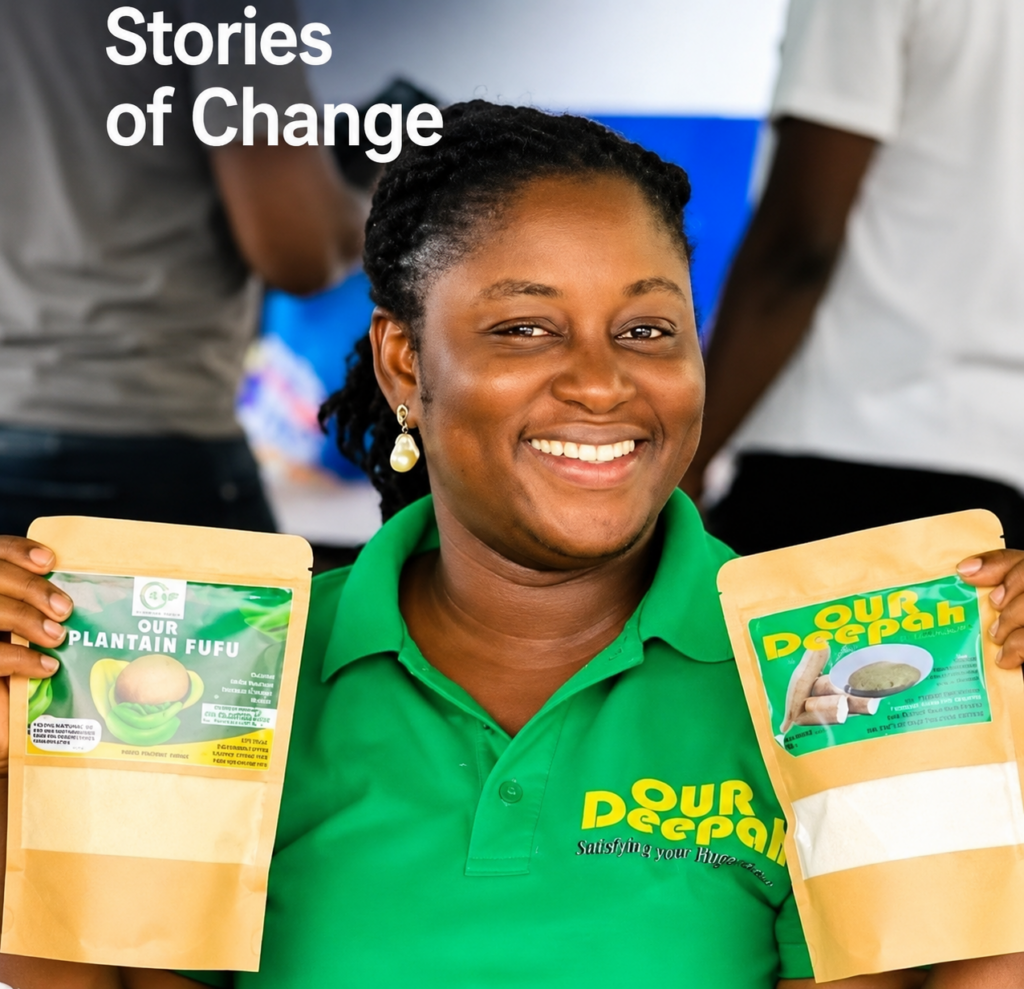
For years, Estelle Konokpah Liberty stood behind the microphone, helping tell Liberia’s stories.
She rose through journalism, understanding that stories had the power to shape society, using her platform not just to report events but to surface the issues that mattered to ordinary communities. That dedication carried her all the way to the top of the profession: Director General of the Liberia Broadcasting System, custodian of the country’s national broadcaster.
On paper, she had arrived. A first degree in public administration, a master’s in international relations, the corner office at LBS. But while she was telling Liberia’s story through the media, another story was quietly taking shape within her — one rooted in soil, in value chains, in the conviction that Liberians should produce what they consume.
Ask her what pulled her out of the studio and into agribusiness, and she answers with a single word.
“Change.”
Then she fills it in. “The desire to be part of the change that sees Liberians taking hold of their economy, but most importantly, producing what we grow here, adding value and marketing it to the world led me to taking the first step.”
The transition was not a rejection of her past. It was an extension of the same instinct that had guided her career: serving people and contributing to national development. The journalist reported problems. The entrepreneur would build answers.
What her hands are building
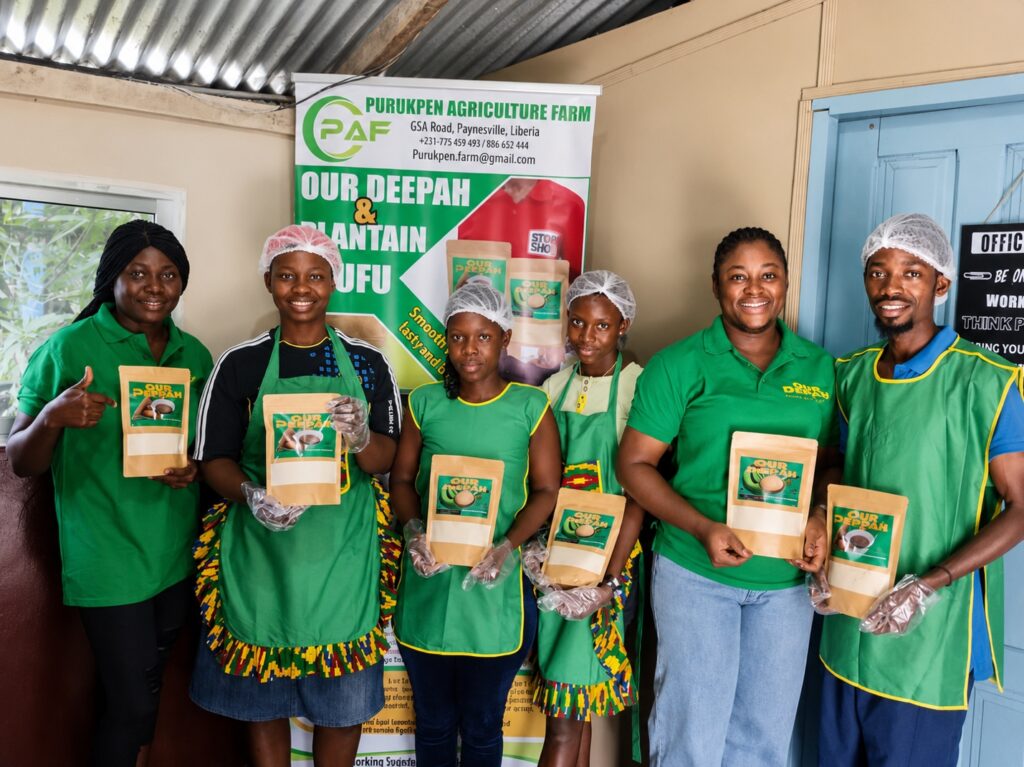
Today, Estelle describes herself as a Liberian Christian woman, journalist by profession, agropreneur, farmer and local processor — and a mother of one biologically “and to so many others.” Her company processes green plantain fufu powder and cassava deepah from locally sourced crops. Purely organic and tasty, her clients tell her — among the best you can trust in Liberia.
The business rests on a simple but powerful belief: Liberia already has the resources to create opportunity for its people, if those resources are properly developed.
It starts with where she buys. Her raw materials come mainly from local farmers, predominantly women — smallholders who often struggle to find buyers before their harvest spoils. By purchasing from them, her business cuts agricultural waste while giving those women a dependable market. “By buying from them, we help reduce products wastage at the same time empowering a whole community,” she says.
And it continues with who she hires. In the communities where she operates, the company brings on young women through short- and long-term contracts, job creation and capacity-building. For Estelle, entrepreneurship is not only about owning a business. It is about opening doors.
“I am inspired by our women farmers and processors whose work today is helping to put quality food on the tables of our families while at the same time growing the economy,” she says.

Learning how to stand
The numbers suggest the bet is paying off. Three years in, her client base has grown by 50 to 60 percent — a measure of rising confidence in locally processed food. The venture has even seeded a second: “From one business, we have opened another,” she says. “Discipline is the hallmark.”
Yet she refuses to declare victory. “We are still learning how to stand,” she says. “We still have a lot of work to be done.”
The hardest part, she admits, was simply beginning. “The biggest challenge was getting the business started. But once we did, with good financial discipline, dedication and teamwork, the business is growing — something as a team leader that makes me proud.”
Setbacks, in her telling, are raw material like everything else. “I consider challenges as growth, because when trying to deal with one, it gives the team a new understanding that elevates the business to another level.”
‘There is no journey without them’
Ask what has carried her through, and again the answer comes in one word: grace.
Behind the grace stands a family she calls her blessing. “There is no journey without them,” she says. “From conceiving an idea to long nights’ discussions, consultations and prayers, everything I am today is because I’m surrounded by a wonderful supportive family and close associates that have and will always be there.”
Her 17-year-old son has his role to play in the enterprise. Her sisters and her father are the emotional scaffolding she leans on. “To succeed in business you must have a very supportive family,” she says, “or you will break down.”
She has also learned that the entrepreneur herself is an asset that needs maintenance. “Checking on your health, taking vacation, and making time for friends can be challenging, but very important to do so. You must have a relaxed mind to think strategically. It’s part of business growth.”
Eyes on the ball
What keeps her going is the vision: to become one of Liberia’s leading processors in the agribusiness sector, expanding beyond her current base into other counties and, eventually, across West Africa. “Keeping my eyes on the ball,” she calls it.
“In the next five to 10 years, I want to build a sustainable business that will empower more young people between the ages of 18 and 25,” she says. “I want to serve as a model for upcoming young businesswomen and build a family legacy that will long stand even after my hands can’t work anymore.”
To young Liberians waiting for capital before they begin, she offers the lesson of her own first step.
“You don’t need to have a million dollars to start a business. Make up your mind, ask God for wisdom, take the first step, be financially disciplined, be prepared to take risks, build a good network, humble yourself, and leave the rest to our Creator.”
“Owning my own business while empowering others — I couldn’t be more proud at what my hands are building,” she says.
From the newsroom where she once reported the dreams and struggles of others, Estelle Konokpah Liberty is now living a story of her own. A story of transformation. A story of service. A story proving that the greatest stories are not only the ones we tell — they are the ones we build.






Discussion about this post