


Published: July 1, 2026
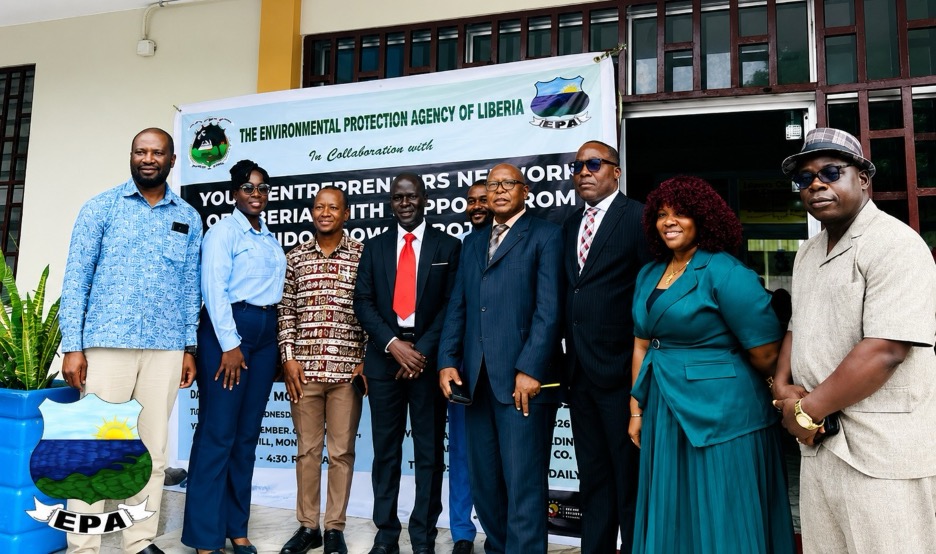
MONROVIA – Environmental Protection Agency (EPA) Executive Director Dr. Emmanuel King Urey Yarkpawolo has urged Liberia’s micro, small and medium enterprises (MSMEs) to move beyond viewing climate change as an environmental issue, emphasizing that the country’s climate commitments must be transformed into jobs, businesses and resilient livelihoods.
Speaking Tuesday at the Liberia Chamber of Commerce during the opening of a four-day workshop under the theme, “Building Competitive, Climate-Resilient and Inclusive MSMEs in Liberia,” Dr. Yarkpawolo said climate action presents significant economic opportunities that Liberian businesses cannot afford to ignore.
He said Liberia’s Nationally Determined Contribution (NDC) is not merely an international reporting obligation but a practical investment framework capable of driving innovation, employment and community resilience.
“Climate commitments cannot stay on paper. They must become jobs, enterprises and resilient livelihoods,” Dr. Yarkpawolo said.
He warned that if MSMEs fail to embrace the country’s climate agenda, Liberia risks missing an opportunity to convert climate policy into tangible economic value.
According to him, climate change is already affecting business operations across the country, with floods damaging roads and markets, coastal erosion threatening homes and investments, erratic rainfall disrupting agriculture and trade, rising energy costs reducing competitiveness, and poor waste management undermining public health and productivity.
Describing MSMEs as the backbone of Liberia’s economy, Dr. Yarkpawolo said they create jobs, support families, provide essential services and drive local entrepreneurship.
However, he acknowledged that many small businesses face significant challenges, including limited access to affordable financing, insurance, modern technology, reliable climate information and resilient infrastructure.
Despite those constraints, he said MSMEs remain indispensable partners in delivering climate solutions nationwide.
Referring to Liberia’s Nationally Determined Contribution (NDC 3.0), he disclosed that the country aims to reduce economy-wide greenhouse gas emissions by 64 percent by 2035.
According to him, 10 percent of that target will be achieved through domestic efforts, while the remaining 54 percent depends on international financing, technology transfer, capacity building and stronger partnerships.
Dr. Yarkpawolo stressed that government alone cannot achieve the target, calling on the private sector, financial institutions, cooperatives, municipalities, farmers, transport operators, waste collectors, recyclers, renewable energy companies, and women- and youth-led enterprises to play active roles.
The EPA boss outlined several sectors where businesses can capitalize on climate-smart investments, including renewable energy, climate-smart agriculture, waste management, forestry, water and sanitation.
He cited opportunities in solar installation and maintenance, mini-grids, clean cooking technologies, climate-smart farming, irrigation systems, organic fertilizer production, food processing, recycling, composting, tree nurseries, ecosystem restoration, flood-resilient sanitation and solar-powered water systems.
He emphasized that these are viable commercial opportunities capable of reducing business costs, creating employment, expanding markets and helping Liberia achieve its climate commitments.
Dr. Yarkpawolo also encouraged businesses to improve documentation and data collection by tracking energy savings, waste management, emissions reductions, jobs created and services delivered.
“In climate finance, what cannot be measured is rarely financed,” he stressed.
He reaffirmed the EPA’s commitment to working with the Liberia Chamber of Commerce, government institutions, financial organizations, development partners and the private sector to ensure MSMEs fully participate in implementing Liberia’s climate agenda through improved technical support, affordable financing, clean technologies and expanded markets for green products.
The EPA Executive Director subsequently declared the four-day workshop on Aligning MSME Business Practices with Liberia’s National Climate Goals officially open.
Earlier, Arthur R. M. Becker, Director of the EPA’s Department of Multilateral Environmental Agreements, announced that the EPA, in partnership with the United Nations Industrial Development Organization (UNIDO) GROW-2 Project and the Youth Entrepreneur Network of Liberia (YENL), will conduct additional two-day workshops in Montserrado and Grand Bassa counties to equip MSMEs with the knowledge and tools needed to align their businesses with Liberia’s Nationally Determined Contributions while improving productivity, competitiveness and long-term sustainability.
Also speaking, Dr. Charles K. Sackey, Chief Technical Advisor of UNIDO, thanked the EPA for the collaboration and noted that the four-day training is funded by UNIDO.
He said the initiative recognizes the realities MSMEs face in building climate resilience and seeks to help businesses grow beyond small-scale operations through practical solutions and stronger collaboration.
“The EPA has provided this session to guide, discuss and facilitate solutions. This engagement is important for strengthening and improving our businesses,” Dr. Sackey said.






Discussion about this post