


Published: June 10, 2026
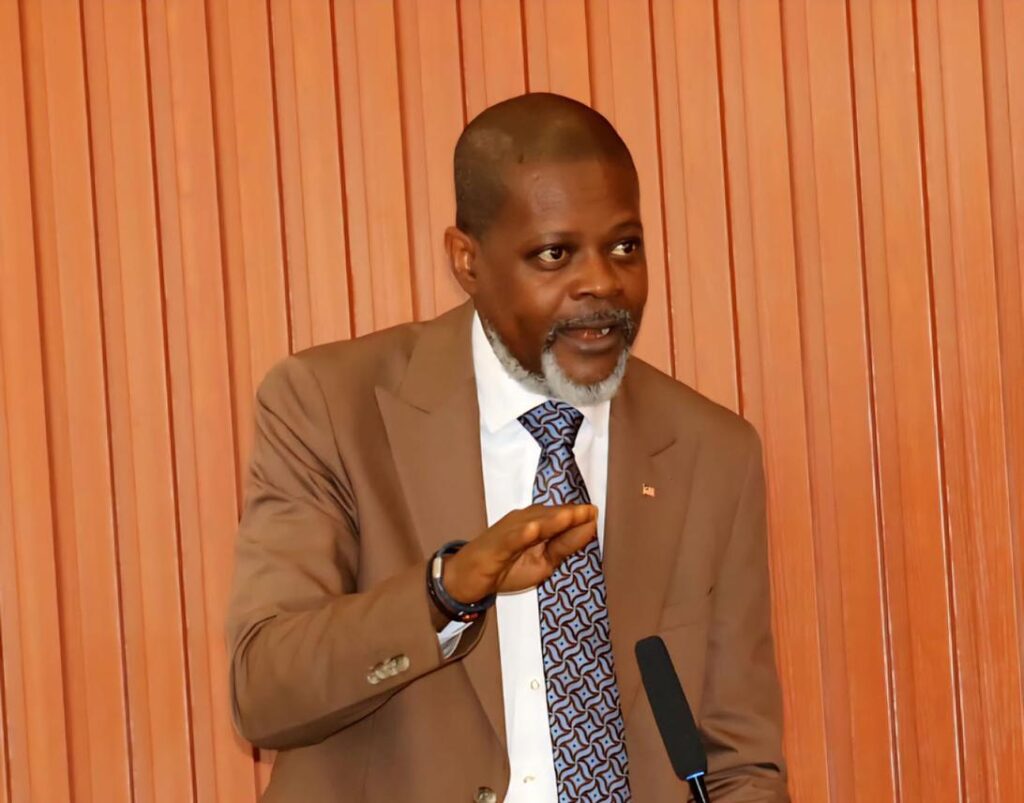
MONROVIA — Montserrado County Sen. Abraham Darius Dillon has warned officials in the Boakai administration not to let the 2029 presidential race consume them, citing former President George Weah’s defeat as proof that governments lose public trust when ambition outpaces delivery.
Speaking on ELBC on Monday, Dillon said the Coalition for Democratic Change misread its own staying power. “By the time President Weah entered power in 2018, they started giving us 12 years, 24 years, 36 years. Where are they today?” he asked. “Once you are in office, don’t focus on your next election. Focus on your checklist of things to achieve for the country and the people.”
He drew a line between the jobs of government and opposition. “Opposition parties will always talk about elections. Their business is to seek power. The government’s responsibility is to work and deliver results,” he said, adding that performance, not rhetoric, decides the next vote.
Dillon pressed the point that conduct shapes public behavior as much as policy does. “Liberians can follow their leader,” he said. “Leadership is by example. When leaders demonstrate discipline, commitment, and responsibility, people tend to follow.” He cited his own refusal to abuse official traffic privileges. “I stay in traffic like everybody else. I don’t use the opposite lane. If I’m late, I’m late. If I want to beat traffic, I wake up earlier,” he said. “Every time one of us breaks the law and uses privileges unnecessarily, we weaken respect for the law among ordinary people.”
The senator endorsed President Joseph Nyuma Boakai’s recent line that “Liberia smells sweet,” while stopping short of calling the work done. “I am quoting the President in agreement with the President that Liberia smells sweet,” he said, pointing to gains in governance, the country’s image and anti-drug enforcement. “When countries are being restricted from receiving visas, Liberia is not among them. Drug traffickers are becoming more fearful because law enforcement is active. The country is improving,” he argued. “Does that mean everything is okay? No. There is still a lot of work to do. But we should also acknowledge progress where progress is being made.”
On the economy, Dillon called for a full review of mining and concession agreements, arguing the terms reflect a weaker bargaining position that no longer applies. “At the time those agreements were negotiated, Liberia was emerging from war. Investors had concerns about security and stability,” he said. “Twenty-six years later, we cannot continue operating under the same assumptions. We own the gold. We own the diamonds. We should be negotiating agreements that reflect the true value of our resources.”
On the courts, he defended judicial independence while conceding delays. “Justice should be what the law says, not who the law says,” he said, rejecting the idea that only the wealthy or connected win in court. “Many ordinary Liberians go to court and receive justice every day. The problem is that those cases don’t make headlines.” He called for reform of the rules governing writs of prohibition and appeals to the Supreme Court so that “no citizen should be denied access to justice because of procedural ambiguities.”
Dillon also backed constitutional reform, saying parts of the 1986 Constitution no longer fit the country’s circumstances. “We have articles in our Constitution that refer to situations and circumstances that no longer exist,” he said, urging a serious national conversation on amendments.






Discussion about this post