


Published: June 15, 2026
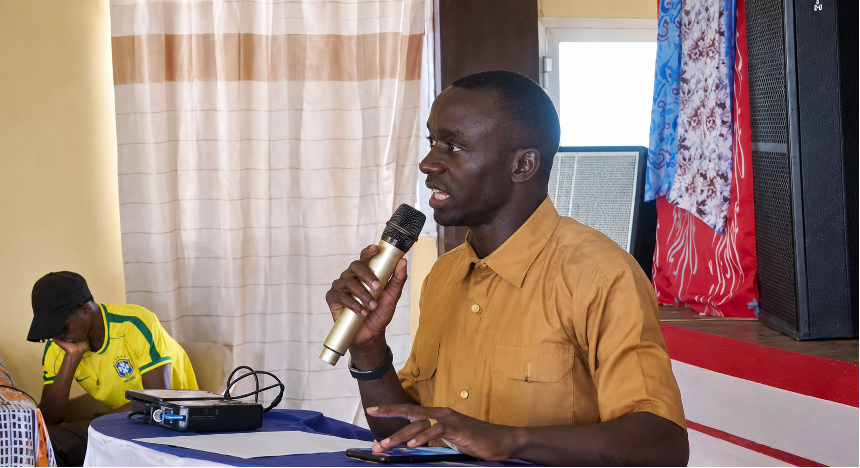
GBARNGA, Bong County — Decades of exporting gold, diamonds and iron ore worth billions of dollars have failed to lift most Liberians out of poverty, and only agriculture can change that, Deputy Agriculture Minister Moses Gbanyan told a youth forum, delivering one of the bluntest public critiques of the country’s extractive economy by a sitting government official.
Gbanyan, who oversees regional development, research and extension at the Ministry of Agriculture, spoke at a one-day Youth Engagement Forum organized by the ministry in Gbarnga for young people from Bong, Nimba and Lofa counties. He argued that mineral wealth has enriched companies and investors while bypassing the communities that live on top of it, and said farming remains the country’s strongest path to jobs, household income and food security.
“Nothing can change this country besides agriculture,” Gbanyan said. “We have had all the diamonds, the gold, the iron ore, but it has never changed this country. If you produce as a young farmer or older farmer, you are empowering yourselves because you are going to send your children to school and live a better life compared to iron ore, gold and rubber that leave the country and are transformed into different products before being brought back for us to buy.”
His remarks land at a moment when Liberia’s returns from its own natural resources are under intensifying scrutiny. A March 2026 assessment commissioned by Forest Trends found that importing countries recorded US$7.8 billion in Liberian mineral imports between 2007 and 2023, about US$2.7 billion more than Liberia officially reported over the same period. The assessment flagged concerns about possible underreporting, revenue leakages and weak oversight across the mining sector, and found that many host communities have not received the full benefits promised under concession agreements.
The gold sector has drawn particular attention. An April 2026 analysis by The Liberian Investigator reported that Bea Mountain Mining Corporation in Grand Cape Mount County exported approximately 12,146 kilograms of gold valued at more than US$653 million in fiscal year 2023, while government revenues attributed to the company for the same period came to about US$33.47 million. That gap has fueled debate among civil society groups and policy analysts over whether Liberia’s concession agreements deliver adequate returns.
Bea Mountain has also faced environmental pressure. Investigations and official records cited by The Liberian Investigator and the Associated Press documented multiple incidents between 2016 and 2023 involving cyanide, arsenic and copper contamination linked to the company’s operations. Reports indicated that affected communities experienced fish deaths, water pollution and other environmental damage, prompting calls for stronger regulatory oversight and accountability. Government agencies have conducted compliance reviews of the company’s production and export procedures, but public debate over transparency and environmental protection continues.
Against that backdrop, Gbanyan framed agriculture as a more inclusive development model because it places income and productive assets directly in the hands of Liberian families rather than routing wealth through foreign concessionaires. He said investments in farming create opportunities that stay within communities, helping households pay for education and health care while feeding national economic growth.
“As young people, if you engage in agriculture, you are investing in yourselves and your future,” he told participants.
Gbanyan called for greater youth participation and investment in farming, saying the future of the sector rests on young Liberians. The forum was part of the Ministry of Agriculture’s broader push to draw young people into farming and agribusiness as the government pursues economic diversification and rural development.






Discussion about this post