

Published: November 16, 2026
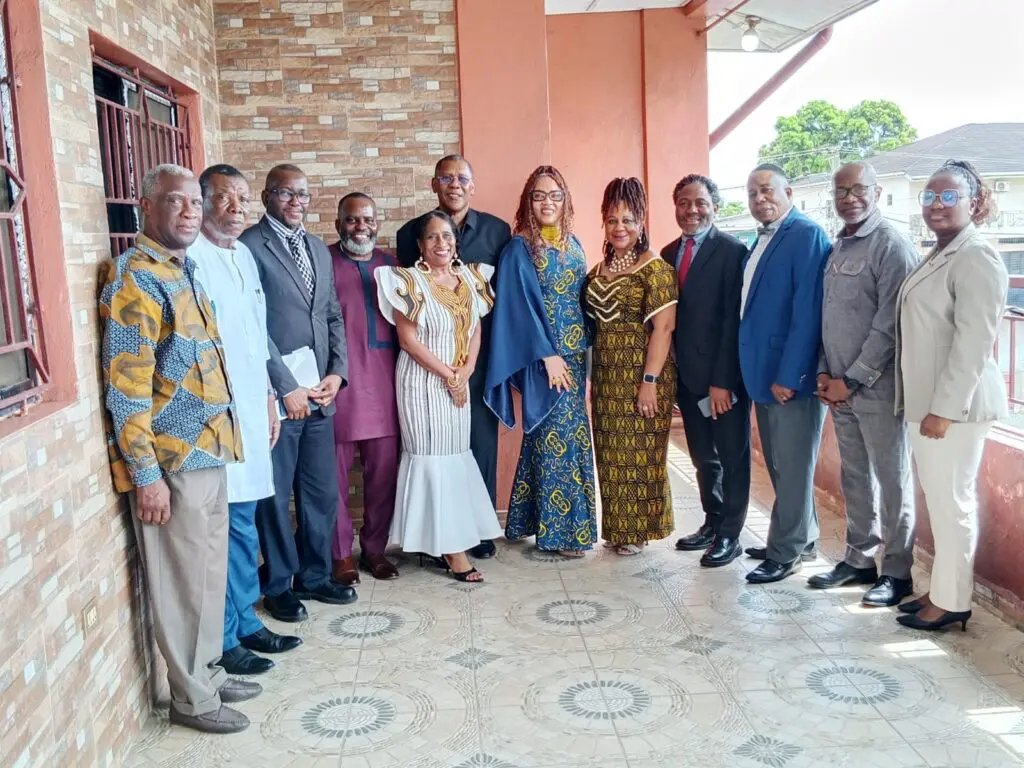
MONROVIA — Cuttington University has hosted its inaugural Academic Intellectual Forum and Panel Discussion, bringing together diplomats, government officials, academics and students to examine Liberia’s eight-decade relationship with the United Nations and its contributions to peace, governance and national development.
The forum, held Thursday, Nov. 12, 2026, at the university’s Old Road campus, was organized by the Graduate School of Global Affairs and Policy in collaboration with the Leadership Institute under the theme, “The United Nations at 81: Liberia-UN Paradigm.”
The event brought together distinguished panelists, students and members of the public to assess the historical relationship between Liberia and the United Nations, including the organization’s involvement in peacekeeping, humanitarian assistance, postwar reconstruction and democratic governance.
Speaking at the program, Cuttington University President Dr. Romelle A. Horton described Liberia’s relationship with the United Nations as longstanding, noting that the country was among the organization’s founding members in 1945.
Horton said the partnership has evolved through periods of cooperation, political instability, humanitarian emergencies and national recovery, with the United Nations playing a role in Liberia’s peacebuilding and development efforts.
“Our nation’s relationship with the United Nations has been shaped by periods of cooperation, national adversity, recovery, and renewed commitment to peace and development,” she said.
The Cuttington University president emphasized that discussions surrounding Liberia’s engagement with the international organization should extend beyond historical achievements to include an assessment of existing challenges, lessons learned and opportunities for strengthening future cooperation.
She also underscored the responsibility of universities to encourage independent research, critical thinking and informed discussions on national and international issues.
“Universities have a special responsibility in this regard. Institutions of higher learning must serve not merely as centers for the transmission of knowledge but also as platforms for independent inquiry, critical thinking, innovative research, and informed national dialogue. Cuttington University remains committed to this responsibility,” Horton stated.
According to her, the university’s Graduate School of Global Affairs and Policy is intended to strengthen academic contributions to national policy discussions while preparing professionals to address challenges in diplomacy, governance, international relations and sustainable development.
Horton expressed hope that the inaugural forum would generate recommendations and encourage collaboration aimed at improving Liberia’s engagement with international partners.
For his part, Ambassador M. Nathaniel Barnes, dean of Cuttington University’s Graduate School of Global Affairs and Policy, said the initiative reflects the institution’s commitment to promoting intellectual discourse on policy issues affecting Liberia, Africa and the international community.
Barnes, a former Liberian finance minister, explained that the forum was established to provide a platform for academics, policymakers and professionals to exchange ideas and examine issues affecting national development and international cooperation.
He described the inaugural theme, “The United Nations-Liberia Paradigm: Eight Decades of Partnership, Peace, Development and Diplomacy,” as an opportunity to critically assess the country’s relationship with the global institution.
According to Barnes, Liberia’s engagement with the United Nations remains historically significant, particularly considering the country’s participation in the organization’s establishment in 1945 and its subsequent involvement in Liberia’s peacekeeping, humanitarian assistance and post-conflict recovery processes.
However, he urged participants to examine both the achievements and limitations of international interventions, particularly their effectiveness in strengthening Liberia’s institutions and promoting national ownership of development initiatives.
Barnes raised questions about the United Nations’ most significant contributions to Liberia, the sustainability of international assistance and the extent to which the partnership has supported institutional development.
He also challenged participants to consider how Liberia could derive greater benefits from international cooperation by pursuing partnerships based on national priorities, mutual accountability and sustainable development.
The former finance minister maintained that universities have a responsibility to facilitate objective analysis and constructive engagement on issues affecting public policy and international relations.
He highlighted the Graduate School’s academic programs in international relations, diplomatic studies, sustainable development, and tourism and hospitality management, describing them as platforms for examining the political, economic and social dimensions of international cooperation.
Meanwhile, Barnes disclosed that the inaugural event forms part of a three-session intellectual series designed to examine Liberia’s relationship with the United Nations and the organization’s broader role in global affairs.
He explained that the first session focuses on the Liberia-UN partnership, while the second will assess the United Nations’ global achievements, challenges and lessons throughout its history.
The third session, he said, will examine the organization’s future, including proposed reforms to multilateral institutions amid changes in the international political environment.
The forum featured presentations and discussions involving several panelists, including Dr. Ibrahim Nyei, deputy minister for international cooperation and economic integration at the Ministry of Foreign Affairs; Banica Stephenie Elliott; Dr. Togba G. McIntosh; and Albert T. Dayyeah, identified by organizers as a European Union expert and focal point in Liberia.
The Graduate School of Global Affairs and Policy thanked the university’s administration for supporting the initiative and acknowledged the Government of Liberia and the United Nations in Liberia for their anticipated participation and contributions.
Organizers said the intellectual series is intended to encourage continued discussions on Liberia’s international partnerships, including opportunities to strengthen diplomatic cooperation, institutional development and national policy formulation.




Discussion about this post