


Published: March 16, 2026
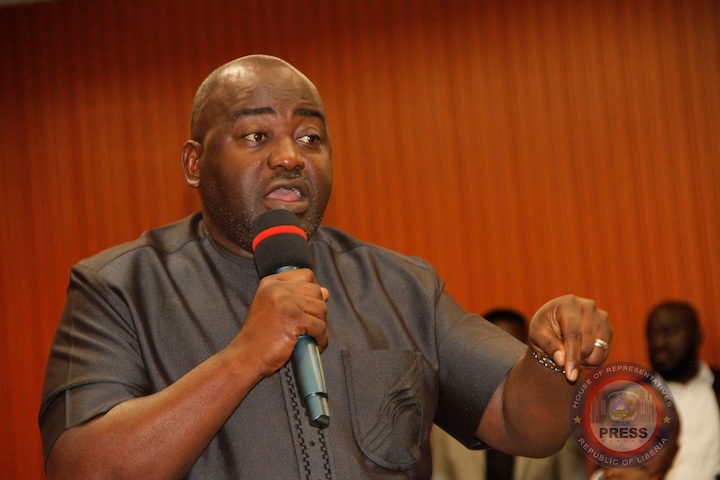
Monrovia — Representative Musa Hassan Bility, a prominent Liberian lawmaker and political leader of the Citizens Movement for Change (CMC), has sharply criticized the decision by Liberia and Sierra Leone to travel to Guinea for discussions aimed at addressing rising border tensions involving the three neighboring countries.
In a strongly worded statement released on social media amid growing concerns over incidents along the shared frontiers, Bility argued that holding the meeting in Guinea undermines Liberia’s national posture and risks sending the wrong diplomatic signal at a time when territorial integrity must be firmly defended.
A Question of Principle and National Posture
According to Bility, the decision for Liberia and Sierra Leone to attend a meeting hosted by Guinea is fundamentally flawed because Guinea is at the center of the allegations of border aggression. “In situations where one country is the aggressor in a border dispute, it is not appropriate for the affected countries to go to that same country to negotiate under its roof and on its terms,” Bility said.
He emphasized that the recent incidents along the borders involving Liberia and Sierra Leone place Guinea in the position of the alleged aggressor, a factor he believes should have guided how the diplomatic engagement was arranged.
For Bility, diplomacy must not only aim at resolving conflicts but also reflect strength, sovereignty, and equality among states. “Going to Guinea to negotiate with Guinea over incidents in which Guinea is the aggressor sends the wrong signal,” he warned. “It risks creating the appearance that we are approaching the situation from a position of weakness rather than from the position of equal sovereign states.”
Call for Neutral Ground
The lawmaker argued that the seriousness of the border dispute demands a more balanced and credible framework for dialogue. He suggested that the discussions should instead have been held in a neutral country within the region, naming Ivory Coast, Ghana, or Nigeria as possible venues capable of hosting such negotiations.
Beyond the location of the talks, Bility also emphasized the importance of broader regional involvement to promote fairness and transparency. “In addition, the involvement of other regional leaders or Economic Community of West African States (ECOWAS) would have ensured balance, transparency, and confidence in the process,” he stated. He believes that such a multilateral approach would reassure citizens in the affected countries that their governments are negotiating from a position of strength rather than under pressure.
Lessons from Liberia’s History
Bility’s concern, he noted, is also influenced by Liberia’s historical experiences with territorial disputes and land losses during its early development. Throughout the late 19th and early 20th centuries, Liberia lost large portions of its territory to colonial administrations overseeing surrounding regions. Historians say these losses mainly resulted from pressure from European colonial powers controlling neighboring territories.
According to Bility, those historical developments should serve as cautionary lessons for modern policymakers. “Liberia has already lost significant portions of its territory during earlier periods of our national development, particularly during the colonial era when powerful neighboring colonial administrations exerted pressure that resulted in the loss of large areas of land,” he explained.
He stressed that those historical realities should guide how contemporary leaders respond to any challenges involving the nation’s borders. “Those losses are not just historical facts. They are lessons,” he said. “They remind us that territorial questions must always be handled with firmness, clarity, and national confidence.”
Protecting Liberia’s Territorial Integrity
Bility emphasized that Liberia’s current borders must be defended with seriousness and dignity. For him, every diplomatic move by the government in response to border tensions should reinforce the message that Liberia remains dedicated to safeguarding its sovereignty and territorial integrity. “The posture we take when our borders are challenged today will determine whether our borders remain secure tomorrow,” he cautioned. He warned that weak responses could gradually undermine Liberia’s negotiating power over time, especially in disputes involving land and communities along national frontiers.
Dialogue Without Weakness
Despite criticizing the venue for the talks, Bility clarified that he is not against dialogue as a way to resolve the dispute. Instead, he stressed that peace and diplomacy are essential tools for maintaining stability in the region. “Let me be clear. I am not advocating conflict and I am not opposed to dialogue,” he said. “Dialogue is necessary and peace must always remain our goal.” However, he insisted that peace should never come at the expense of national dignity. “There is an important difference between pursuing peace and surrendering national posture,” Bility added.
According to him, responsible diplomacy sometimes requires standing firm and insisting on conditions that guarantee fairness and equality among all parties involved.
Public Confidence and National Unity
The lawmaker also voiced concern about the potential domestic effects of choosing to hold the meeting in Guinea. He warned that such a decision could weaken confidence among Liberian citizens who count on their government to defend the country’s sovereignty with strength and clarity. “Every action we take in response to disputes must reinforce the message that Liberia will protect its territorial integrity,” he said. Failure to do so, he cautioned, could lead the public to perceive that the country is conceding ground before negotiations even start.
A Call for Reconsideration
In conclusion, Bility urged the Liberian government to reconsider its approach and demand a neutral venue for discussions on the border dispute. He also called for a wider regional framework involving West African leaders and institutions that can ensure fairness in the negotiation process. “For these reasons, I believe this approach is misguided,” Bility said, emphasizing that, “Liberia should insist on a neutral venue and a broader regional framework for resolving this dispute.”
As tensions along the borders remain a sensitive issue for communities living in frontier areas, Bility’s statement is likely to fuel further debate in Liberia about how the government should handle diplomatic engagements with neighboring countries when sovereignty and territorial integrity are at stake.
At the present moment, President Mamadi Dumbouya has deployed heavily armed military personnel along Guinea’s borders with Liberia and Sierra Leone, and instructed them to defend the territorial integrity of his country, leaving no room for compromise.






Discussion about this post