


Published: November 27, 2026
By Blamo N. Toe and Masefane Konneh
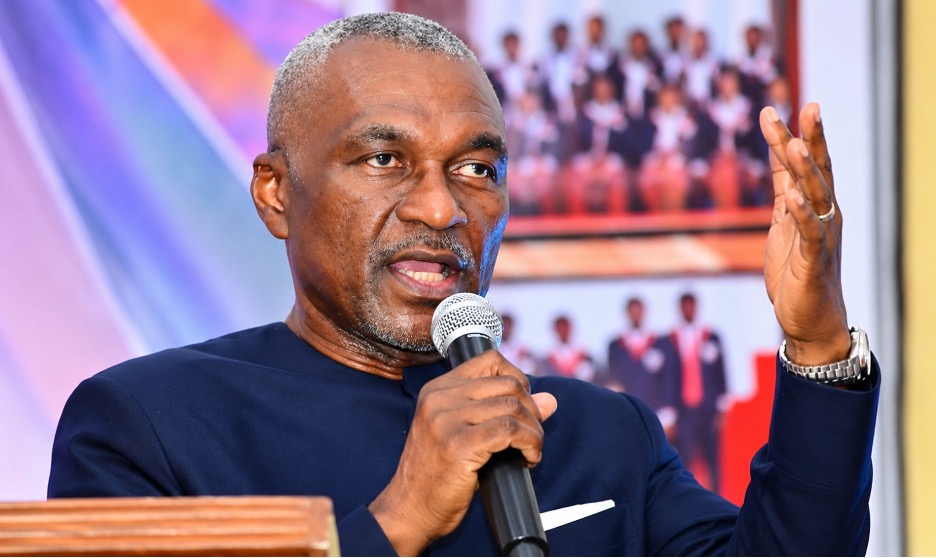
MONROVIA — Opposition Alternative National Congress Political Leader Alexander B. Cummings has called on the Boakai administration to halt further action on its US$5.7 billion infrastructure agreement with Bea Mountain Mining Corporation, warning that the country’s actual financial obligations could significantly exceed the announced value and potentially commit future mineral revenues to repayments for decades.
Addressing a major news conference Thursday in Monrovia, Cummings maintained that although the publicly announced value of the Master Infrastructure Development Agreement is approximately US$5.7 billion, provisions within the framework could allow additional costs, adjustments and government obligations that significantly increase the amount recoverable through future revenue offsets.
He stressed that Liberians deserve to know exactly what financial obligations are being assumed in their name, how long future revenues could be committed, what independent valuation supports the proposed costs and whether alternative financing models could achieve the same objectives at significantly lower costs.
“The government has not yet provided convincing answers to these questions,” he said. “Particularly concerning are indications that future royalties, income taxes, dividends, and other government revenues generated from Liberia’s natural resources may effectively be redirected toward repayment — for decades.”
Cummings maintained that pledging Liberia’s future mineral wealth without proper valuation and oversight could leave successive governments receiving little benefit from resources extracted from Liberian soil.
The businessman-turned-politician described the arrangement as not merely an accounting issue but a matter of sovereignty, human rights and intergenerational justice, questioning whether future generations of Liberians would inherit infrastructure assets or financial obligations.
According to Cummings, the experiences of resource-rich nations demonstrate that the availability of natural resources does not necessarily guarantee economic prosperity.
“Countries rarely suffer because of a lack of natural resources. They suffer because natural resources are sometimes managed without adequate transparency, competition, accountability, and independent oversight,” he said.
He maintained that Liberia must not repeat mistakes that other countries have already paid dearly to learn.
Cummings described President Joseph Nyuma Boakai’s decision to sign the agreement with Bea Mountain and its parent company, MNG Gold, as grave, arguing that its implications extend beyond the construction of roads, power plants, railways and other physical infrastructure to the long-term management of Liberia’s mineral wealth.
While acknowledging Liberia’s infrastructure deficit, the ANC political leader cautioned that the urgency of addressing poor roads, unreliable electricity and limited economic opportunities should not undermine transparency and sound financial judgment.
Drawing a comparison with the biblical account of Esau, who exchanged his birthright for a meal, Cummings warned against sacrificing Liberia’s long-term economic interests to address immediate development needs.
“We must not become an Esau Generation,” he said.
“Our infrastructure deficit is real. Our desire for development is legitimate. But in our urgency to solve today’s problems, we must not mortgage tomorrow’s possibilities,” Cummings added.
Cummings acknowledged that financing infrastructure through future mineral revenues may appear attractive because it does not require immediate budgetary expenditures. However, he questioned whether Liberia would receive adequate value for the resources committed under the arrangement.
“There is no such thing as free infrastructure. Someone ultimately pays,” he said.
Among the concerns raised by Cummings are questions about compliance with the Public Procurement and Concessions Act, the alleged absence of competitive bidding, lack of independent valuation and engineering assessments, potential overpricing of infrastructure projects and automatic deductions from future government revenues.
He also identified potential fiscal and contingent liabilities, environmental and social risks, governance and conflict-of-interest concerns, and threats to Liberia’s long-term fiscal sustainability.
The former presidential candidate further expressed concern that future national revenues could effectively be pledged outside traditional public debt transparency mechanisms, potentially limiting public understanding of the country’s long-term financial commitments.
“These are not political concerns. They are governance concerns. They are economic concerns. They are national concerns,” he maintained.
Cummings called on the government not to proceed with the agreement until several safeguards have been satisfied, including independent valuation of the mineral resources underpinning the arrangement, independent engineering and feasibility assessments, competitive procurement and full publication of all transaction documents.
He also demanded legislative review and public hearings, comprehensive environmental and social impact assessments, independent fiscal risk and debt sustainability analyses, and internationally credible transaction advisory services.
Additionally, Cummings called for independent certification of project costs and completed infrastructure works, alongside public disclosure of all contingent liabilities and future revenue commitments.
The ANC political leader clarified that his position should not be interpreted as opposition to infrastructure development, foreign investment, public-private partnerships or the responsible utilization of Liberia’s natural resources.
“What we oppose is lack of transparency. What we oppose is secrecy. What we oppose is committing future generations to massive obligations without the protections and safeguards that responsible governance requires,” he said.
His remarks come amid growing public debate over the agreement, which includes four power plants with a combined generation capacity of 270 megawatts, a 146-kilometer highway and additional road networks across Liberia.
The government has said the infrastructure initiative would be financed through additional revenues expected from Bea Mountain due to higher gold prices.
However, Cummings maintained that the administration must show the proposed financing arrangement offers the best possible value for Liberia before proceeding with implementation.
“The true test of leadership is not how quickly agreements are signed. The true test of leadership is whether those agreements withstand public scrutiny, protect the national interest, and create lasting benefits for generations yet unborn,” he said.
Cummings urged the administration to pause, review, disclose and consult, emphasizing that the management of Liberia’s mineral resources should transcend political affiliations.
“History will not judge this agreement by the speeches delivered on signing day. History will judge it by what remains twenty, thirty, and forty years from now,” he said.
He noted that the objective is not merely to build infrastructure, but to build infrastructure the right way, at the right price, under the right conditions and in the best interest of the Liberian people.




Discussion about this post