


Published: November 27, 2026
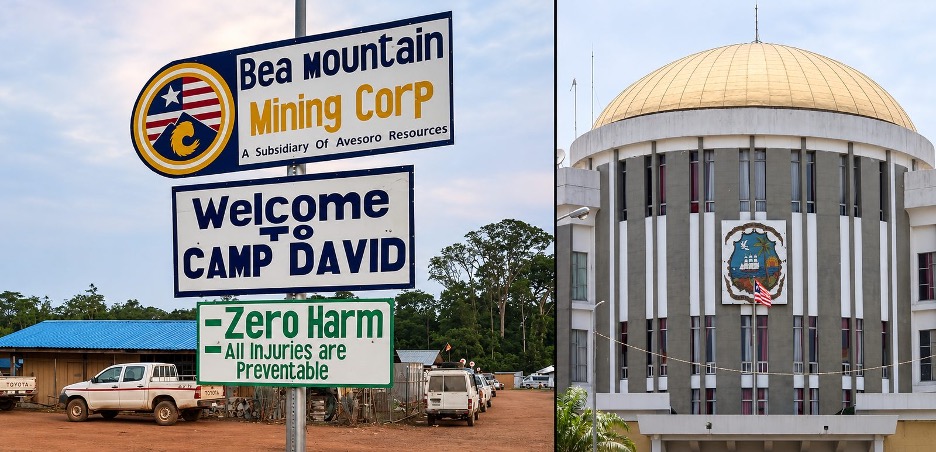
CAPITOL HILL, Monrovia — Two House committees have two weeks to examine the US$5.7 billion Bea Mountain infrastructure deal, under which the gold miner would pay for dams and roads and recover the cost from taxes and royalties it owes the government. Lawmakers referred the agreement Thursday, a day after President Joseph Nyuma Boakai signed it.
The House sent the Master Infrastructure Development Agreement to its Committees on Investment and Concessions and on Public Works, with instructions to report to Plenary within two weeks. The agreement takes effect only after the Legislature ratifies it.
In a letter to Speaker Richard Nagbe Koon submitting the agreement, Boakai asked lawmakers to approve it.
“I trust that the Legislature will ratify this Agreement, which is poised to unlock Liberia’s infrastructure deficit, creating pathways for inclusive growth and national development,” the president wrote.
Under the agreement, Bea Mountain Mining Corp. pays the approved costs of the projects. It then recovers those costs, with interest, by setting them against payments it would otherwise make to the government, including corporate income tax, royalties and other fiscal obligations. The company commits up to US$500 million in revolving financing, meaning that amount can be outstanding at any time and is freed up again as costs are recovered.
The government says the structure lets Liberia build major infrastructure without adding conventional borrowing to its public debt. Bea Mountain is already the second-largest contributor to domestic revenue this year.
The program includes three hydropower plants, one on the Via River and two on the St. Paul, with installed capacities of 100, 100 and 10 megawatts, plus a 60-megawatt biomass plant, for 270 megawatts in all. It also includes about 305 kilometers of high-voltage lines, with connections to Nimba and Bong counties, and upgrades to substations, transformers and the 66-kilovolt network.
The agreement lists 14 road and bridge projects. They include a 146-kilometer Liberia Development Road, roads from Bomi to Gbarpolu, Brewerville to Bopolu, and in Cestos, Lofa and Nimba, several coastal roads, a Kesselly Boulevard bridge, a rebuilt Tubman Boulevard with a new bridge, and a concrete-paved road in Monrovia.
The Rev. Samuel B. Reeves Jr., president of the Liberia Council of Churches, has urged lawmakers not to ratify the agreement in its current form. In a published analysis, Reeves said the deal gives Bea Mountain strong rights to recover its costs, while Liberia’s protections on pricing, delivery, plant performance and community compensation need closer examination. He also questioned how costs would be recovered from government revenue and how much interest could build up on unpaid balances.
A Liberian Investigator review of the agreement found that only eight core projects have fixed prices. The grid upgrade and most of the roads depend on later proposals and approvals. It put the total at about US$5.68 billion before interest and adjustments. The review also found that only the biomass plant and two transmission lines carry fixed deadlines, even though Boakai promised at the signing that the program would be delivered within five years.




Discussion about this post