


Published: July 8, 2025
MONROVIA — The Liberian Investigator has learned from the Ministry of Finance and Development Planning that the recently transferred US$937,000 from the United Nations World Food Programme (WFP) to the Government of Liberia’s Consolidated Account was not a policy initiated by the current administration, but rather a continuation of a decision made under the previous George Weah-led government.
The amount represents the unspent balance from the controversial 2020 COVID-19 Emergency Food Assistance Program and was formally remitted to the Central Bank of Liberia on July 3, 2025, according to sources at the Finance Ministry. Officials confirmed that the funds are being redirected to support the Home-Grown School Feeding Program, a nationally coordinated effort aimed at feeding school-age children with locally produced food.
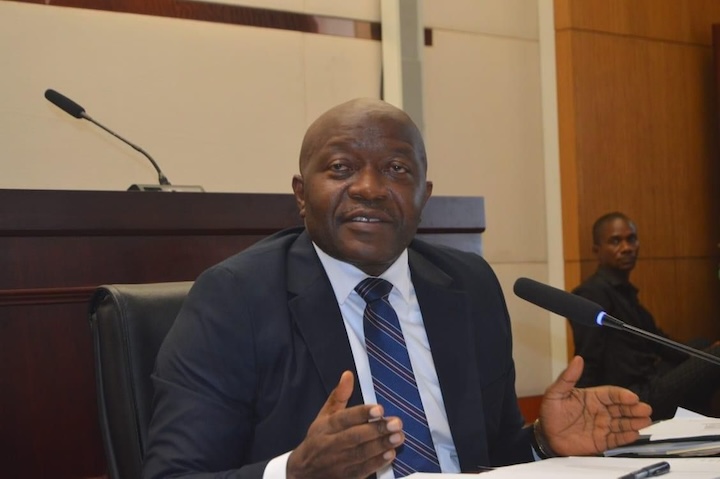
Despite speculation surrounding the involvement of Finance and Development Planning Minister Augustine Kpehe Ngafuan, insiders at the ministry say the reallocation was never initiated or redefined by him. Instead, the decision stemmed from a 2022 policy recommendation by the National COVID-19 Food Assistance Steering Committee, a multi-stakeholder body established during the height of the pandemic and chaired at the time by the then Minister of Commerce.
“The public should understand that this was not a new decision,” said a senior Finance Ministry official. “Minister Ngafuan simply inherited a standing policy recommendation from the Weah administration, which was backed by various ministries, civil society actors, and development partners.”
Tracing the Origin of the Reallocation
The National Steering Committee, which included representatives from the Ministries of State, Finance, Justice, Agriculture, and Education, Press Union of Liberia, among others, concluded in its final review that the remaining balance from the over US$25 million food assistance package should be redirected to improve nutrition for schoolchildren. This, according to documents reviewed by The Liberian Investigator, was viewed as a sustainable way to use the leftover funds while supporting local agriculture.
Out of the total unspent amount, about US$234,000 was retained for final implementation activities by the WFP, while US$937,000 has now been returned to the Liberian government. The Finance Ministry has indicated that the amount is being “ring-fenced” to ensure it is used solely for the school feeding program.
No Political Hand in the Pot
The Liberian Investigator has confirmed that officials in the current administration are treading carefully, emphasizing that the execution of this funding decision is a matter of continuity, not new policy. Sources insist there was no modification or manipulation of the original intent of the Steering Committee’s recommendation.
“This is not about politics; it’s about food and children,” one senior official stated. “We are simply moving forward with a plan already on the table.”
The implementation was reportedly delayed due to the 2023 general elections and the government transition that followed. However, with donor cuts—particularly from USAID—impacting school feeding programs across developing countries, the returned funds are now being positioned as a critical buffer to maintain school-based nutrition in Liberia.
Public Demands Transparency on Past Expenditures
While the decision to channel the remaining COVID-19 emergency funds into school feeding has been largely welcomed, governance advocates are demanding accountability over how the original US$25 million was used.
The WFP earlier confirmed it spent approximately US$23.838 million of the total emergency allocation. In June 2021, the Liberian Senate directed the General Auditing Commission (GAC) to audit the program following multiple allegations of procurement irregularities, unverified bank reconciliations, and inflated labor payments. However, no audit report has ever been made public.
Former Deputy Information Minister Eugene L. Fahngon, now Director General of the Liberia Broadcasting System, was one of the loudest voices calling for scrutiny at the time. “It is the people’s money,” Fahngon said in 2021. “And the people deserve answers.”
Four years on, those answers remain elusive, and the current administration is left to manage the fallout while trying to ensure that the funds now available are spent prudently.
A Way Forward for Food and Farmers
Under the Home-Grown School Feeding Program, the Ministries of Agriculture and Education are expected to launch implementation ahead of the next academic year, using locally sourced rice, cassava, palm oil, and vegetables. The goal is to provide at least one nutritious meal daily for schoolchildren, while also empowering Liberian farmers through guaranteed markets.
Finance Ministry insiders also told The Liberian Investigator that strict financial controls are being developed to prevent any repeat of the COVID-19-era controversies. All disbursements will be tracked through dedicated systems, and the program will be jointly overseen by education and agriculture specialists.





Discussion about this post