


Published: July 10, 2026
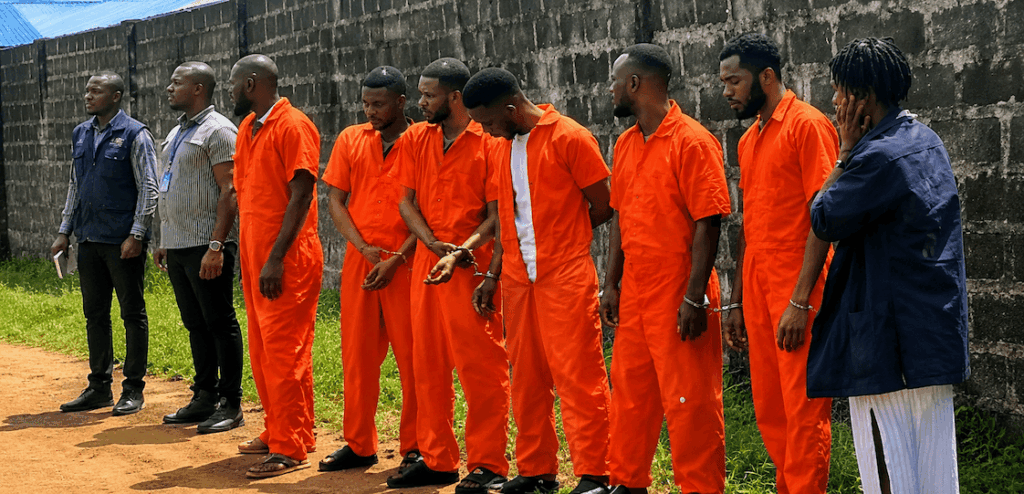
MONROVIA – Seven convicted members of a human trafficking syndicate will spend 50 years each behind bars after Criminal Court ‘A’ at the Temple of Justice delivered one of the most severe trafficking judgments in Liberia’s recent history, punishing a fraudulent overseas employment scheme that lured dozens of Liberians with false promises of jobs in Canada.
Judge Roosevelt Z. Willie handed down the landmark ruling on Friday after a trial jury unanimously found the defendants guilty of multiple offenses arising from an elaborate trafficking operation that targeted vulnerable citizens across several counties.
The court found that the convicted traffickers operated under the guise of Infinitive Millennials Star Platinum Limitless, Inc., doing business as Q-Net, which prosecutors argued was used as a cover to recruit victims with deceptive promises of lucrative employment opportunities and improved living conditions in Canada.
According to evidence presented during the trial, the network recruited at least 57 victims from Nimba, Bong, Grand Gedeh, Bomi, Lofa and other counties. Victims were persuaded to pay between US$950 and US$4,500 in processing and travel fees after being assured they would soon leave Liberia for jobs abroad.
Instead of facilitating international travel, the traffickers transported the victims to a fenced compound in Gbangba Town along the Robertsfield Highway, where they were unlawfully detained under harsh and degrading conditions.
Survivors provided chilling testimony throughout the trial, describing months of physical abuse, psychological intimidation and exploitation inside the compound. Witnesses testified that immediately upon arrival, their mobile phones were confiscated, effectively cutting off communication with family members. They said they were then pressured to solicit additional money from relatives and friends under false pretenses.
Victims further testified that those who failed to produce additional funds were subjected to severe punishment, including prolonged exposure to the scorching sun, forced consumption of excessive quantities of water, food deprivation, verbal humiliation and strenuous physical labor.
Several female victims also gave emotional testimony alleging that they were repeatedly sexually exploited by convicted ringleaders Bill Plato and Wuo Zegarsco Garteh, allegations that formed part of the prosecution’s evidence during the proceedings.
Defense lawyers maintained throughout the trial that the case centered on a legitimate network marketing enterprise and argued that the prosecution had failed to establish the legal elements of human trafficking because none of the victims had actually been transported outside Liberia.
Judge Willie rejected that argument in his ruling. The court held that under Liberia’s Trafficking in Persons Act of 2021, the crime of human trafficking does not require victims to cross international borders. The judge ruled that trafficking is established where individuals are recruited, harbored, transported or exploited through fraud, deception, coercion or abuse of vulnerability, regardless of whether international movement occurs.
Based on the evidence presented, the court concluded that the defendants deliberately deceived vulnerable Liberians, obtained substantial sums of money from them under false representations and subjected them to unlawful confinement and exploitation.
Following the verdict, Judge Willie sentenced Wuo Zegarsco Garteh, Daylue Kargo, Rudolph S. Flomo, Bill Plato, Stanley Wonanbaye, Jerome Genseh and Alexander Plato to 50 years imprisonment each. In addition to their prison terms, each of the seven convicts was ordered to pay a US$10,000 fine, while collectively paying US$90,000 in restitution to compensate the victims for losses suffered during the trafficking operation.
The court also sentenced three co-defendants, Maxi Wonanbaye, Marthaline Y. Tompia and Preston Godfrey, who entered guilty pleas during the proceedings. Each received 20 years imprisonment, a US$500 fine and an order to pay US$10,000 in restitution.
Immediately following sentencing, defense attorneys formally announced that they would appeal both the convictions and the penalties before the Supreme Court of Liberia. Judge Willie acknowledged the notice of appeal, emphasizing that every convicted person is constitutionally entitled to seek appellate review. Pending the outcome of those proceedings, all convicted defendants were remanded to the Monrovia Central Prison to begin serving their sentences.
The judgment is being widely viewed as one of the toughest sentences imposed since the enactment of the Trafficking in Persons Act of 2021. Legal observers say the ruling sends a strong message that Liberian courts are prepared to impose substantial penalties on individuals who exploit vulnerable citizens through fraudulent overseas employment schemes.
The decision also reinforces the judiciary’s interpretation that human trafficking is not limited to cross-border movement but includes recruitment, confinement and exploitation carried out through deception within Liberia itself.
The case has drawn national attention because of the number of victims involved, the disturbing allegations of abuse inside the Gbangba Town compound and the significant prison terms imposed, marking what many consider a milestone in Liberia’s efforts to combat human trafficking and protect citizens from fraudulent migration and employment schemes.





Discussion about this post