


Published: April 28, 2026
Last updated: August 28, 2026
In Summary:
- While responding to comments by Finance Minister Augustine K. Ngafuan about the Millennium Challenge Corporation energy funding, Jacob Jallah, a member of the Citizens Movement for Change, claimed on Spoon Talk that about 60% of Liberians are not connected to the national electricity grid
- However, data from the Liberia Electricity Corporation and Jungle Energy Power show roughly 328,191 homes (about 27.6% of households) are connected to the grid, while the World Bank reports only 25% of the population is connected to the LEC grid, and about one-third have electricity access overall, according to the African Development Bank.
- Based on this evidence, the claim is rated incorrect, as available data indicate that approximately 75% of Liberians are not connected to the national grid.
Jacob Jallah of the Citizens Movement for Change claimed that about 60% of Liberians are not connected to the national electricity grid. He made the claim on February 3, on Spoon Talk, while responding to comments by Finance Minister Augustine K. Ngafuan regarding the Millennium Challenge Corporation (MCC) funding for the energy sector.
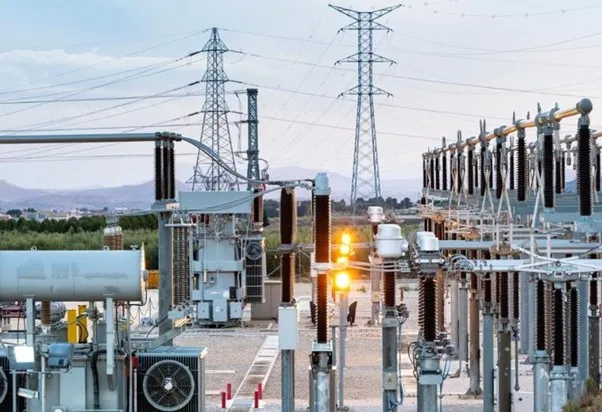
The U.S. Energy Information Administration (EIA) defines the electric grid as a network of power plants, transmission lines, substations, transformers, and distribution lines that work together to supply electricity nationwide. In short, a national electricity grid connects electricity producers to users through a coordinated, country-wide infrastructure system.
The Claim
Jallah stated: “The real issue is that we have a generation capacity deficit. We don’t have enough electricity to go across the country. If you look at the statistics right now, connections around the country is about 30 – 40%. So, it means that about 60% of the country is not connected to the National Electricity Grid”.
Rating Justification
To verify the claim, we reviewed data from the Liberia Electricity Corporation (LEC), which shows approximately 306,000 grid connections serving an estimated 1,003,508 people.

We also reviewed information from Jungle Energy Power (JEP), one of Liberia’s electricity providers.
Data from the company indicate that it has connected about 22,191 homes across the country.

Combined, this suggests that approximately 328,191 homes — or about 27.6% of households — are connected to the national grid through LEC and JEP.
However, there is no publicly available data indicating how many homes have been connected by LIBEnergy, the company responsible for electrification in the southeastern counties.
Additionally, we reviewed the World Bank’s 2024 Liberia Electricity Sector Strengthening and Access Project (LESSAP) Phase II document. It reports that only 25% of Liberia’s population is connected to the LEC grid, while 32.7% have access to electricity overall, including off-grid sources.

Further data from the African Development Bank indicate that approximately one-third — or 33% — of Liberians have access to electricity.
Conclusion
Based on this evidence, we conclude that Jallah’s claim is incorrect.
His statement understates the scale of the problem, as available data suggest that over 70% of Liberians are not connected to the national grid.




Discussion about this post