


Published: April 28, 2026
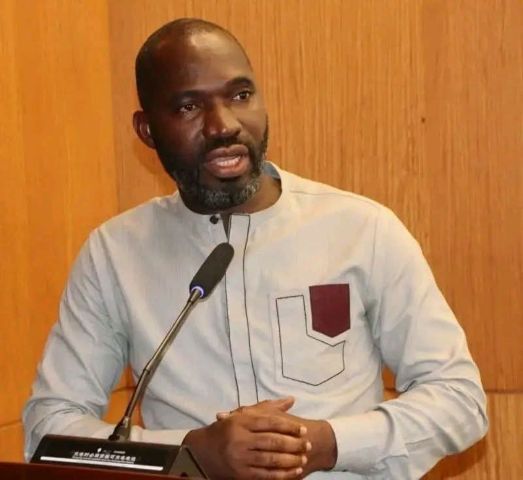
CAPITOL HILL — River Gee County Sen. Francis S. Dopoh has unveiled an ambitious legislative agenda aimed at overhauling Liberia’s mineral law, targeting long-standing loopholes in the gold sector while calling for restraint in public discourse on national security matters, particularly the Armed Forces of Liberia (AFL).
Speaking Monday at a press conference on Capitol Hill, Dopoh said the proposed amendments seek to curb the persistent export of unprocessed gold, formalize artisanal mining, and ensure that Liberia derives greater economic benefits from its mineral wealth.
“Many of us complain when we see ounces of gold leaving the country. We get angry—but what action are we taking?” she asked. “We must move beyond rhetoric to enforce meaningful reforms.”
Closing Loopholes in the Gold Sector
At the center of the proposed reforms is a plan to address structural weaknesses in Liberia’s gold industry, particularly the large-scale export of raw gold with minimal local value addition.
Dopoh described the situation as unacceptable, noting that Liberia continues to lose significant revenue due to weak regulation, smuggling and limited processing capacity.
She said the proposed legislation would strengthen oversight, close regulatory gaps and reposition the sector to better serve national interests.
Formalizing Artisanal Mining
A key pillar of the reform is the restructuring of Liberia’s largely informal artisanal mining sector, which accounts for the bulk of mining activities across the country.
According to Dopoh, existing licensing categories—including Class B and Class C—are inadequate to regulate or empower local miners.
She is advocating for the creation of mining cooperatives to formalize operations, ensure fair pricing and introduce structured brokerage systems.
“Miners should not have to travel to Monrovia to sell their gold under compromised conditions,” she said, proposing the establishment of county-level gold markets to decentralize access and improve transparency.
Environmental and Public Health Concerns
The proposed amendments also target environmental and health risks associated with mining, particularly the widespread use of mercury in gold extraction.
Dopoh warned that current practices have contributed to water pollution and declining livelihoods in mining communities.
She said organizing miners into cooperatives would make it easier to enforce safer and more sustainable practices, while strengthening regulatory compliance.
Driving Value Addition and Economic Growth
Beyond regulation, the legislation seeks to promote domestic gold processing as a means of boosting Liberia’s economy.
Dopoh lamented that most gold exported from Liberia remains in raw form, depriving the country of value-added benefits.
She revealed that the government, including the Central Bank of Liberia, is exploring the use of gold as part of the country’s financial reserves—but questioned the logic of importing refined gold while exporting raw resources.
“We should not continue exporting raw gold only to consider buying refined gold from outside,” she said.
“In the next five years, we must reach a point where gold no longer leaves Liberia in an unfinished state.”
She added that developing a domestic gold refining industry would create jobs, attract investment and strengthen the national economy through a robust value chain, while providing a reliable market for artisanal miners.
A Shift Toward Modern Mining Policy
Reflecting on Liberia’s post-war recovery, Dopoh acknowledged that existing mining laws were enacted under different circumstances.
However, she stressed that the current environment demands more forward-looking policies.
“As a country, we must take decisive steps. This is about operationalizing a system that benefits our people—not just issuing licenses,” she said.
The proposed amendments, which include a five-year implementation timeline, are expected to be debated by lawmakers and stakeholders in the coming months as part of broader efforts to reform Liberia’s extractive sector.
Caution on AFL Discourse
In a separate but related development, Dopoh cautioned against the spread of misinformation regarding the strength and operations of the Armed Forces of Liberia.
Her remarks come amid growing public debate, including comments attributed to Gbarpolu County Sen. Amara Konneh on the numerical strength of the Liberian Army relative to regional forces.
Dopoh warned that figures circulating on social media—including claims that the AFL has reached approximately 2,000 personnel—are not official.
“Some of the numbers you see on the internet are merely estimates. They are not official communications from the Ministry of National Defense or the Armed Forces of Liberia,” she clarified.
Call for Responsible Public Commentary
The River Gee County senator emphasized the need for caution in discussing sensitive national security matters.
She noted that recruitment and training efforts have been ongoing since at least 2022, but cautioned against drawing conclusions from incomplete or unofficial data.
Dopoh also stressed that, as a legislator not assigned to the defense or national security committee, it would be inappropriate to disclose or speculate on sensitive military details.
“Our support to the Armed Forces of Liberia is grounded in formal processes and institutional planning—not personal advocacy or public pressure,” she said.
She further warned that certain public statements by officials could create negative perceptions or undermine confidence in the military if not carefully framed.
Balancing Reform and Responsibility
Dopoh’s dual focus on mineral sector reform and responsible national security discourse highlights broader governance challenges facing Liberia—ranging from resource management to institutional credibility.
As debates on both fronts intensify, the senator urged a shift toward evidence-based policymaking and coordinated institutional action to safeguard national interests.






Discussion about this post