


Published: July 10, 2026
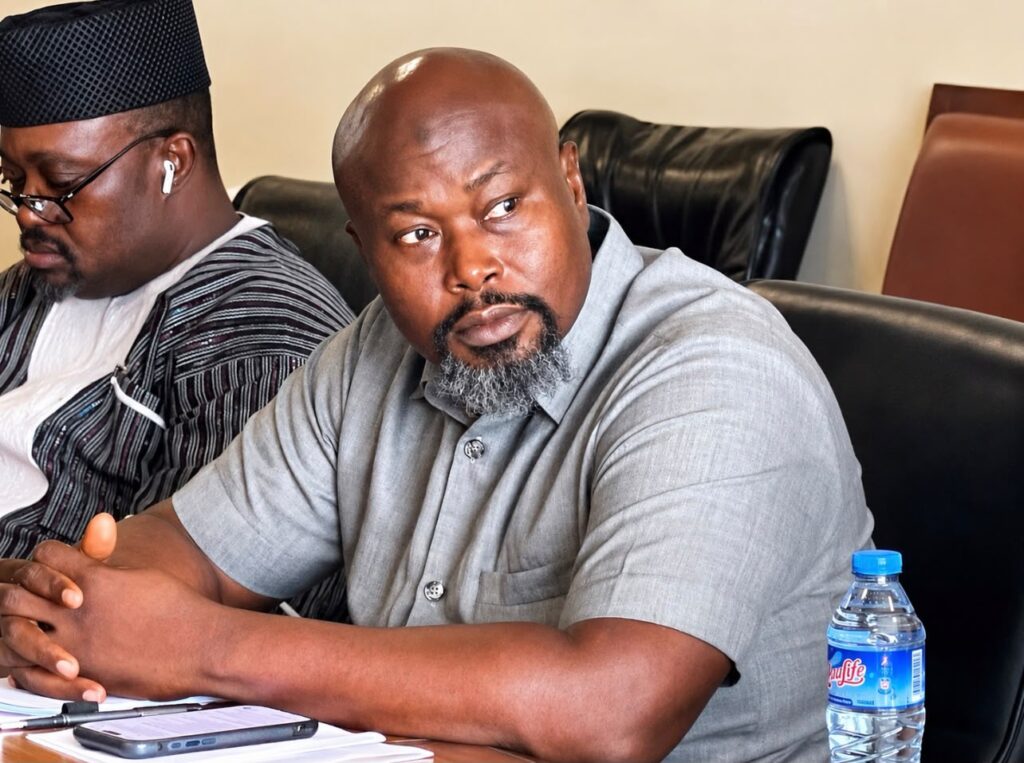
CAPITOL HILL, Monrovia — The President of the Liberia Chamber of Mines, Amara Kamara, has called on the House of Representatives to abandon its ongoing effort to amend Liberia’s Mining and Minerals Law, arguing that piecemeal changes would squander time and leave the country’s mining sector ill-prepared to capitalize on future investment opportunities.
Appearing before the House Joint Committees on Lands, Mines, Energy and Natural Resources, Environment, Hydrocarbon, and Judiciary during the second phase of public hearings, Kamara urged lawmakers to pursue a comprehensive review of the entire legal framework governing the mining sector rather than adopting isolated amendments.
“We want the amendment for now. Stop it,” Kamara told lawmakers. “Let’s look into a complete review of the law. The timeline for this reform is like yesterday.”
Kamara broke ranks with the Ministry of Mines and Energy’s proposed timeline, which envisions completing a new mining law by 2028. While agreeing that Liberia urgently needs an updated legal framework, he argued that waiting another two years would unnecessarily delay reforms needed to attract investment and improve government revenue.
“My Minister, sorry to say, we disagree with you on your timeline,” Kamara said. “2028 is too far. Let us start one month from now and finish it by mid-2027 or before the Legislature closes for its Christmas break. This law is tied to development and revenue collection.”
According to Kamara, Liberia’s current Mining and Minerals Law no longer reflects the realities of the modern mining industry or the country’s economic ambitions. He said the legislation lacks provisions that encourage mineral exploration, regulate emerging strategic minerals, strengthen local content, improve environmental safeguards, digitize licensing procedures, and eliminate bureaucratic inefficiencies.
He noted that Liberia continues to struggle with inadequate geological data, poor infrastructure, unreliable energy supply, and climate-related challenges, all of which make investment more difficult.
“We need investment in our sector, and as it is, these laws don’t favor investment,” Kamara said. “We need predictability and certainty so investors know they will not be sent back because of outdated laws.”
Kamara also argued that undertaking a full legislative review would ultimately be more efficient than spending months debating limited amendments.
“If we were to do a cost-benefit analysis on the time spent doing Class B amendments versus reviewing the entire law, you would see that it’s a waste,” he told the committee. “We know what we want to change, what should remain, and what needs to be added.”
The Chamber of Mines president further urged lawmakers to benchmark Liberia’s reforms against international best practices while tailoring the legislation to the country’s unique circumstances.
He stressed that the review should address critical and strategic minerals needed for the global energy transition alongside traditional resources such as gold, diamonds, iron ore, base metals and industrial minerals.
Kamara also emphasized that the reform process should involve broad national consultation, including government institutions, mining companies, artisanal miners, host communities, civil society organizations and development partners.
While advocating sweeping reforms, Kamara cautioned lawmakers against using a new mining law to alter or undermine existing contractual obligations.
“Laws are not retroactive,” he said. “We’re not changing the law to target existing Mineral Development Agreements or concessionaires. We’re changing the law for future generations.”
He urged that the legal rights of existing concessionaires, Mineral Development Agreement holders, exploration license holders and other legally licensed operators be respected throughout the review process, noting that many agreements already contain stabilization clauses protecting investors from future legislative changes.
“The sooner we do this review, the better,” Kamara warned. “Otherwise, if we continue to delay, more concessions will be signed under the existing legal framework.”
His comments came as lawmakers continue building consensus around replacing the nearly two-decade-old Mining and Minerals Law with an entirely new legislative framework.
The second phase of public hearings also featured presentations from the Ministry of Mines and Energy, the Ministry of Finance and Development Planning, and other stakeholders, many of whom agreed that comprehensive reform would better position Liberia to maximize the economic benefits of its mineral resources while strengthening environmental protections, regulatory oversight and investor confidence.
The Joint Committee is expected to consolidate recommendations from the hearings before presenting its report and legislative proposal to House Plenary for consideration.






Discussion about this post