


Published: June 29, 2026
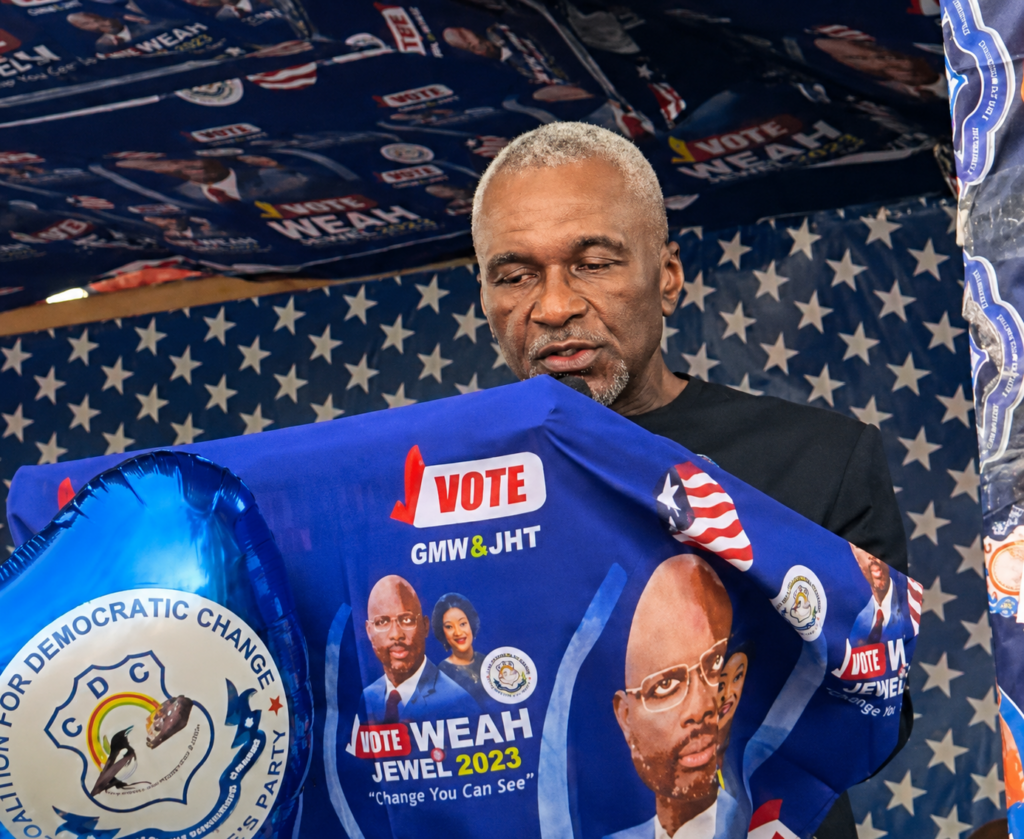
ZWEDRU, Grand Gedeh County — Liberia’s fractured opposition signaled the start of a coordinated push against President Joseph Nyuma Boakai’s government on Saturday, as Alternative National Congress political leader Alexander B. Cummings demanded an independent investigation into the record cocaine seizure at Roberts International Airport and urged rival parties to close ranks ahead of the 2029 election.
Cummings delivered the keynote address at the Congress for Democratic Change’s 22nd anniversary, using a stage crowded with former rivals to argue that no single party can unseat the governing Unity Party alone and that the roughly US$19 million drug bust at the airport offers an immediate test of the government’s commitment to accountability. He framed the Zwedru gathering as a turning point for an opposition that has struggled to coordinate since losing the presidency in 2023.
“Our strength lies in opposition solidarity,” Cummings said. “The ANC, CDC, CMC, MPC, NPP, LPP, ALP, and all opposition parties together can create the change we seek for Liberia.”
The anniversary drew a wide cross section of opposition figures to Grand Gedeh, the home county and political stronghold of former President George Manneh Weah, including Movement for Progressive Change political leader Simeon Freeman, Citizens Movement for Change political leader Musa Hassan Bility, All Liberian Party political leader Benoni Urey, MOVEE political leader Dee-Maxwell Kemayah, Grand Gedeh County Senator Thomas Yaya Nimely, former Finance Minister Amara Konneh and former Associate Justice Cllr. Kabineh M. Ja’neh. Former Vice President Jewel Howard-Taylor, now standard-bearer of the National Patriotic Party, sent a statement of support. The convergence of leaders who have often competed against one another, and against Weah, gave the celebration the character of an early alignment ahead of the next presidential cycle.
Cummings singled out the airport seizure as the issue around which that alignment should first form. He vowed the opposition would press the case both at home and through Liberia’s international partners.
“We must begin by demanding nothing less than an independent and transparent investigation of the recent 19 million US Dollar drug bust at the RIA, and accountability for all those found culpable,” Cummings said. “If we are serious about fighting drugs, this would be a good start.”
The June 8 interdiction at Roberts International Airport ranks as one the largest cocaine seizure under the Boakai administration. Authorities recovered about 237.6 kilograms of cocaine valued at an estimated US$19.2 million, a haul that has fueled weeks of public debate over who facilitated the shipment, who stands to be charged and whether senior figures will ultimately be shielded. Cummings invoked a popular Liberian expression for self-dealing to warn that the opposition would not allow the matter to fade.
“The proliferation of drugs is no joke, and no one will be allowed to eat show on us with this case,” he said, adding that the opposition would call on friends in the international community to ensure the government “does not get away with protecting any big hand in this case.”
The ANC leader devoted much of his address to the government’s record on poverty, institutional weakness and exclusion, casting the drug case as one symptom of a broader governance failure. He said more than half the population suffers multidimensional poverty, that rural poverty had climbed to 81 percent and that 50.9 percent of Liberians live below the national poverty line, even as policymakers point to economic growth and a US$1.2 billion national budget.
“These are not just statistics,” Cummings said. “They are the painful realities of our compatriots, the haunting cries of children who go to bed hungry, night after night, their dreams stifled before they can even begin.”
Aware that his unity drive invites suspicion of personal ambition, Cummings moved to blunt the criticism directly, telling the crowd the cause was larger than any individual.
“I hear some people say that Cummings only wants to be President,” he said. “But let me be very clear, the kind of change we seek is bigger than any one person.”
He pledged to accept any role in a unified opposition, pointing to his presence as keynote speaker at a rival party’s celebration as proof of that willingness. “If I have to be the driver or the car boy to get us to our destination of a better Liberia, I will,” Cummings said. He closed by casting the next election as a referendum on the governing party, declaring the opposition would “replace the failed Rescue Mission in 2029 and begin the mission to FIX Liberia.”
Weah, the CDC’s standard-bearer, used his own remarks to formally open the party’s campaign for 2029 and to recast a movement that lost power two years ago as the engine of an opposition revival. He thanked the assembled leaders by name, citing Cummings, Bility, Urey, Freeman and Ja’neh, and said their attendance showed “that political leaders who seek the best interest of Liberia can and must work together.”
The former president rejected suggestions that the CDC has weakened in opposition. “My fellow partisans, twenty-two years ago, they laughed at us. They mocked us. They underestimated us. We proved them wrong,” he said, before reaffirming the party’s claim to a grassroots base of market women, students, farmers, workers and motorcyclists. “When I walked into the Executive Mansion, millions of Liberians walked through that door with me. That is the story of the CDC. That is our legacy. That is our pride.”
Weah leveled some of his sharpest charges at the Boakai administration’s handling of the rule of law and the anti-drug fight, accusing the government of persecuting former officials, deploying excessive force against citizens, refusing to comply with Supreme Court rulings and protecting individuals tied to trafficking because of their connections to those in power. “Liberia has turned into a narco state,” he said.
He tied the anniversary directly to the next contest. “The road to 2029 begins today,” Weah declared, calling on partisans and the wider opposition to organize. “This is not the time for division. This is not the time for complacency. This is the time for mobilization.”
Among the most symbolically charged moments came from Ja’neh, who shared a stage with the man whose administration oversaw his removal from the Supreme Court. In 2019, the House of Representatives impeached Ja’neh and the Senate convicted him over allegations of misconduct tied to a property dispute, a proceeding that drew criticism from segments of the legal community and civil society as a threat to judicial independence. The ECOWAS Court of Justice ruled in April 2020 that his removal violated his rights to due process and ordered the Liberian government to pay him US$200,000, though it stopped short of ordering his reinstatement.
Rather than revisit that dispute, Ja’neh praised Weah for the 2022 amendment to Liberia’s nationality law that restored citizenship to Liberians who had naturalized abroad, calling it the former president’s “legacy law.” He said the reform reached more than 500,000 Liberians in the diaspora and urged the ANC, the Liberty Party, the CDC and other opposition parties to work with the Legislature to extend the right to register and vote to citizens living overseas. He disclosed plans to submit a formal policy paper to Cummings to advance the proposal, recasting one of the Weah presidency’s most contentious episodes as a point of common cause.



Discussion about this post