


Published: June 29, 2026
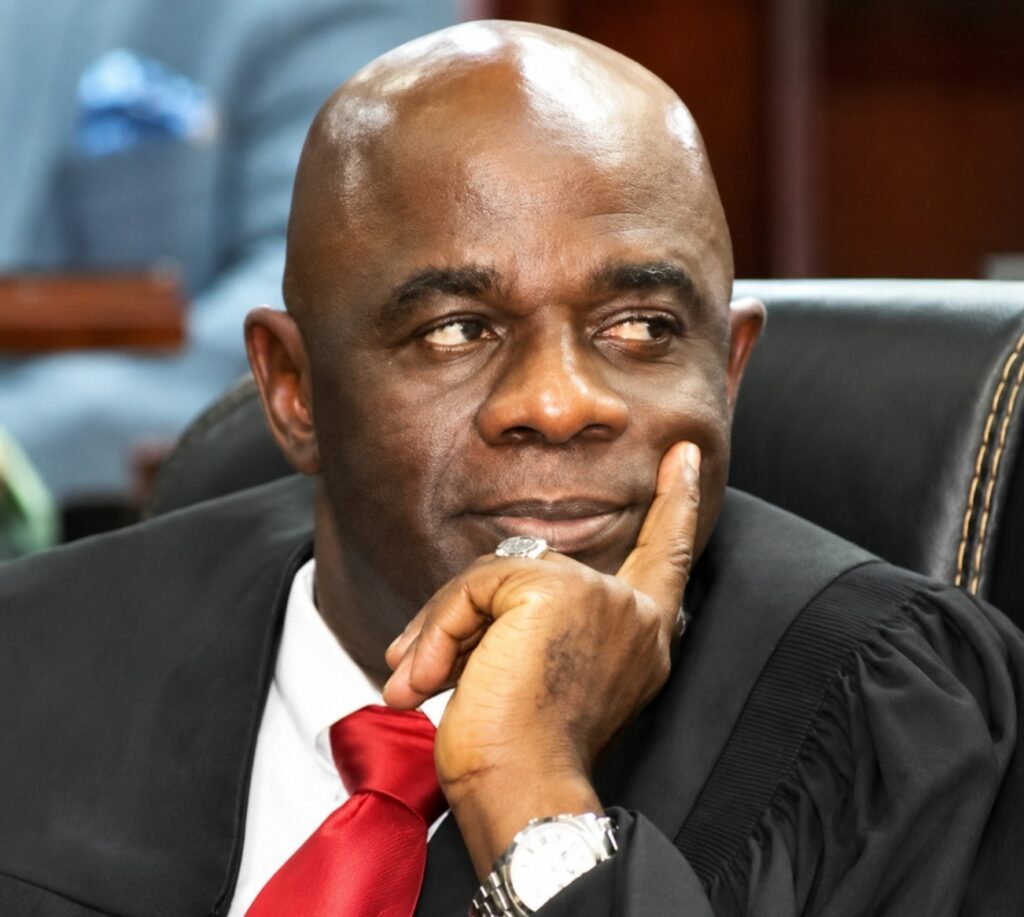
ZWEDRU, Grand Gedeh County — Former Associate Justice Kabineh M. Ja’neh has praised former President George Manneh Weah for what he described as one of the most enduring legislative achievements of his administration—the amendment of Liberia’s citizenship law in 2022 to restore citizenship rights to Liberians living abroad. Calling it Weah’s “legacy law,” Ja’neh urged political leaders to complete the reform by ensuring Liberians in the diaspora can register and vote in national elections.
Ja’neh made the remarks Saturday, June 27, during the Congress for Democratic Change’s (CDC) 22nd anniversary celebration in Zwedru, where he joined several prominent opposition leaders and supporters gathered to commemorate the party’s milestone and chart its political future ahead of the 2029 elections.
His appearance drew considerable public interest, given his controversial removal from the Supreme Court bench during Weah’s presidency—a political episode that divided opinion across Liberia and remains one of the country’s most debated judicial controversies.
Addressing the crowd, Ja’neh argued that Liberia’s previous citizenship law excluded hundreds of thousands of Liberians from participating in the country’s democratic process.
“Now, some of you may remember that in our country’s history, one of the things the political class has done very well is to always find ways and means, through multiple ways, to exclude the majority of Liberian people from voting,” he said.
Recalling the provisions of the 1973 Aliens and Nationality Law, Ja’neh explained that Liberians who acquired citizenship in another country automatically lost their Liberian citizenship and, by extension, their political and property rights.
“For example, in 1973, a law was passed in Liberia that says if you leave Liberia and go somewhere, though you were born here and hold Liberian citizenship, and you participated in voting in that country, but you naturalized in that country, you lose your Liberian citizenship automatically,” he said.
According to Ja’neh, that legal restriction remained in force for nearly five decades until the Weah administration signed amendments to Liberia’s nationality law in 2022, allowing Liberians by birth to retain or regain their citizenship after acquiring another nationality.
“That law was on our books from 1973 until 2022. It was during the presidency of Mr. George Weah that this law was changed to restore citizenship and the right of vote for every Liberian citizen. I usually call this the ‘legacy law’ left by President Weah,” Ja’neh declared.
He said the reform restored the rights of more than 500,000 Liberians living abroad who had long been excluded from full participation in the country’s civic life.
“The other piece that is missing in our argument is that in Liberia, the law says if you are not a Liberian citizen, you cannot own property,” he said. “When they say property, I am talking about real estate. You cannot own it. Restoring rights to the diaspora is viewed as a vital step in expanding the democratic base of Liberia.”
Ja’neh urged the Alternative National Congress (ANC), the Liberty Party (LP), the CDC, and other opposition parties to work collectively with the Legislature to enact the measures necessary to allow Liberians living abroad to register and vote.
He disclosed plans to present a formal policy paper to ANC Political Leader Alexander B. Cummings, who served as keynote speaker at the celebration, to advance discussions on diaspora voting.
“Previously, Liberians lost their citizenship automatically upon naturalizing in countries like the United States, Canada, or Côte d’Ivoire; however, that law has now changed,” Ja’neh said, adding that voting remains a constitutional right that should not depend on where a Liberian resides.
He maintained that the Legislature has the constitutional responsibility to appropriate the funding required to implement diaspora voting, describing the reform as essential to Liberia’s democratic transformation.
Background: From Impeachment to Reconciliation
Ja’neh’s appearance alongside Weah at the CDC anniversary celebration carried symbolic political significance.
In 2019, while serving as an Associate Justice of the Supreme Court, Ja’neh was impeached by the House of Representatives and convicted by the Liberian Senate on allegations of misconduct and abuse of office stemming from a judicial decision involving a property dispute. The Senate voted to remove him from office after impeachment proceedings initiated by lawmakers.
The impeachment drew widespread criticism from Liberia’s legal community, civil society organizations, and international partners. Many argued that the proceedings undermined judicial independence and due process, while others maintained that the Legislature acted within its constitutional oversight authority.
The controversy eventually reached the ECOWAS Court of Justice, which, in April 2020, ruled that Ja’neh’s removal violated his rights to due process and a fair hearing under regional human rights standards. The court found that Liberia breached its international obligations and ordered the government to pay Ja’neh US$200,000 in compensation for the rights violations associated with his impeachment. However, the ECOWAS Court did not order his reinstatement to the Supreme Court.
Despite the impeachment taking place during Weah’s administration, Ja’neh used Saturday’s platform not to revisit the political dispute but to commend what he considers one of Weah’s lasting legislative accomplishments—the restoration of citizenship rights to Liberians in the diaspora.
His remarks underscored a notable shift from one of the most contentious constitutional episodes of the Weah presidency to a message centered on national inclusion, democratic participation, and expanding the electoral rights of Liberians across the world.





Discussion about this post