


Published: October 16, 2026
BOMI COUNTY — More than two decades after Liberia’s devastating civil wars claimed an estimated 250,000 lives, struggling mothers and war survivors in Bomi County have renewed demands for justice, pressuring lawmakers to accelerate the establishment of a War and Economic Crimes Court to prosecute individuals accused of committing atrocities during the conflicts.
By Blamo N. Toe
Chanting “Sign the paper,” the women made their emotional appeal during a legislative dialogue in Bomi County Electoral District 3, where hundreds of residents gathered to engage their lawmaker, Rep. Sam P. Jallah, on national and community concerns.
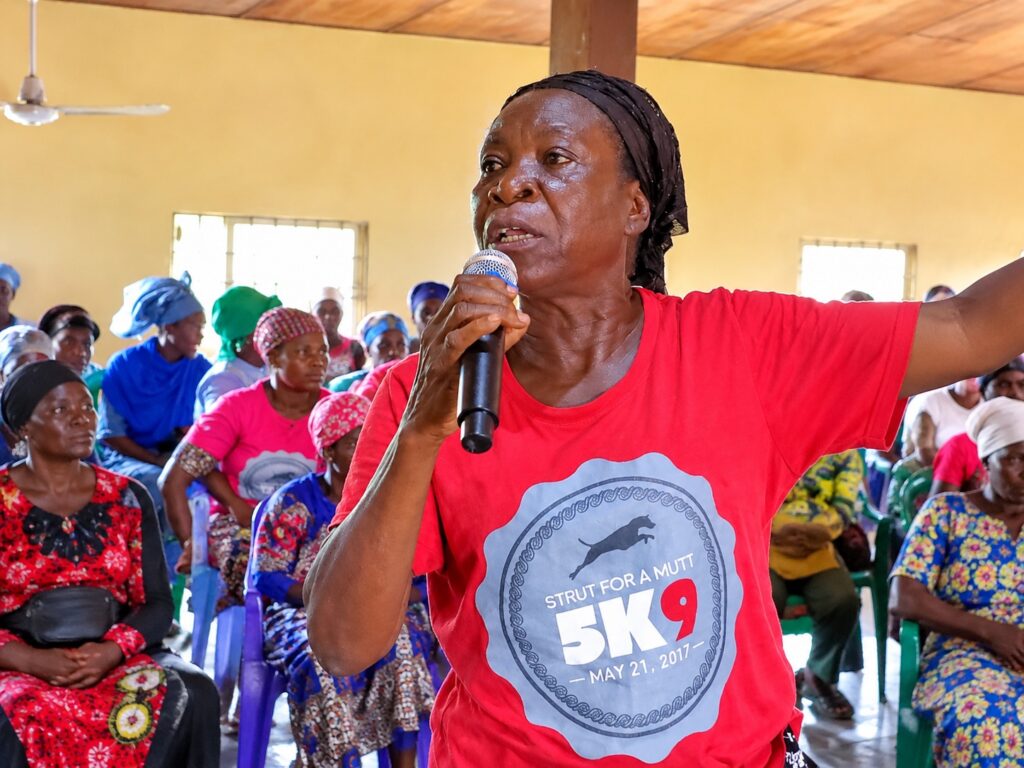
The gathering took an emotional turn when a group of mothers, led by a woman wearing a red T-shirt, demanded that the Legislature take concrete action to ensure accountability for wartime killings, displacement, and other atrocities that continue to affect survivors and their families.
The women urged Jallah to use his legislative influence to advance the signing of a document they believe is necessary for the court’s establishment, insisting that individuals responsible for the suffering of innocent civilians should face justice.
“Please, we want for you to try to sign this document before the Senate. They are your friends and I believe you can do it,” the woman pleaded.
She then questioned why those allegedly responsible for wartime atrocities should remain free while victims continue to endure the consequences of the conflicts.
“All those people that put us in this life, should they go free?” she asked, drawing a loud reaction from the gathering.
The women maintained that individuals accused of participating in wartime atrocities should be brought before a competent court to answer allegations against them, stressing that the judicial process would also allow those wrongly accused to defend themselves.
“They must bring them. If their hands or their feet are not part, they will take them off but they must come,” she demanded. “Maybe something will happen then someone will accuse me of being part so if i come forth and they ask me, the one I know, I will say it”.
Their demands reflected continuing frustration among survivors who believe successive governments have failed to deliver justice despite repeated commitments to establish a mechanism for prosecuting wartime crimes.
Recalling the horrors of the conflict, the woman narrated how civilians seeking refuge inside a church were forced to flee after a rocket struck the building, leaving families scrambling for safety.
“We were just running anywhere with not direction so sign the paper,” she emphasized.
The women repeatedly chanted “Sign the paper,” calling on President Joseph Nyuma Boakai’s administration and the Legislature to move beyond political commitments and take the necessary steps toward establishing the court.
Liberia endured two brutal civil wars between 1989 and 2003, during which an estimated 250,000 people were killed and hundreds of thousands displaced. The conflicts were characterized by widespread killings, sexual violence, recruitment of child soldiers, destruction of communities and other serious human rights violations.
Although the country has maintained relative peace since the signing of the 2003 Accra Comprehensive Peace Agreement, accountability for atrocities committed during the conflicts remains a major national concern.
The Truth and Reconciliation Commission, established as part of Liberia’s post-war recovery, recommended creating a special judicial mechanism to prosecute individuals responsible for serious wartime crimes.
However, the recommendations remained largely unimplemented for years, prompting repeated demands from victims’ groups, civil society organizations and international human rights advocates.
Efforts toward establishing the court gained momentum in 2024 when the Legislature adopted a joint resolution supporting its creation.
President Boakai signed Executive Order No. 131 on May 2, 2024, establishing the Office for the Establishment of a War and Economic Crimes Court to coordinate preparations for the proposed judicial institution.
Despite these steps, the information available for this report did not confirm the proposed court’s operational establishment. Its creation requires additional legal, institutional and financial arrangements before prosecutions can begin.
Their repeated chant, “Sign the paper,” underscored their determination to see the country’s longstanding promises of wartime justice translated into concrete action.






Discussion about this post