



Published: January 27, 2026
MONROVIA, Liberia — President Joseph Nyuma Boakai has again placed the National Port Authority at the center of Liberia’s economic recovery strategy, forcefully reaffirming the institution’s role in trade facilitation, revenue mobilization and structural transformation during his 2026 State of the Nation Address.
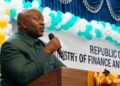
Delivering his second SONA of the year, Boakai’s remarks amounted to a clear national endorsement of the reform agenda being implemented by the NPA Management Team under Managing Director Sekou A. M. Dukuly, working in concert with the Authority’s Board of Directors.
The president framed port reform not as a technical exercise, but as a strategic pillar of national renewal, linking efficiency at the Freeport of Monrovia to lower costs of doing business, expanded trade capacity and long-term macroeconomic stability.
Breaking Monopoly, Expanding Competition
President Boakai disclosed that a recent high-level engagement in Morocco has produced a commitment from Tanger Med — one of Africa’s leading port development entities — to invest in strategic port equipment, logistics systems and terminal infrastructure at the Freeport of Monrovia.
He said the investment will expand the Freeport’s capacity and support the construction of modern bulk cargo terminals at the LMC Pier, a move aimed at easing congestion and structurally reducing trade costs.
The intervention directly challenges what has long been viewed as an operational monopoly at the Freeport, opening the port ecosystem to competition, efficiency, transparency and tariff rationalization.
Port sector analysts expect the expansion of bulk-handling capacity at the LMC Pier to significantly reduce vessel waiting times, minimize cargo dwell periods, decongest existing berths and improve overall turnaround efficiency — delivering immediate benefits to importers, exporters, shipping lines and consumers.
RESET Agenda Takes Center Stage
The president’s direction aligns squarely with the NPA’s RESET Agenda, which seeks to reclaim operational sovereignty, modernize port services, strengthen logistics value chains and reposition Liberia as a competitive maritime gateway along the West African coast.
By decentralizing capacity and diversifying terminal operations, the reforms aim to dismantle congestion-driven inefficiencies that have historically inflated prices and slowed commerce.
Planning With Precision, Reforming With Purpose
Boakai further revealed that comprehensive master plans for the ports of Monrovia and Buchanan have now been completed, establishing the technical and investment framework for phased infrastructure renewal, terminal expansion, channel optimization and long-term throughput growth.
These master plans are guiding the NPA’s modernization trajectory and are being reinforced by tariff reforms that have already produced measurable revenue gains.
According to port officials, the reforms are strengthening the Authority’s financial sustainability while improving predictability, fairness and transparency for port users — recalibrating Liberia’s port economy toward performance-based governance.
Toward a 24-Hour Maritime Economy
Looking ahead, the president outlined a reform pathway designed to fundamentally redefine Liberia’s maritime economy. Key initiatives include expansion of the Freeport of Monrovia, development of bulk cargo terminals at the LMC Pier, strategic dredging to accommodate larger vessels and a full transition to 24-hour port operations.
These measures build on reforms already underway by the NPA Management Team, including the restoration of night navigation, deployment of navigational aids, berth optimization and the operational shift toward round-the-clock activity.
Together, the initiatives are expected to boost cargo throughput, reduce port charges, enhance trade competitiveness and accelerate national revenue mobilization — positioning Liberia as a logistics and transshipment hub within the Mano River Union and the broader Gulf of Guinea corridor.
A Presidential Vote of Confidence
President Boakai’s SONA acknowledgment represents more than commendation. It signals a decisive vote of confidence in the direction, discipline and delivery capacity of the NPA’s leadership and Board of Directors.
The message is unmistakable: port reform is no longer a peripheral administrative concern but a core pillar of Liberia’s macroeconomic recovery strategy and national development architecture.





Discussion about this post