


Published: June 24, 2026
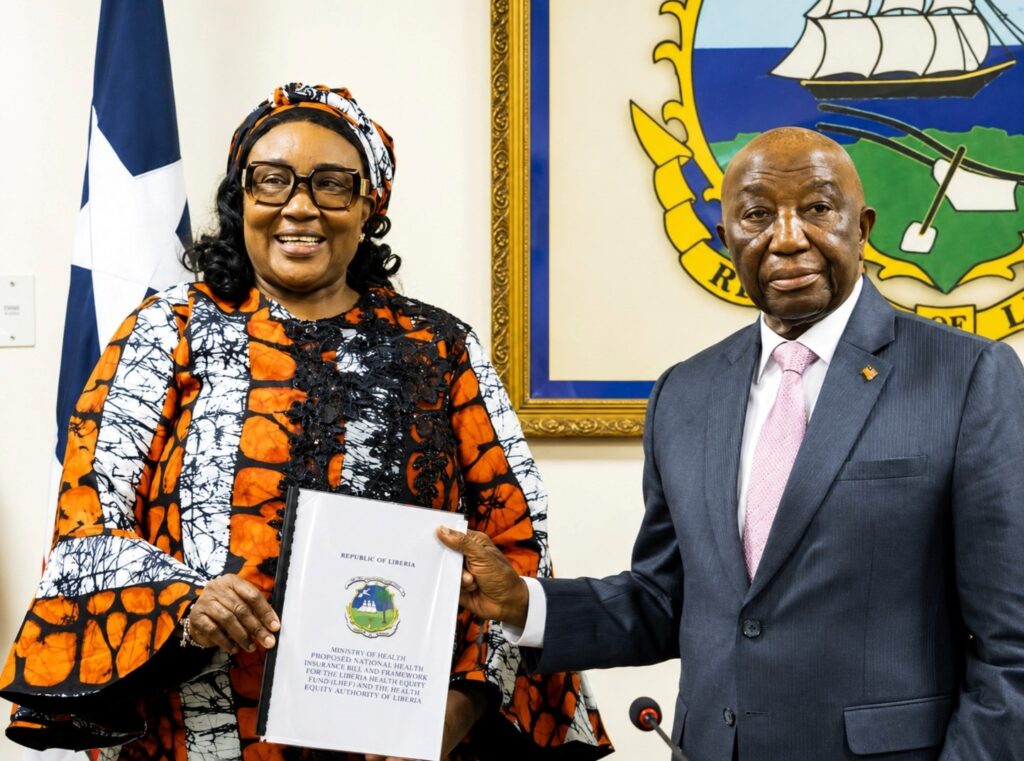
MONROVIA — Liberia has taken a significant step toward establishing a national health insurance system after the Ministry of Health submitted a landmark health financing bill to President Joseph Nyuma Boakai Sr., proposing the creation of the Liberia Health Equity Fund (LHEF) to improve healthcare access, lower out-of-pocket medical costs, and promote universal health coverage across the country.
The proposed legislation, which also seeks to establish the Health Equity Authority of Liberia (HEAL), is designed to create a sustainable health financing mechanism that improves healthcare delivery, promotes equitable access to medical services, and shields vulnerable households from catastrophic healthcare costs.
Health officials describe the initiative as one of the most ambitious healthcare financing reforms proposed in Liberia in recent years and a key component of the Health and Sanitation Pillar of the government’s ARREST Agenda for Inclusive Development.
The proposal was formally presented Tuesday at the Executive Mansion, where Ministry of Health officials outlined a framework aimed at building a more resilient and sustainable healthcare system through a dedicated pool of resources to support health services nationwide.
Receiving the proposal, President Boakai hailed the initiative as a major step toward ensuring that all Liberians have access to affordable, quality healthcare regardless of their economic status.
“The health of the people is the responsibility of the government,” President Boakai said.
The president stressed that access to healthcare, education and other essential public services remains fundamental to national development, noting that investments in human capital are critical to Liberia’s future growth and prosperity.
“If we give the people quality education and full access to healthcare, that country will be great,” he said.
Boakai emphasized that the success of a national health insurance scheme will depend largely on public understanding and participation. He called for a robust nationwide awareness campaign to educate citizens about the benefits of health insurance and how the proposed system would function.
According to the president, health insurance operates by pooling contributions from participants to ensure resources are available when medical care is needed, thereby reducing the financial burden associated with illness and emergency treatment.
Drawing on experiences from countries that have successfully implemented similar programs, Boakai urged policymakers to adopt proven approaches while tailoring the system to Liberia’s unique realities and priorities.
“We do not need to reinvent the wheel,” he said. “Liberia can learn from successful international experiences while building a healthcare financing system that reflects the country’s specific needs.”
The Liberian leader assured health authorities and development partners of his administration’s support for the initiative and encouraged continued stakeholder engagement to build trust and public confidence in the proposed scheme.
Under the proposal, the Liberia Health Equity Fund would be financed through multiple revenue streams intended to guarantee the program’s long-term sustainability.
According to health authorities, funding sources would include contributions from employees and employers in the formal sector ranging between 0.5% and 1% of salaries through the National Social Security and Welfare Corporation (NASSCORP), subject to regulations established by the proposed Health Equity Authority of Liberia.
The bill also proposes dedicating between 1% and 3% of Value Added Tax (VAT) collections to the fund, with the final percentage to be determined through regulatory processes.
Additional funding sources include a one-cent surcharge on mobile money transactions, mandatory contributions from Class A and Class B mining concession companies, and periodic lump-sum contributions from members of the informal sector through associations, unions and other organized groups.
Health officials further disclosed that the financing framework would draw from 10% of total excise tax collections, 5% of revenues generated from environmental pollution-related taxes and activities, as well as levies imposed on companies providing health and health-related insurance services.
If enacted, the Liberia Health Equity Fund is expected to significantly transform the country’s healthcare financing system by expanding access to medical services, strengthening healthcare infrastructure, improving health outcomes and accelerating Liberia’s progress toward achieving universal health coverage.
The proposal is now expected to undergo further review and consultations as government officials, lawmakers, healthcare professionals and development partners work toward establishing what could become Liberia’s first comprehensive and sustainable national health insurance program.






Discussion about this post