


Published: June 22, 2026
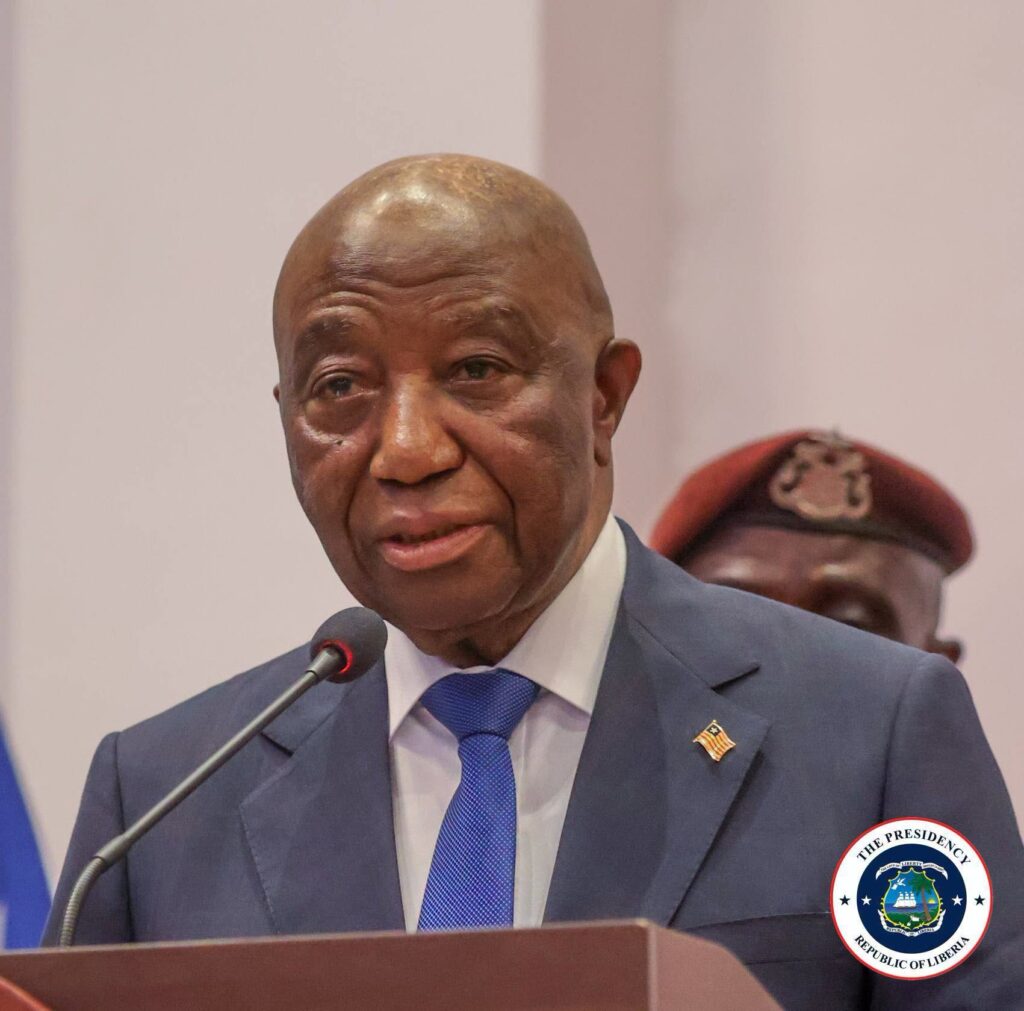
LOWER MARGIBI — President Joseph Nyuma Boakai says Liberia is prepared to use its newly secured seat on the United Nations Security Council and its role on the Advisory Council for International Reparatory Justice to help address global challenges, promote peace and contribute to international efforts aimed at confronting historical injustices.
Speaking to reporters over the weekend upon his return through Roberts International Airport after attending a high-level conference on reparatory justice in Accra, Ghana, Boakai said Liberia’s participation in global platforms is driven not only by national interests but also by a commitment to providing leadership on issues affecting humanity.
“Liberia is now on the Security Council, as a non-permanent member, and so we have a lot to contribute. Now, in terms of benefit, I mean, we are there to solve problems of the world. That’s why we are on the Security Council,” Boakai said.
The president was returning from a two-day High-Level Consultative Conference on Reparatory Justice hosted by Ghanaian President John Dramani Mahama and attended by African leaders, policymakers and international stakeholders.
The conference focused on advancing global efforts to address the enduring consequences of the transatlantic slave trade and slavery, support implementation of the United Nations resolution on reparatory justice, and strengthen international cooperation in promoting accountability, healing and sustainable development for people of African descent.
According to Boakai, discussions centered on restoration, remembrance and reconciliation as essential pillars of justice. He said the objective was not to dwell on past divisions but to acknowledge historical wrongs while building a better future.
Drawing from Liberia’s own post-war recovery and reconciliation experience, the president said the country advocates a balanced approach that prioritizes healing over division.
He stressed that Liberia views reparatory justice not as a “witch hunt,” but as an opportunity to learn from history and create pathways for lasting peace and development.
“Liberia views its participation in international panels not just for domestic benefit, but as a responsibility to offer its unique perspective on peace and security to the world,” he emphasized.
Boakai also disclosed plans to establish a memorial park as part of Liberia’s ongoing reconciliation and reburial efforts. He said the project would preserve historical memory while supporting national healing and unity.
The president noted that Liberia’s experience in reconciliation and democratic renewal offers valuable lessons that can contribute to broader African and global conversations on justice, remembrance and sustainable development.
He said Liberia’s position as a non-permanent member of the U.N. Security Council places the country in a unique position to share lessons from its own history while participating in international efforts aimed at promoting peace, education, development and greater opportunities for Africans.
Boakai added that Liberia intends to use its growing international profile to support initiatives that advance justice, healing and development across Africa and beyond.
“Liberia’s experience in reconciliation and democratic renewal provides valuable lessons,” he said, noting that the country stands ready to contribute to global discussions on preserving historical memory and advancing justice for people of African descent.



Discussion about this post