


Published: October 21, 2026
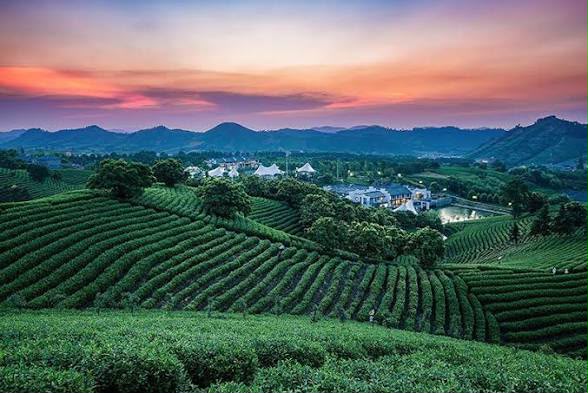
ANJI, China — From the scent of freshly grown white tea to the quiet grounds of a 2,500-year-old tomb, 23 Liberian journalists on Tuesday traced a remarkable development story in Anji — one that links agriculture, creativity, heritage and tourism in a county turning what it already has into new opportunities.
By Gibson Gee
The journalists, who are in China for a journalism seminar organized by the Research and Training Institute of the National Radio and Television Administration of China, visited three sites in Anji County: a white tea-growing area, the Anji Creative and Design Center (ACDC), and the Anji Ancient City National Archaeological Site Park and museum.
The first stop took the delegation into Anji’s tea-growing countryside, where a local guide introduced the journalists to the area’s white tea industry and its importance to local communities.
At the center of Anji’s white tea story is a philosophy that has become closely associated with the county’s transformation: “One leaf enriches an entire community.”
The phrase traces back to Huangdu Village in Xilong Township, where Xi Jinping visited in April 2003 and highlighted the role of a single tea leaf in creating an industry and improving the livelihoods of local residents.
The philosophy grew from Anji’s development of its white tea industry, turning what was once a local agricultural resource into an important source of income and a defining part of the county’s identity.
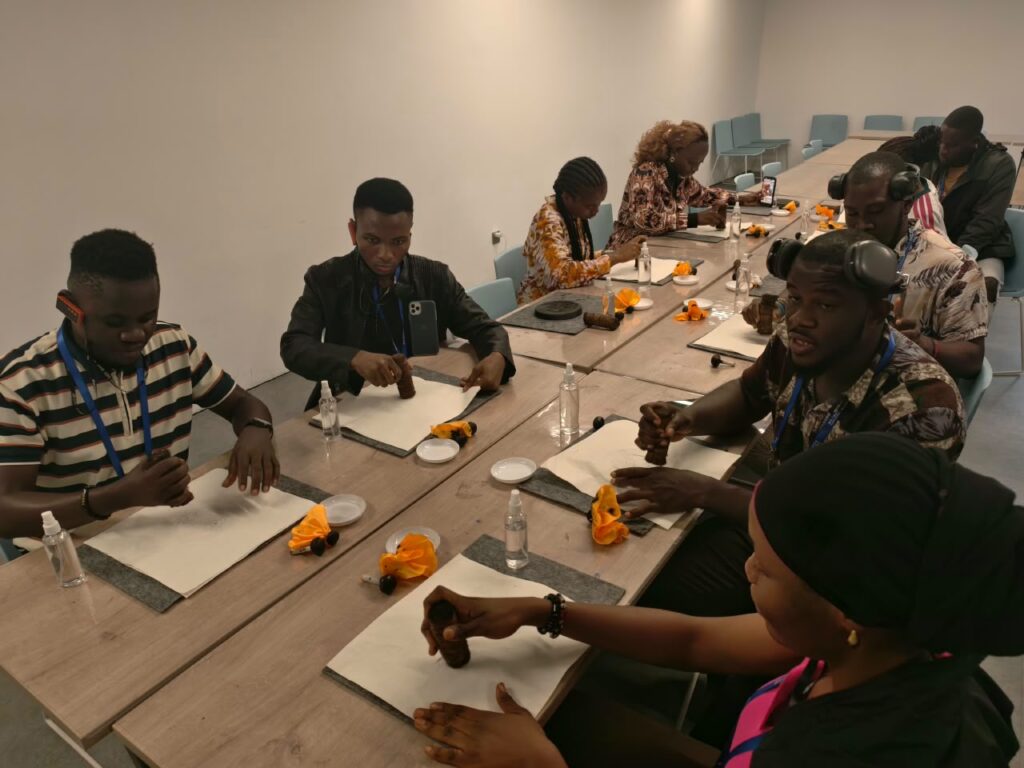
During the visit, the journalists toured the tea-growing area and learned how the plantations have also become part of the visitor experience, allowing tourists to see where the tea is cultivated while learning about its production and cultural significance.
For the visiting journalists, the tea fields offered an early indication of the broader story they would encounter throughout the day: Anji’s development is built around resources that already exist within its communities.
The experience demonstrated how an agricultural product can become part of a wider tourism economy when the landscape, culture and production process are incorporated into the visitor experience.
From the tea fields, the delegation moved to ACDC, where the focus shifted from agriculture to creativity.
The Anji Creative and Design Center provides space for freelancers and creative professionals, including musicians and producers, while incorporating nature and recreational attractions into its environment.
The tour guide explained the center’s role to the journalists.
“This place hosts a lot of freelancers, most of whom are musicians, producers and more come here to stay for some time.”
The journalists also encountered deer and cats at the center.
Explaining the treatment of the deer, the guide said:
“We have here Kitties and deers.”
“The Deers are not for eating. Once they died we buried them”the guide added.
The visit offered another perspective on Anji’s rural development, showing how creative activities and cultural spaces can be introduced into a setting traditionally associated with agriculture.
The delegation’s final stop took it deep into Anji’s ancient history.
At the Anji Ancient City National Archaeological Site Park, the journalists toured the archaeological museum and ancient city remains before proceeding to an ancient tomb within the park.
The archaeological site preserves remains associated with Anji’s ancient history and the Yue civilization. The museum presents archaeological discoveries and artifacts that help explain the development of the ancient settlement and the people who lived in the region.
The most striking part of the final visit was the ancient tomb.
Known as Bamudun, the tomb is part of the Longshan Yue Noble Tomb complex and dates back about 2,500 years. The site is regarded as one of the most significant excavated noble tombs in the complex.
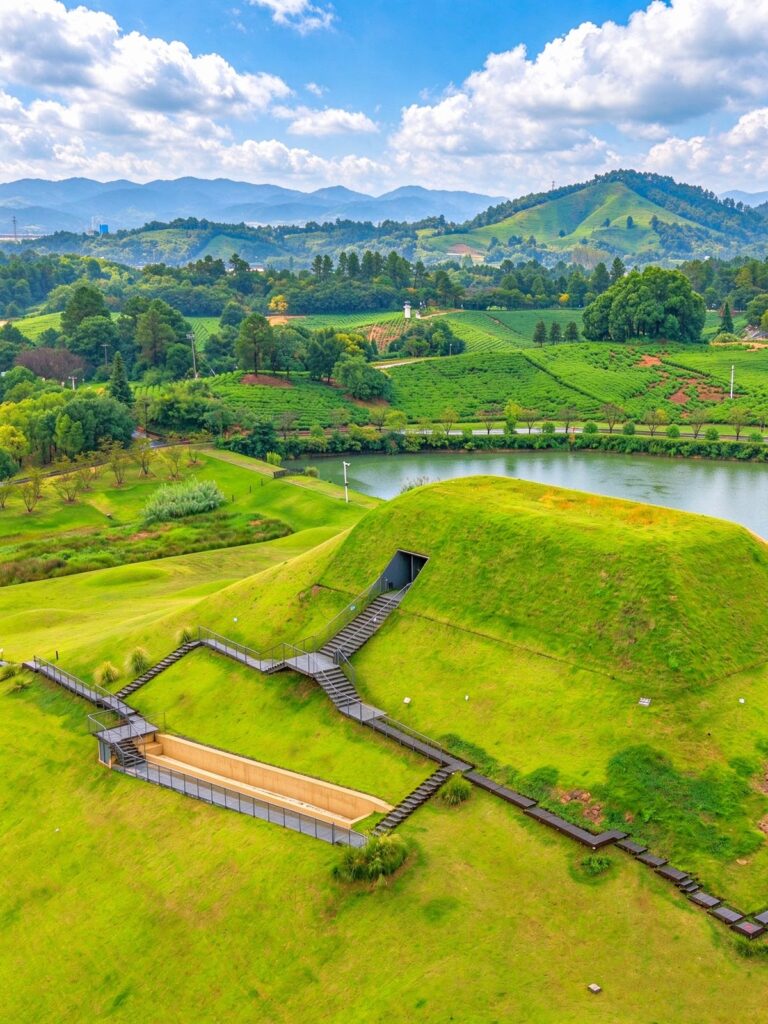
Archaeological excavations in the area have uncovered accompanying tombs and hundreds of burial objects, including pottery, jade and stone artifacts, providing researchers with evidence about the society and craftsmanship of ancient Yue.
For the visiting journalists, standing at the tomb provided a physical connection to a period of Chinese history that existed more than two millennia ago.
But the site is not simply being preserved as an archaeological relic.
The ancient city and tombs have been incorporated into a broader archaeological park that combines heritage preservation, research, education and public visitation.
The museum and archaeological facilities allow visitors to learn not only about the objects discovered at the site but also about the process through which archaeologists reconstruct the history of ancient communities.
The three stops presented three different sides of Anji.
The tea fields showed the relationship between agriculture and rural livelihoods.
ACDC demonstrated how creativity and cultural activity can become part of rural life.
The ancient city, museum and tomb highlighted the value of heritage preservation and cultural tourism.
For the Liberian journalists, the field visit also provided an opportunity to reflect on Liberia’s own resources.
Liberia has agricultural products, forests, beaches, cultural traditions and historical sites that could contribute to tourism and local economic activity. But resources alone do not necessarily create an industry.
Anji’s experience illustrates what can happen when local resources are developed, preserved and connected to the wider visitor experience.
The county’s story is therefore not simply about tea, an ancient city or a creative center.
It is about finding value in what already exists and building around it.
For the 23 Liberian journalists, Tuesday’s journey offered a firsthand view of that approach, from the simple value of one tea leaf to the enduring significance of an ancient tomb, with creativity, culture and tourism connecting Anji’s past to its present.






Discussion about this post