


Published: November 17, 2026
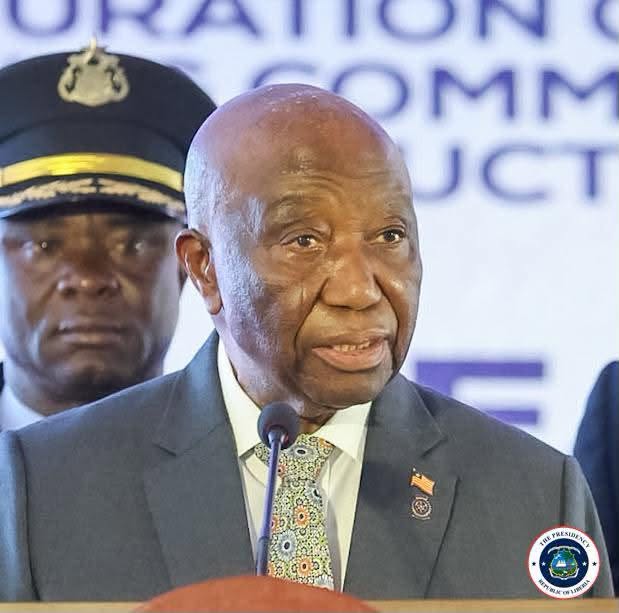
MONROVIA – Liberia will build a national museum to hold the archives, testimonies and memory of its 14-year civil war, and President Joseph Nyuma Boakai said Monday it must belong first to the victims, survivors and their families.
“Nothing about them must be done without them,” Boakai said. “Their voices must be heard in the rooms of the Museum, their stories must be told in the halls, and their dignity must be honored in everything we build. If we fail them, we fail the purpose of this Museum.”
Boakai spoke at the Centennial Pavilion in Monrovia as he opened the first meeting of the steering committee for the Liberia Peace, Reconciliation and Memorial Museum. Over three days, the committee is to adopt the museum’s charter, implementation plan, budget, working groups and financing, along with a plan for its first 90 days of work.
“I ask you to decide, not only to discuss,” Boakai told the committee. “The Liberian people are watching, and they are waiting, not for speeches, but for action.”
The committee is chaired by Minister of State without Portfolio Hadja Mamaka Bility. Its co-chair is Aliou Mamadou Dia, the resident representative of the United Nations Development Programme. Boakai said he, Bility and Dia signed the museum’s project charter Friday. He called the charter the institution’s founding document, setting out its purpose, governance and program of work.
“It is a promise, written down and signed, that the memory of our past will be preserved, that the truth will be told, and that reconciliation will be pursued, not in words alone, but in a national institution that will stand for generations,” he said.
Boakai said the museum will be more than a building. It will house the documents, photographs and recorded voices of people who lived through the war so they are never lost. It will serve as a center of learning for young people and scholars, a memorial to the dead, and a place where Liberians of every county, faith and background “can meet the truth together and choose, together, the future.”
He tied the project to the country’s unfinished reckoning with the war.
“We have lived in peace for more than two decades, and for that we give thanks to God and to the resilience of the Liberian people. But peace that is not built on truth is a peace that is not yet complete. A nation that does not face its past cannot fully secure its future,” he said.
The meeting’s banners carried five words: Remember, Understand, Learn, Reconcile, Prevent. Boakai said those words describe the journey the museum will take the country on, “so that no generation of Liberians ever again endures what ours endured.”
He said the museum is built especially for Liberians born after the war or who were children when it ended. “They did not choose the conflict, but they inherited its consequences,” he said.
Delegations from Rwanda and South Africa, both countries that have built memorials to their own histories of mass violence, came to share their experience. So did Dimitri Sanga, director of UNESCO’s Multisectoral Regional Office for West Africa. Boakai welcomed their help but said Liberia will keep ownership of the work.
“This is Liberia’s story, and it must be told in Liberia’s voice,” he said.
He urged the committee to build the museum on sound feasibility studies, good design and secured financing “so that what we begin here endures.”
Boakai said the museum also answers a call from the Truth and Reconciliation Commission. He recalled that on July 26 in Buchanan, he announced several history and heritage initiatives the commission had recommended, including the National Historical Recovery and Repatriation Initiative and the revival of the National History Project. He said a presidential committee to advise on carrying out those initiatives will be announced in the coming days.
Traditional chiefs, religious leaders, members of the diplomatic corps, Cabinet ministers, soldiers of the Armed Forces of Liberia and women’s peace groups attended the ceremony. Photographs of the war years, the interim governments and the United Nations peacekeeping mission lined the venue.

Discussion about this post