


Published: November 16, 2026
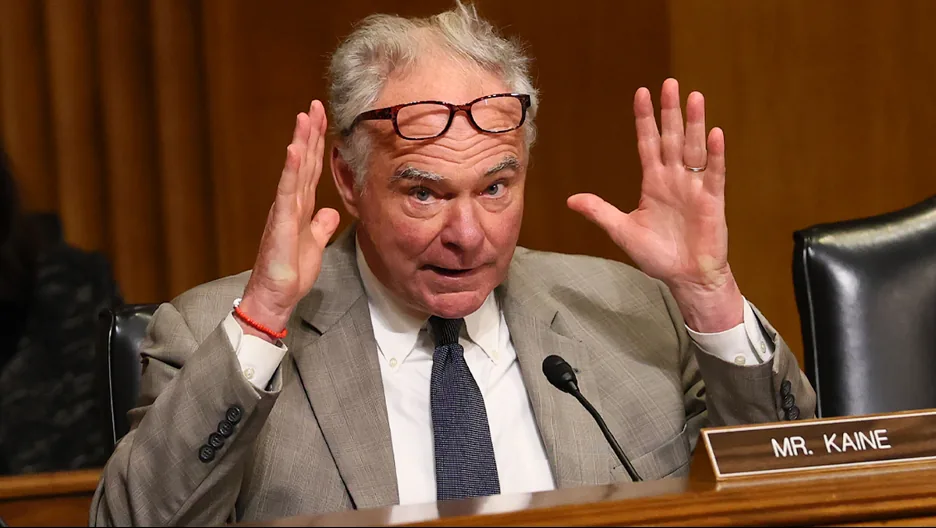
MONROVIA — U.S. Sen. Tim Kaine wants Washington to account for what has happened to the non-Liberians it deported to Liberia under the Boakai government’s deal to accept up to 1,200 of them. His resolution asks the State Department whether any have been detained or abused and what Liberia was promised in exchange.
Kaine, a Virginia Democrat on the Senate Foreign Relations Committee, filed resolution S. Res. 886 on Sept. 23. If adopted, it would require the secretary of state to submit a statement to Congress on Liberia’s human rights practices within 30 days, under Section 502B(c) of the Foreign Assistance Act of 1961.
The resolution focuses on people “who are not citizens of Liberia” but were sent there by the U.S. government. It asks about alleged arbitrary detention, torture, due process violations, enforced disappearances, killings, and trafficking. It asks what steps Washington took to assess how Liberia would treat those it received, what assurances the U.S. sought or obtained, and what conditions are like in Liberian detention facilities. It also asks about any U.S. security assistance, agreements, and financial transactions with Liberia tied to the removals, and what the U.S. has done to return or release anyone wrongfully removed. It seeks a list of people transferred to Liberia in 2025 and 2026, and a summary of meetings in those years between Liberian officials and U.S. officials in Washington.
“We have a right to demand answers about what conditions are like in those countries,” Kaine said in a statement announcing the measure.
Liberia is one of 15 countries named in resolutions Kaine filed the same day, alongside Sierra Leone, Guinea-Bissau, Uganda, and the Democratic Republic of Congo. He had earlier filed similar resolutions for 13 others, including Ghana, Cameroon, Equatorial Guinea, Eswatini, and South Sudan. Citing news reports, his office said the administration has pledged at least US$410 million to a network of third-country deportations spanning dozens of countries.
The resolution is a request for information. It makes no finding that abuses have occurred in Liberia.
Kaine’s office says resolutions under Section 502B are privileged, allowing him to force the Senate to debate and vote on them. Congressional records show that S. Res. 886 was referred to the Foreign Relations Committee the day it was filed, with no further action recorded. If the Senate adopts it, the law attaches consequences to silence: if the State Department does not deliver the statement within 30 days, U.S. security assistance to Liberia would be suspended until it does, unless Congress specifically authorizes otherwise.
The first deportees under the deal, about 20 people, arrived at Roberts International Airport on Aug. 20, according to U.S. officials quoted by CBS News. U.S. officials told the network that a small group refused to leave the plane.
President Joseph Nyuma Boakai’s government has defended the arrangement as humanitarian. Information Minister Jerolinmek Piah said the arrivals would be received as “guests of the Republic,” that they were free to leave, and that they could seek asylum, according to Al Jazeera. The government said the U.S. and an unnamed international partner would cover accommodation, food, and onward travel. It said the deal rested on diplomatic notes exchanged in September 2025 and that Liberia received no payment.
The government has not said publicly where the deportees are housed, and it did not allow journalists to speak with them when they arrived.
Some Liberian lawmakers have questioned whether the executive could make the deal unilaterally. Sen. Samuel Kogar of Nimba County cited Article 57 of the Constitution, which requires the concurrence of a majority of each house of the Legislature for certain agreements.
“This is not a small issue,” Kogar said.
The resolution’s request for a record of financial transactions follows a series of U.S. measures favorable to Liberia. They include a five-year, US$124 million health memorandum signed in December 2025 and an extension of visitor visa validity for Liberians from 12 to 36 months. Neither government has publicly linked those measures to the deportation deal.
The scrutiny comes as Liberia prepares to take the rotating presidency of the U.N. Security Council in December.



Discussion about this post