


Published: October 16, 2026
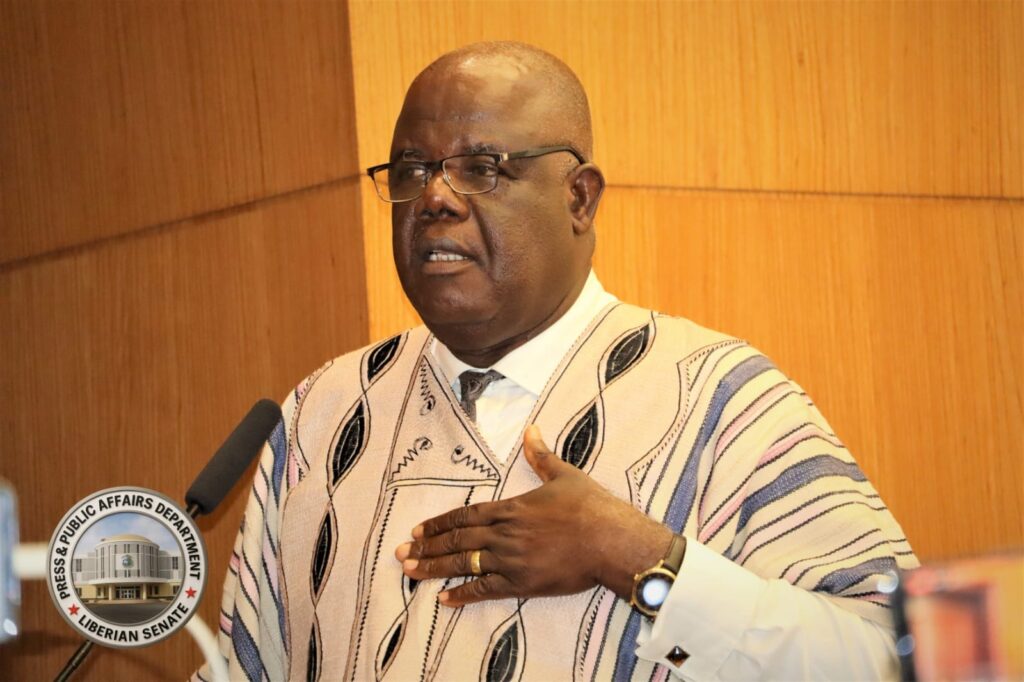
MONROVIA — Maryland County Sen. J. Gbleh-bo Brown has accused President Joseph Nyuma Boakai’s administration of undermining the rule of law by allegedly failing to implement a Supreme Court ruling concerning the leadership of the Governance Commission, warning that continued disregard for judicial decisions threatens constitutional governance and public confidence in state institutions.
Brown, chairman of the Senate Committee on Rules, Order and Administration, raised the concerns Thursday during the opening of the third segment of the Liberian Senate’s session, where he also announced a proposal to standardize salaries for legislative employees and address longstanding compensation disparities.
The Maryland County lawmaker questioned why the Executive Branch has kept acting officials at the Governance Commission despite what he described as a Supreme Court decision ordering the reinstatement of the institution’s legally appointed chairman and co-chairperson.
According to Brown, the leadership controversy has persisted for nearly three years, raising serious questions about the government’s commitment to constitutional principles, judicial independence and institutional accountability.
He argued that compliance with Supreme Court decisions is a constitutional obligation rather than a matter of executive discretion.
“The framers of our Constitution have never made it optional for the upholding of the ruling of the Supreme Court,” Brown declared.
The senator maintained that the government’s alleged failure to implement the ruling undermines the authority of the judiciary and weakens the constitutional framework governing relations among the three branches of government.
Brown also questioned the role of the minister of justice, who serves as attorney general and chief legal adviser to the president, arguing that the office has a responsibility to ensure that the Executive Branch respects judicial decisions.
He suggested that continued noncompliance with a ruling of the country’s highest court could set a troubling precedent for governance and weaken public confidence in the justice system.
The senator urged his legislative colleagues to take the matter seriously and exercise their oversight responsibilities to protect the integrity of the judiciary and uphold constitutional order.
His concerns centered on the Governance Commission, an institution established as part of Liberia’s postwar governance reforms to promote accountability, institutional effectiveness and adherence to democratic principles.
Brown recalled that the commission emerged from national efforts to address governance weaknesses identified among the factors contributing to Liberia’s devastating civil conflicts.
He emphasized that the institution was intended to strengthen public administration, promote good governance and help prevent the recurrence of conditions that contributed to the country’s years of instability.
Against that background, Brown argued that the controversy surrounding the commission’s leadership raises broader concerns about respect for the legal frameworks governing public institutions.
He maintained that the Senate must not remain indifferent when questions arise over compliance with judicial decisions, particularly those involving institutions established to strengthen accountability and democratic governance.
The senator’s intervention adds to the ongoing public debate over the Governance Commission’s leadership and the Executive Branch’s handling of appointments to institutions whose leadership positions are governed by law.
The administration’s response to Brown’s latest allegations was not immediately available.
Meanwhile, Brown said the Senate Committee on Rules, Order and Administration has developed a proposal to standardize compensation for selected legislative employees, including administrative personnel and senators’ personal staff.
He explained that the initiative followed consultations and technical work undertaken during the legislative break by members of his committee and selected personnel from the Senate’s Central Administration.
According to Brown, the proposed adjustments aim to address salary disparities among employees performing comparable duties and bring remuneration for certain positions within the Senate’s Central Administration closer to that of similar positions in the Executive Branch.
He said the committee also considered the need to promote greater equity between senators’ personal staff and civil servants performing similar administrative and professional responsibilities.
The Maryland County lawmaker maintained that a more equitable compensation structure would improve staff morale, efficiency and productivity while strengthening the Legislature’s administrative operations.
Brown said the proposal has already been submitted to Senate leadership, with copies distributed to senators for consideration.
The proposed changes would require further review and approval before implementation.
While calling for improvements in legislative staff welfare, Brown emphasized the need for the Senate to remain equally committed to defending constitutional governance and ensuring accountability across government institutions.






Discussion about this post