


Published: September 23, 2026
Deputy Minister Nyei asks DR Congo, Somalia and the African Union to co-own the guide as rotation strips the A3 of experienced negotiators
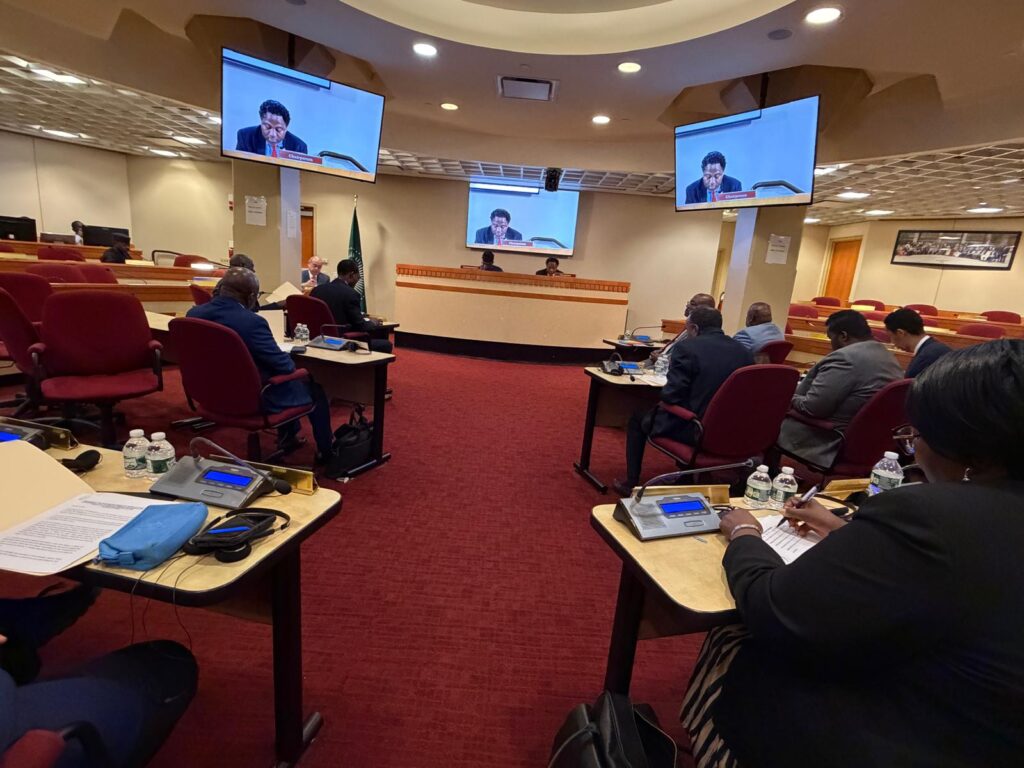
New York – Liberia has drafted a practical handbook to stop Africa’s elected members of the UN Security Council from losing their negotiating know-how every time a delegation rotates off the council, and has asked the Democratic Republic of the Congo, Somalia and the African Union to co-own it.
By Lennart Dodoo
Dr. Ibrahim Al-bakri Nyei, deputy minister for international cooperation and economic integration at the Ministry of Foreign Affairs, announced the draft while presiding over an A3 ministerial meeting in New York on the margins of the 81st session of the UN General Assembly, with Liberia serving as the group’s coordinator.
“We simply spend far too much valuable time reinventing the wheel,” Dr. Nyei said.
He described rotation as the bloc’s “greatest structural vulnerability,” saying experienced staff leave at the end of each year and incoming delegations must relearn how to negotiate, handle penholding and align positions between New York and Addis Ababa.
“Every December, invaluable institutional memory leaves New York,” he said.
The problem is immediate for the current bloc. Somalia joined the council in January 2025 after more than five decades, while 2026 marks Liberia’s return after a 65-year absence and the DRC’s return after 35 years. Somalia’s two-year seat ends in December.
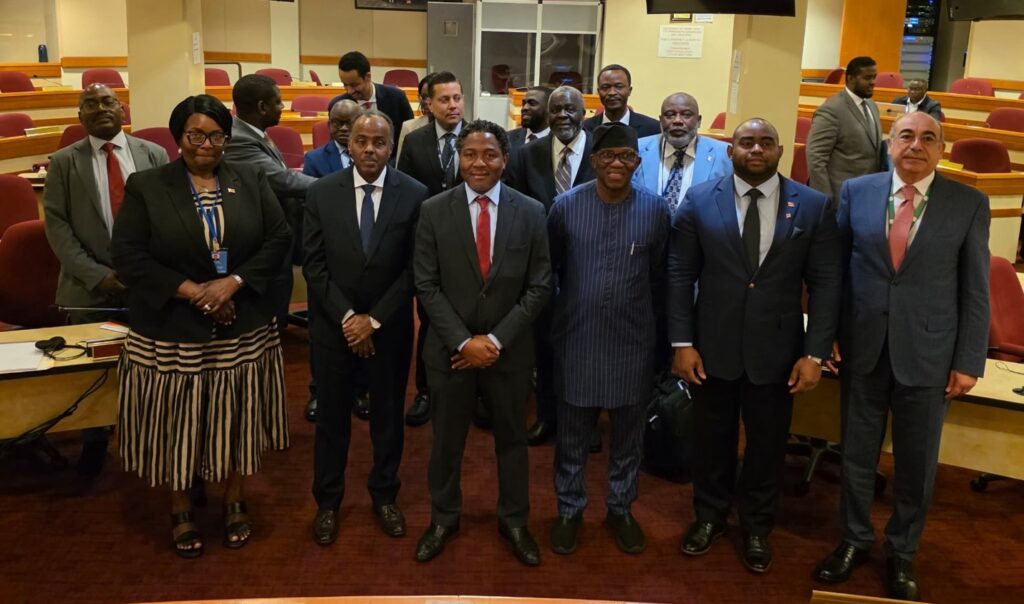
The draft, titled the A3/A3+ Practical Handbook, is intended to record the group’s working methods on joint negotiating positions, consensus-building, penholding strategies and handovers between outgoing and incoming delegations. Dr. Nyei said the strategic direction set by the AU’s Oran Process had been indispensable but that negotiators also need “a practical, day-to-day desk companion.”
“Institutional memory cannot expire with the conclusion of any single delegation’s two-year tenure,” he said.
Dr. Nyei stressed that Liberia did not intend the handbook to carry its name.
“This is not, and cannot be, Liberia’s handbook. It belongs to all of us,” he said. “Liberia has merely laid the foundation stones, but its legitimacy and true value depend entirely on our shared ownership.”
He asked the other A3 members, the AU Permanent Observer Mission to the UN and the AU Department of Political Affairs, Peace and Security to name focal points to work with Liberia’s team, “challenge the draft, inject your institutional insights, and refine it into a living instrument that our continent can rely upon year after year.”
The A3 coordinates Africa’s positions on the council and rotates its coordinator role; Somalia coordinated the group in the first quarter of the year. With Guyana’s term ending in 2025, the council currently has no Caribbean member, ruling out the expanded A3+1 arrangement used in 2020-2021 and 2024-2025.
Dr. Nyei has been one of Liberia’s lead voices on the council seat. In December, speaking for Foreign Minister Sara Beysolow Nyanti at the 12th High-Level Seminar on Peace and Security in Africa in Algiers, he said Liberia was preparing to assume its role as an A3 member for the 2026-27 term.





Discussion about this post