


Published: May 15, 2026
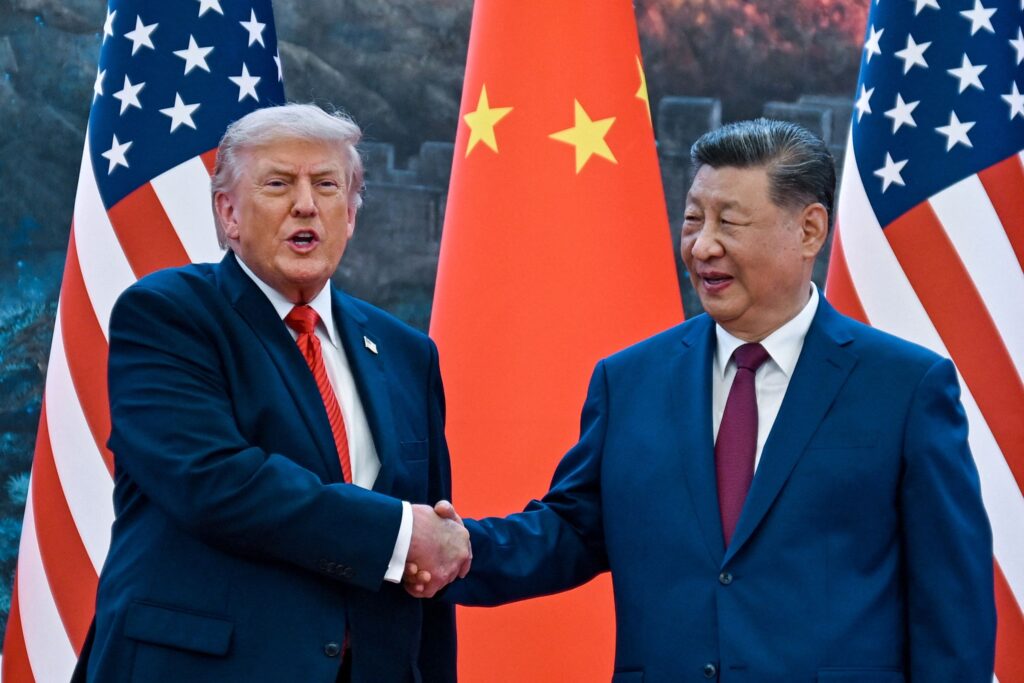
BEIJING — The latest summit between Chinese President Xi Jinping and U.S. President Donald Trump has once again thrust the complex rivalry between the world’s two most powerful nations into global focus, underscoring how competition, cooperation and strategic mistrust continue to shape international politics in the 21st century.
Meeting Thursday at Beijing’s Great Hall of the People during Trump’s state visit to China, both leaders projected optimism about stabilizing relations after years of tensions over trade, technology, military influence and the future of Taiwan. Yet beneath the ceremonial handshakes and promises of cooperation lies a geopolitical contest that increasingly defines the modern international order.
The summit came at a time of mounting global instability-from wars in Eastern Europe, especially Ukraine and the Middle East to economic uncertainty and shifting alliances across Asia and Africa. Against that backdrop, both Washington and Beijing appeared eager to present themselves as responsible global powers capable of managing differences without sliding into open confrontation.
Xi framed the moment in historic terms, asking whether China and the United States could “overcome the Thucydides Trap” — a reference to the theory that conflict often erupts when a rising power threatens an established one. The phrase reflected a deeper anxiety that has hovered over U.S.-China relations for more than a decade: whether the rivalry between the established American superpower and an ascendant China can remain peaceful.
From Engagement to Strategic Competition
Trump’s visit to China was due in March but due to his direct involvement alongside Israel against in the ongoing war with Iran, the delay had to factor in. But, there is something even more compelling to note. That is, for decades after China opened its economy in the late 1970s, Washington largely pursued a policy of engagement with Beijing, believing economic integration would encourage political moderation and cooperation. That relationship transformed dramatically as China’s economic and military power expanded.
China, although far younger that the United States in its self-rule (independence), is now the world’s second-largest economy, a global manufacturing giant and a technological competitor challenging American dominance in industries ranging from artificial intelligence to electric vehicles and telecommunications.
The United States, meanwhile, increasingly views China not simply as a trading partner but as its principal strategic competitor. The rivalry intensified during Trump’s first term (earlier presidency), when his administration launched sweeping tariffs on Chinese goods, accused Beijing of unfair trade practices and restricted Chinese access to sensitive technologies. Although tensions eased at moments, many of those policies continued under subsequent U.S. administrations, reflecting rare bipartisan consensus in Washington that China’s rise poses long-term strategic challenges.
At the Beijing summit, however, Trump emphasized cooperation over confrontation, praising Xi as “a great leader” and describing the relationship between the two countries as critically important to global stability. “The United States and China are the most important and most powerful countries in the world,” Trump said during the talks, adding, “Together, we can do a lot of big and good things for the two countries and the world.”
Economic Interdependence Amid Distrust
Despite political friction, the economies of the United States and China remain deeply intertwined. Trade between the two nations reaches hundreds of billions of dollars annually, with American companies heavily invested in Chinese manufacturing and Chinese firms dependent on U.S. markets and technology.
Xi emphasized that economic and trade relations between the two countries are “mutually beneficial and win-win in nature,” while calling equal consultation the proper way to resolve disagreements.
The summit also highlighted efforts to stabilize trade relations after years of tariff disputes and supply-chain disruptions that affected global markets. Trump traveled to Beijing accompanied by prominent American business leaders, signaling Washington’s continued recognition that economic engagement with China remains essential despite strategic tensions. SpaceX and Tesla’s Elon Musk, Apple’s Tim Cook and Goldman Sachs’s David Solomon are among the top business executives accompanying Trump on his visit.
Yet beneath the economic cooperation lies growing competition over technological supremacy. The United States has tightened restrictions on advanced semiconductor exports to China and sought to reduce dependence on Chinese supply chains in sensitive industries. China, in turn, has accelerated efforts to achieve technological self-sufficiency and expand its global economic influence through initiatives such as the Belt and Road program.
This competition increasingly extends into developing regions, including Africa, where both nations are competing for influence through trade, infrastructure investment and diplomatic partnerships.
Taiwan Remains the Most Dangerous Flashpoint
Among all the issues dividing Washington and Beijing, Taiwan remains the most explosive. Xi used the summit to reiterate Beijing’s longstanding position that Taiwan is the “most important issue” in China-U.S. relations and warned that mishandling the matter could lead to clashes or even conflict.
China views the self-governed island as part of its territory and has vowed eventual reunification, by force if necessary. The United States officially recognizes Beijing under the “One China” policy but maintains unofficial ties with Taiwan and continues supplying defensive weapons to the island. The Taiwan Strait has become one of the world’s most militarized regions, with frequent Chinese military exercises and increased American naval activity heightening tensions.
For most analysts who have and continue to follow the Taiwan situation, they widely regard Taiwan as the most likely trigger for a direct military confrontation between China and the United States.
Xi’s warning that “Taiwan independence” and peace are “as irreconcilable as fire and water” reflected Beijing’s increasingly forceful rhetoric on the issue.
For Washington, balancing support for Taiwan while avoiding escalation with Beijing remains one of the most delicate challenges in foreign policy.
Rival Visions for Global Leadership
Beyond trade and security, the rivalry between China and the United States increasingly reflects competing visions of global governance and international leadership. The United States continues to champion a rules-based international order built around democratic alliances and Western-led institutions. China, meanwhile, presents itself as an alternative center of global influence, emphasizing sovereignty, economic development and multipolar cooperation.
Beijing has expanded its diplomatic footprint across the Global South, portraying itself as a partner for developing nations seeking investment and infrastructure without Western political conditions. This competition for influence is particularly visible in Africa, Latin America and Southeast Asia, where both powers are working to deepen political and economic ties.
At the same time, both countries recognize that global challenges such as climate change, pandemics, nuclear proliferation and financial instability cannot be addressed effectively without cooperation between Washington and Beijing. That reality has forced both governments into a complicated relationship combining strategic rivalry with selective collaboration.
Symbolism and Power Politics
The elaborate state ceremony welcoming Trump underscored the symbolic importance China attached to the visit. Honor guards lined the eastern entrance of the Great Hall of the People, national anthems were played and a 21-gun salute echoed across Tiananmen Square as Xi hosted Trump with the grandeur typically reserved for major diplomatic milestones. The imagery reflected China’s desire to project itself as an equal — or even superior — global power capable of hosting diplomacy on its own terms.
For Xi, the summit also served domestic and international political purposes, reinforcing his image as a statesman managing relations with the United States from a position of strength. Trump, meanwhile, appeared eager to showcase his personal rapport with Xi, repeatedly emphasizing their longstanding communication and mutual respect. Personal diplomacy has often played a central role in Trump’s approach to foreign policy, particularly with powerful world leaders.
A Rivalry That Will Shape the Century
While both leaders struck conciliatory tones in Beijing, signs suggest that there is still an expected fundamental rivalry between the United States and China to disappear. The competition spans economics, military power, technology, ideology and global influence, dimensions that make the relationship far more consequential than a traditional bilateral dispute.
Instead, the summit highlighted a broader reality: the United States and China are locked in a long-term struggle to shape the future balance of global power while simultaneously trying to avoid catastrophic conflict. Whether that rivalry remains manageable may become one of the defining questions of the century.
Xi acknowledged as much during the talks, saying the choices made by both nations would affect not only their own peoples but “the future of humanity.” For now, the Beijing summit offered a temporary image of stability, two rival powers seeking dialogue in a world increasingly unsettled by uncertainty and division. But beneath the diplomatic optimism remains an enduring geopolitical contest whose outcome will influence global politics, economics and security for generations to come.






Discussion about this post