


Published: June 12, 2026
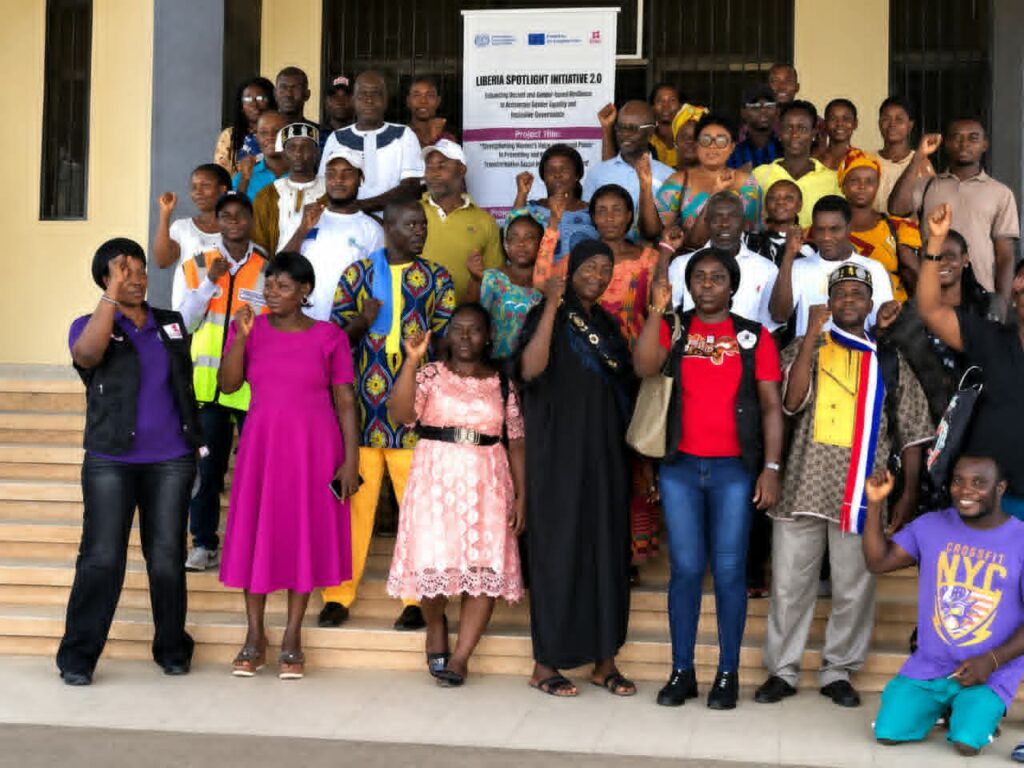
HARPER, Maryland County — The Women NGOs Secretariat of Liberia (WONGOSOL), with support from UN Women Liberia and funding from the European Union, has officially launched activities under the Liberia Spotlight Initiative 2.0 Project, a major intervention aimed at reducing sexual and gender-based violence (SGBV) and advancing gender equality and women’s empowerment across the country.
The project, titled “Reducing Sexual and Gender-Based Violence to Achieve Gender Equality and Women’s Empowerment,” was officially launched during a one-day inception meeting held Tuesday at the Harper City Hall Conference Hall in Maryland County. The gathering brought together local government officials, chiefs, commissioners, women leaders, youth representatives, civil society organizations, human rights advocates, service providers, and development partners to discuss strategies for preventing violence against women and girls and strengthening collaboration among key stakeholders.
The inception meeting marked the beginning of a broader engagement process that will include stakeholder mapping and assessment exercises in eight counties: Maryland, Montserrado, Nimba, Lofa, Grand Cape Mount, Grand Gedeh, Grand Bassa, and Bong.
According to the organizers, the initiative seeks to establish stronger partnerships among government institutions, women’s rights groups, civil society organizations, and communities in order to improve responses to violence against women and girls while promoting sustainable social change.
Strengthening Women’s Collective Power
Providing an overview of the project, WONGOSOL Project Officer Mrs. Jeneba M. Vessellie explained that the organization is currently implementing Outcome D of the Spotlight Initiative component entitled “Strengthening Women’s Collective Power to Prevent Violence and Transform Social Norms in Liberia.”
Mrs. Vessellie said the outcome is designed to ensure that women’s rights groups and civil society organizations can more effectively influence and advance progress on Gender Equality and Women’s Empowerment (GEWE) and the Elimination of Violence Against Women and Girls (EVAWG).
She emphasized that lasting change cannot be achieved through isolated efforts. “This outcome recognizes that sustained progress does not depend solely on the capacity of individual organizations. It depends on collective action, coordination, networking, partnerships, and the strength of the women’s movement across Liberia,” Mrs. Vessellie told participants. She outlined the project’s three major outputs, beginning with efforts to strengthen knowledge-sharing, networking, partnerships, and joint advocacy among civil society organizations.
The second output focuses on improving the use of accountability mechanisms, including social audits, community scorecards, public hearings, and service delivery monitoring to ensure that institutions are responsive to the needs of women and girls. The third output centers on strengthening the institutional capacities of civil society organizations in program design, implementation, monitoring and evaluation, and resource mobilization.
Stakeholder Mapping and Assessments Mrs. Vessellie explained that the inception meeting serves as a strategic entry point for the project and is intended to introduce the initiative’s objectives, implementation approach, and expected outcomes while securing local ownership and commitment.
Following the launch, WONGOSOL will undertake a two-day stakeholder mapping and assessment exercise in all eight Spotlight counties. The exercise will identify women’s rights groups, civil society organizations, existing services, referral pathways, gaps, challenges, and opportunities for collaboration in strengthening prevention and response mechanisms related to sexual and gender-based violence. The assessments will also examine the effectiveness and readiness of approximately 100 civil society organizations and women’s rights groups to manage programs and resources effectively.
Based on assessment findings, selected organizations will receive refresher training and technical support to strengthen their strategic planning and institutional development efforts.
Key Activities Planned
Under the initiative, WONGOSOL will conduct advocacy training for 100 women’s civil society organizations and women’s movement actors across four project counties. The project will also facilitate advocacy engagement dialogues involving women’s organizations and community stakeholders, support the development of accountability reports on sexual and gender-based violence issues, and organize official dialogues with government officials and key stakeholders.
One of the initiative’s notable activities includes support for the preparation of a Civil Society Shadow Report to contribute to Liberia’s reporting obligations under the Convention on the Elimination of All Forms of Discrimination Against Women (CEDAW).
Officials say these interventions are intended to improve advocacy efforts, strengthen accountability, and ensure that policies and services adequately address the needs of women and girls.
UN Women Highlights Need for Survivor-Centered Approaches
Delivering remarks on behalf of UN Women, Spotlight Initiative Coordinator Ms. Deodaata Mukazyire stressed the importance of strengthening civil society organizations and improving coordination among stakeholders in the fight against gender-based violence. She noted that Spotlight Initiative 2.0 is being implemented in eight counties because of the need to build strong grassroots networks capable of advancing gender equality and supporting survivors of violence. “The initiative seeks to strengthen the capacity of civil society organizations and women’s rights groups, enhance stakeholder coordination, improve advocacy efforts, and promote survivor-centered approaches to addressing sexual and gender-based violence,” Mukazyire said.
She explained that women and girls often experience the greatest impacts of social and economic challenges due to entrenched social norms and gender stereotypes. “There is a reason why this project focuses primarily on women and girls,” she stated. “When challenges arise in society, women and girls are often affected differently because of the perceptions and expectations that have been created around the roles they should and should not play. It is not because they lack the ability, but because society has traditionally assigned certain roles to them. As a result, when difficulties occur, women and girls are frequently among those most affected.”
Mukazyire said the initiative seeks not only to address violence but also to challenge harmful social norms that continue to limit opportunities and expose women and girls to various forms of discrimination and abuse.
Expected Results
According to project officials, the Spotlight Initiative 2.0 is expected to deliver several key outcomes over the implementation period. Among them are stronger engagement between women’s rights organizations and government institutions, improved evidence-based advocacy, enhanced accountability for service delivery and enforcement of laws addressing violence against women and girls, and greater sustainability of women’s movements through stronger organizational systems and improved resource mobilization.
Project leaders also expect the initiative to improve access to quality services for survivors of violence and establish sustainable platforms for collective action aimed at advancing gender equality nationwide.
Stakeholders Pledge Commitment
The launch meeting concluded with strong endorsements from local authorities, traditional leaders, civil society representatives, and human rights advocates. Participants welcomed the initiative and pledged their commitment to supporting its implementation and ensuring that its objectives are achieved. Several speakers highlighted the importance of collaboration among government agencies, community leaders, and civil society organizations in addressing gender-based violence and protecting the rights of women and girls.
Officials expressed optimism that the project will contribute significantly to creating safer communities, strengthening accountability systems, and empowering women and girls throughout Liberia. Through the combined efforts of WONGOSOL, UN Women, the European Union, government institutions, and local stakeholders, Spotlight Initiative 2.0 is expected to become a major platform for advancing women’s rights and eliminating violence against women and girls across Liberia’s eight participating counties.
Security authority, chiefs, commissioners, religious, civic society, human rights groups many among others have reaffirmed their commitment to upholding to the program until it achieves its goals.






Discussion about this post