


Published: September 25, 2026
MONROVIA — Liberia’s Witness Protection Agency is pushing for a five-year, evidence-based funding framework to build a stronger national protection system, warning that witnesses should never be forced to choose between helping prosecute alleged criminals and protecting their own lives.
By Destiny D. Jabula
WPA Director Teklo Maxwell Grigsby II said the proposed framework would define the responsibilities of government institutions, security agencies and civil society organizations while establishing clearer referral pathways for witnesses facing threats because of information or testimony they provide.
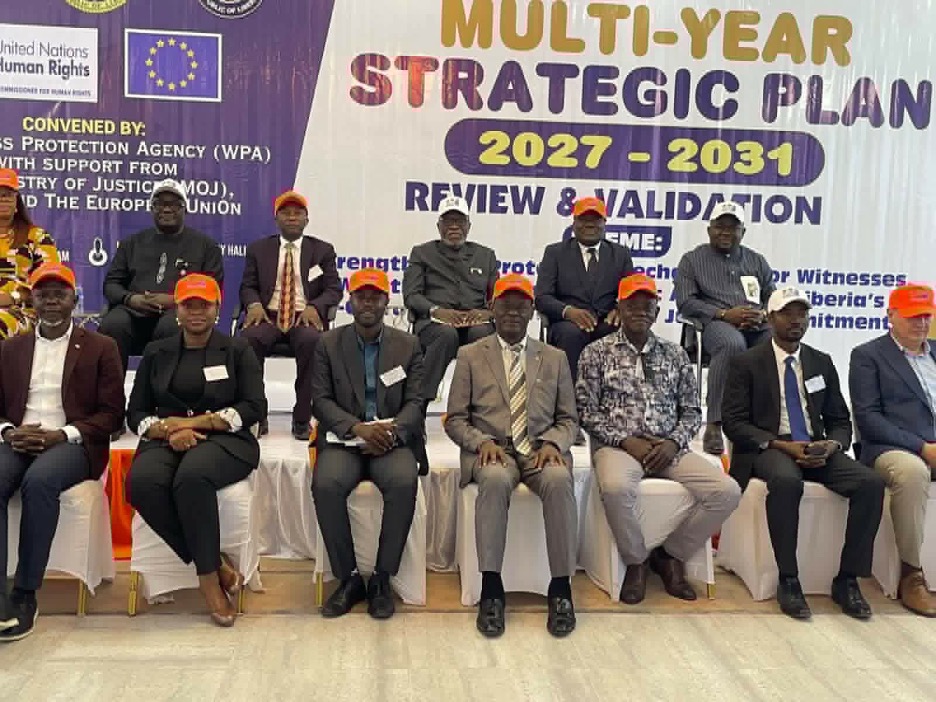
Grigsby spoke during a two-day review and validation session of the agency’s Multi-Year Strategic Plan for 2027-2031 on Thursday in Monrovia, which brought together government institutions, civil society organizations and other stakeholders.
“Witness protection is not a business for one institution,” Grigsby said, stressing that effective protection requires coordinated action among institutions responsible for investigations, security, justice and public accountability.
He explained that a case could begin with a civil society organization receiving information about alleged corruption and referring it to the Liberia Anti-Corruption Commission, which has the statutory mandate to investigate corruption-related allegations.
If the person providing the information later faces threats because of a willingness to testify, Grigsby said, the matter could be referred to the Witness Protection Agency. Security institutions could then become involved depending on the nature and severity of the threat.
According to him, such scenarios demonstrate why witness protection cannot be left solely to the WPA.
“By the time we leave from here, our expectation is no witness should have to choose between testifying or providing evidence in court against a criminal defendant or thinking about their survival or safety,” Grigsby said.
He also acknowledged what he described as a lack of public confidence in Liberia’s capacity to protect witnesses, saying some Liberians believe they can safely testify only after being taken outside the country.
“Most Liberians only feel safe to give testimony when you put them on a plane to go either to Ghana, Guinea, somewhere else,” he said. “We have to change this.”
Grigsby said the 2027-2031 strategic plan is intended to help build a system in which witnesses can cooperate with investigations and testify in Liberia without fearing for their safety.
Financing, however, remains a major component of that effort.
Grigsby said the agency wants to translate the strategic plan into measurable financial requirements and submit an evidence-based budget to the government through the Ministry of Finance.
“We want to submit to the government a budget that is evidence-based,” he said, adding that the two-day deliberations are expected to help determine the resources required to achieve specific protection outcomes.
He acknowledged that the government provided a budgetary allocation to the agency in 2026, which has supported some ongoing activities, but said sustainable financing will be necessary as the WPA develops a national witness protection program.
Grigsby also pointed to the possibility of tapping a portion of petroleum-related revenues to support emergency response and victim-focused programs as the agency explores additional funding mechanisms beyond its regular government allocation.
Beyond government financing, he called for greater civil society involvement in monitoring the agency through public education, surveys, feedback and peer review.
“We’ve asked the civil society to organize so that from time to time they too can measure our work and can give practical peer review,” Grigsby said.
He also stressed the need for acceptable standards in facilities established to protect witnesses.
“Safe room cannot be worse than people’s homes,” he said.
The two-day review and validation exercise is examining the proposed Multi-Year Strategic Plan for 2027-2031 and defining the responsibilities of institutions expected to contribute to a coordinated witness protection system.
For the WPA, Grigsby said the objective is to create a system that can protect people who come forward with critical information without requiring them to leave Liberia to feel safe.





Discussion about this post