


Published: May 4, 2026
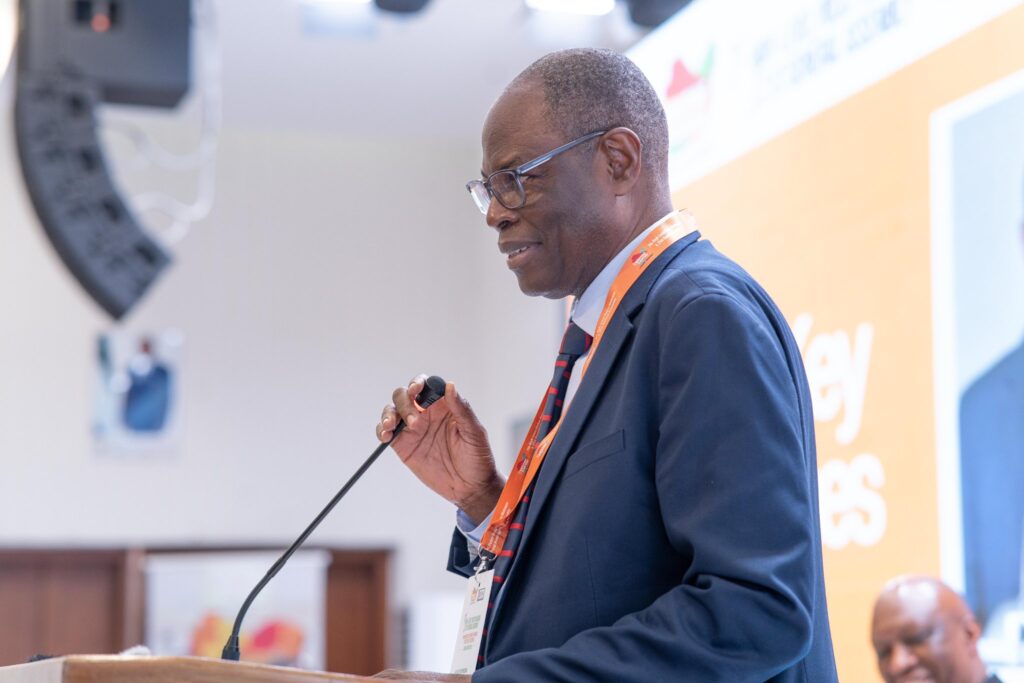
WATAF Executive Secretary Jules Tapsoba
ABUJA, Nigeria — The West African Tax Administration Forum (WATAF) has called for deeper collaboration between the media and tax authorities across Africa, stressing that press freedom remains a cornerstone of transparent governance, improved tax compliance and sustainable development.
In a statement marking World Press Freedom Day, WATAF Executive Secretary Jules Tapsoba said a free, independent and responsible press plays a decisive role in strengthening tax systems by promoting accountability and informing citizens about how public resources are generated and used. “A free and responsible press is indispensable to transparent tax systems,” Tapsoba said, adding that “By informing citizens and holding institutions accountable, the media strengthens trust, improves compliance and supports sustainable domestic revenue mobilization.”
Media as a Pillar of Accountability
WATAF’s statement highlights a growing recognition among policymakers that effective tax administration is not solely a technical function but also a matter of public trust. Across many African countries, low levels of voluntary tax compliance have often been linked to skepticism about how governments manage public funds. In this context, the media is increasingly seen as a bridge between citizens and state institutions.
By investigating public finance, explaining tax policies in accessible terms and scrutinizing government spending, journalists help demystify complex fiscal systems. This, WATAF argues, creates a more informed citizenry that is better positioned to meet its tax obligations and demand accountability in return. The Forum noted that professional and ethical reporting on tax matters contributes significantly to curbing tax evasion, illicit financial flows and corruption — challenges that continue to undermine revenue generation across the continent.
When the media exposes loopholes, mismanagement or abuse within tax systems, it pressures authorities to implement reforms and strengthen oversight mechanisms.
Domestic Resource Mobilization at the Forefront
The call comes at a time when domestic resource mobilization has become a central policy priority for African governments seeking to reduce dependence on external financing. With mounting fiscal pressures, including debt servicing obligations and development needs, many countries are focusing on improving tax collection efficiency and broadening their revenue base.
WATAF emphasized that public cooperation is essential to achieving these goals. Citizens are more likely to comply with tax obligations when they understand the purpose of taxation and trust that revenues will be used responsibly. Here, the media plays a vital role in shaping perceptions and fostering transparency. “Domestic resource mobilization is significantly strengthened when citizens are well-informed and trust public institutions,” the statement said.
The Forum added that accurate reporting helps counter misinformation about tax policies, which can otherwise fuel resistance or confusion among taxpayers. In several countries, reforms such as digital tax systems, value-added tax adjustments and compliance enforcement measures have faced public backlash, often due to inadequate communication.
Challenges Facing Journalists
While commending journalists and media institutions across Africa, WATAF acknowledged the difficult conditions under which many operate. These challenges include limited access to information, financial constraints, political pressure and, in some cases, threats to press freedom. Despite these obstacles, the organization praised the resilience of journalists who continue to uphold standards of accuracy and professionalism, particularly in reporting on public finance and governance issues. “Reporting on revenue governance plays an essential role in reinforcing accountability and strengthening democratic institutions,” the statement noted.
Across the region, investigative journalism has uncovered tax-related irregularities ranging from corporate tax avoidance schemes to misappropriation of public funds. Such reporting not only informs the public but also supports reform efforts within revenue authorities.
A Call for Openness from Tax Authorities
WATAF’s message was not directed solely at the media. The organization also urged tax administrations to adopt more transparent and media-friendly approaches, recognizing journalists as strategic partners rather than adversaries. According to the Forum, proactive engagement with the media can significantly enhance public understanding of tax systems and improve compliance rates. This includes timely dissemination of information, clear communication of policy changes and responsiveness to inquiries. “Effective collaboration between tax administrations and the media can significantly enhance revenue collection and support national development priorities,” WATAF said.
In practice, this could involve regular press briefings, simplified tax guides for public consumption and capacity-building initiatives to help journalists better understand fiscal policy. Some countries have already begun implementing such measures, with revenue authorities establishing dedicated communication units to engage the public more effectively.
Press Freedom as a Non-Negotiable Principle
WATAF underscored that safeguarding press freedom must remain a fundamental commitment for governments across Africa. Without an independent media, efforts to promote transparency and accountability in tax systems are likely to falter. Press freedom, the Forum argued, is not only a democratic ideal but also an economic necessity. Transparent governance fosters investor confidence, strengthens institutions and creates an environment conducive to sustainable growth.
An empowered media, WATAF said, helps reinforce the social contract between governments and citizens — a relationship in which taxpayers contribute to national development and, in return, expect accountability and effective service delivery. “An empowered and independent media is essential to fostering a culture of accountability, strengthening the social contract and driving inclusive economic growth,” the statement said.
Regional and Global Contexts
The call for stronger media-tax collaboration aligns with broader international efforts to enhance transparency in public finance. Organizations such as the International Monetary Fund (IMF) and the World Bank have consistently emphasized the importance of governance and accountability in improving tax systems.
In West Africa, where economies vary widely in size and structure, regional cooperation has become increasingly important. WATAF plays a key role in facilitating this collaboration by providing a platform for knowledge sharing, capacity development and policy dialogue among member states. Through its initiatives, the Forum supports the modernization and harmonization of tax systems in line with regional and international standards. This includes promoting digitalization, improving compliance frameworks and addressing cross-border tax challenges.
The Role of WATAF
As a regional body, WATAF brings together tax administrations across West Africa with the aim of strengthening domestic resource mobilization. Its work focuses on enhancing cooperation, building institutional capacity and fostering innovation in tax administration. The organization has been instrumental in shaping regional tax policy discussions and supporting reforms that align with global best practices.
By advocating for stronger partnerships with the media, WATAF is expanding its approach to include broader stakeholder engagement. This reflects a growing understanding that effective tax systems require not only technical expertise but also public trust and participation.
What the future holds
As African countries continue to implement tax reforms and strengthen institutions, the relationship between the media and tax authorities is likely to become even more critical. In an era of rapid information dissemination and increasing public scrutiny, transparent communication is essential to maintaining credibility and trust. WATAF’s call serves as a reminder that sustainable development depends not only on revenue generation but also on the integrity of the systems that manage those resources.
By working together, the media and tax administrations can help build a more transparent, accountable and inclusive economic landscape. The Forum reaffirmed its commitment to promoting collaboration among stakeholders, including journalists, policymakers and civil society organizations, in the pursuit of resilient and credible tax systems across Africa.




Discussion about this post