


Published: January 26, 2026
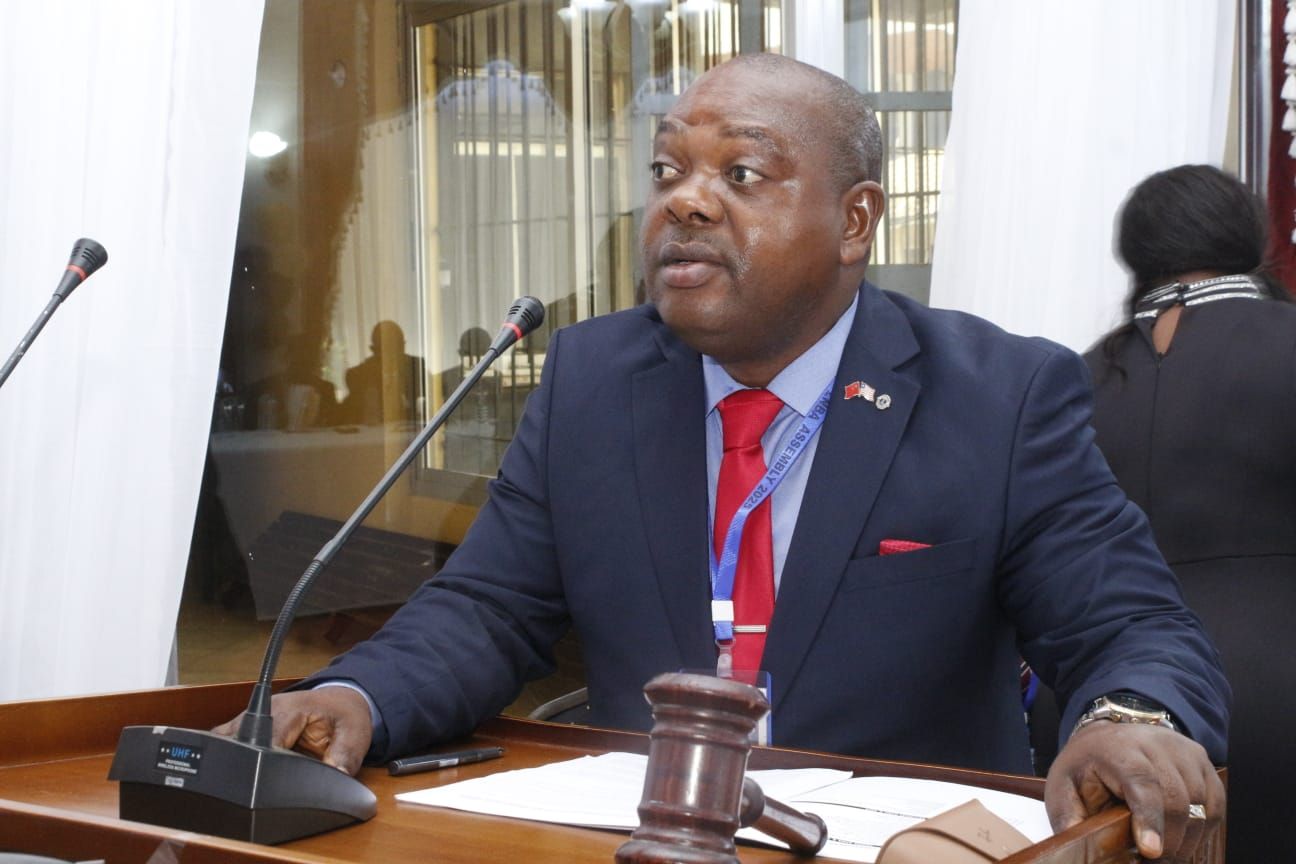
Monrovia — Cllr. Bornor M. Varmah has officially assumed office as Chairperson and Chief Executive Officer of the Law Reform Commission (LRC), unveiling an ambitious reform agenda while committing to resign within six months if his team fails to deliver with adequate government support.
Varmah was nominated on September 3, 2025 by President Joseph Nyuma Boakai, Sr. as Chair of the Commission, alongside Massa Jallabah as Commissioner, following the elevation of former LRC Chair Boakai Kanneh to the Supreme Court Bench as Associate Justice.
Stepping into the new role, he has taken over the helm of authority at LRC as the immediate past president of the Liberia Bar Association (LBA). He has also been serving as the president of West African Bar Association.
Commitment to Service and Institutional Reform
Speaking during his official takeover ceremony on Friday in Monrovia, Varmah said his leadership would be defined by service, accountability, and results, stressing that law reform is central to democratic governance.
“We’ve come as selfless public servants to work. Law reform is indispensable to any democratic setting,” Cllr. Varmah, Chairperson Noted.
He disclosed that prior to formally assuming office, he had already begun internal reviews and consultations with national authorities to identify key interventions that would strengthen the Commission’s effectiveness.
Budget Expansion and Six-Month Ultimatum
Varmah confirmed that engagements with the Ministry of Finance and Development Planning have already resulted in a preliminary increase of the Commission’s budget to US$1.1 million, with further discussions underway at the Legislature for additional funding through contingency allocations.
“If we have the needed support to the Law Reform Commission and my team does not perform here, I will tender my resignation in six months,” He pledged.
He emphasized that meaningful law reform requires adequate financing, logistics, and skilled human resources, particularly to enable nationwide public consultations.
Nationwide Consultations and Staffing Drive
The LRC Chair highlighted the need for vehicles, operational funds, and competent lawyers to allow the Commission to engage citizens across Liberia, noting that laws must reflect the voices of those they govern.
“Whenever we engage in law reform processes, we must incorporate the views of our people who are going to benefit from the law,” the Chairman added.
He announced plans to recruit between 10 and 15 competent lawyers within his first year, alongside training support from the United Nations system and other international partners.
Restoring Public Access to Liberia’s Laws
Varmah disclosed that restoring long-dormant legal access platforms would be among his early priorities, describing public access to laws as a democratic necessity.
“Law reform is not just law written and scattered everywhere. The Commission must make the law accessible to the people who consume the law,” Cllr. Varmah Asserted.
He said the Commission would collaborate with the UN system and the Government of Liberia to revive the platform, which has remained inactive since 2017.
Policy Review, Concessions, and Local Content Focus
Varmah further outlined plans to review conflicting laws, improve concession agreements, strengthen Liberianization and local content policies, and advance work on the Family Code recently turned over to the Commission by the Supreme Court.
“Can we begin to shift from royalty-based concessions to profit-sharing mechanisms, and do we even have the trained manpower to checkmate those agreements?” He said.
Kanneh Reflects on Challenges and Coordination Gaps
Outgoing LRC Chair and Associate Justice of the Supreme Court, Boakai Kanneh, described his tenure as constrained by limited resources and weak coordination among state institutions, despite demand-driven interventions.
“In my mind, the most quintessential problem of the commission is coordination—between branches of government and among agencies,” Associate Justice Kanneh lamented.
Justice Kanneh warned that Liberia faces serious legal risks due to the absence of a centralized and complete repository of national laws.
“There is nowhere in this country not even online where you can find all the laws of the Republic,” Justice Kanneh Maintained.
Finance Ministry Calls for Specialized Legal Capacity
Remarking that the event, Deputy Minister for Economic Management at the Ministry of Finance and Development Planning, Dehpue Zuo, underscored the need for specialized legal expertise at the Commission to address overlapping mandates and governance inefficiencies.
“There is a tough wall in the governance architecture of Liberia, and it is impeding progress,” Deputy Minister Zuo added.
He also urged closer collaboration between the Commission and the Office of the President to ensure executive orders and legislation do not conflict with existing laws.
“Before an executive order is issued, it should be reviewed to ensure it does not conflict with existing law,” He Furthered.
Zuo disclosed that the government is preparing a supplementary budget in February tied to major deliverables, which could provide additional fiscal space for priority reform initiatives.
Meanwhile, the Liberian National Bar Association represented by its Vice president Cllr. F. Juah Lawson and Secretary General Elisha T.J. Forkeyoh pleaded the Bar full support to the Commission’s new Leadership.
“The LNBA stands ready to support and collaborate with the commission under the leadership of Cllr. Varmah and we wish you a successful and impactful tenure” Cllr. Lawson said.






Discussion about this post