


Published: November 18, 2026
An investigation into how volunteer arrangements, irregular payments and limited access to labour protections are shaping the working lives of young journalists.
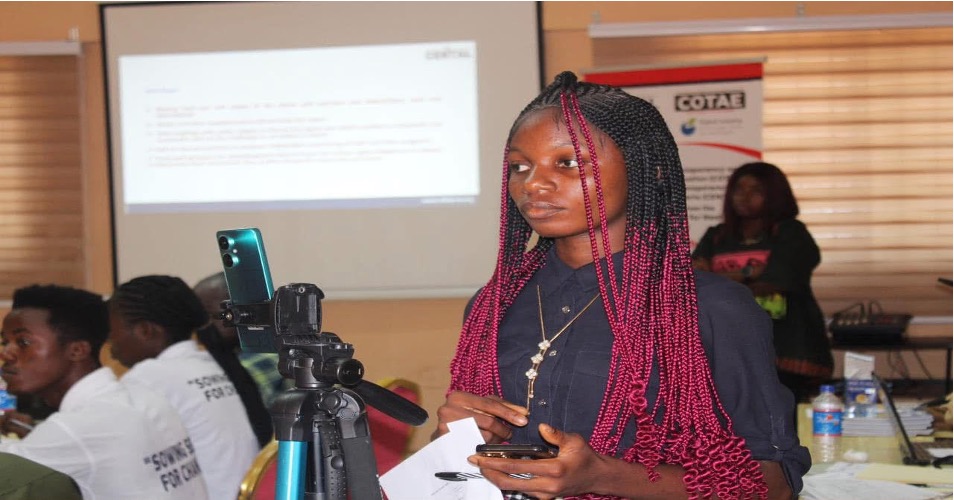
MONROVIA, Liberia — For Laymah Kollie, becoming a journalist was supposed to offer a pathway to a better life and an opportunity to serve her country. Instead, years after entering the profession, she says she remains without a regular salary or a formal employment contract, despite rising from volunteer reporter to desk editor at Women’s TV.
By a Journalism Student Group
Kollie began volunteering with the online television station in 2020, a position she held through 2023 before becoming a senior reporter. In 2024, she was promoted to desk editor, the position she currently occupies. Yet she says the promotion has not translated into a regular monthly salary or a formal letter of employment.
Her experience reflects a concern raised by young journalists in Liberia: the expectation that they should work for little or no pay in exchange for professional experience, visibility or the possibility of future employment.
A survey of 10 young reporters conducted by this investigation offers a snapshot of the problem. Seven respondents said they were not on a regular payroll, five identified themselves as volunteers, and one was recorded as an intern. Eight were classified as receiving payments below the Ministry of Labor US$143 monthly benchmark. Five also reported relying on handouts, while none said they had lodged a complaint with the Press Union of Liberia (PUL).
Although the survey represents a small portion of journalists in Liberia, its findings point to a troubling pattern: some young reporters are contributing labour to media institutions without the financial security normally associated with employment.
A profession sustained by uncertain arrangements
The findings reveal a distinction between being considered employed and actually receiving regular pay. Four respondents were recorded as employed, while six were classified as not employed. However, only three said they were on a payroll; seven said they were not.
Five respondents identified as volunteers, and one as an intern. The figures suggest that some young people are performing journalism-related work without the security of a regular salary or a clearly defined employment arrangement.
Marka Davies, News Editor at OK FM, said journalists across Liberia are generally underpaid and that some young reporters work for extended periods without contracts.
According to Davies, some media institutions pay as little as US$175 a month to senior newsroom staff, while younger journalists may work for months without compensation in exchange for experience. He said the contribution of young journalists should not be overlooked.
He warned that “meagre salaries, coupled with unfavorable working conditions in some instances, push journalists toward unethical practices.”
For journalists without predictable income, the cost of remaining in the profession can extend beyond the absence of a monthly salary. Transportation to assignments, internet access, phone credit and other reporting expenses often have to be covered personally. These costs can make it difficult for young reporters to follow up on stories, conduct field investigations and meet newsroom deadlines.
Working story to story
For some journalists, the problem is not simply low salaries but the absence of predictable employment arrangements.
Queenell Bailey of the Daily Observer said reporters often move from one assignment to another without guaranteed compensation. She explained that journalists may be commissioned according to the number of stories they cover and sometimes receive only transportation support.
“As a reporter, you sometimes need to go the extra mile for a story, especially to follow up on a developing story amid financial constraints,” she explained.
Such arrangements can leave reporters uncertain about when, or whether, they will be paid for their work. They may also limit the time and resources available to pursue complex stories that require repeated visits, additional interviews and independent verification.
Trokon Wrepue, Director of News at OK FM, attributed the problem partly to the weak financial position of Liberia’s media industry. He said some media owners cite low advertising revenue as a reason for poor compensation, while others fail to pay despite having the means.
“The profession has lost some of its value because many journalists are underpaid or unpaid,” Wrepue said. “Some journalists are compelled into self-censorship or unethical practices because they need money to survive.”
Wrepue’s concerns point to a broader issue: when journalists struggle to meet basic living and reporting expenses, their professional independence may be placed under pressure.
When exposure becomes employment
Media professionals interviewed for this investigation drew a distinction between legitimate internships and arrangements that rely on unpaid labour.
Lennart Dodoo, Managing Editor of the Liberian Investigator, said an internship should have a defined duration, supervision and a clear training component. He argued that when a person performs regular newsroom duties and the institution consistently benefits from that work, the arrangement should not continue indefinitely under the label of training or exposure.
“Exposure does not pay for a taxi to the Temple of Justice or a data bundle to file from a press conference,” he said, emphasizing that media institutions unable to pay should reduce the number of people they recruit rather than rely on a growing pool of unpaid or underpaid workers.

Dodoo acknowledged that financial difficulties are a major problem across Liberia’s media industry, where limited advertising revenue and delayed payments can make it difficult for news organizations to maintain regular payrolls. But he cautioned against allowing those difficulties to become a justification for prolonged unpaid work.
“If someone has been filing for a year, the training rationale has expired. They are staff and should be paid as staff or released so they can find a job that pays them,” he said.
The distinction matters because young journalists may accept volunteer positions believing that sustained work will eventually lead to employment. Without written terms, a defined training period or a clear pathway to paid work, however, the promise of exposure can become an open-ended arrangement that benefits the newsroom more than the aspiring journalist.
The financial pressure and its implications for journalism
The survey also found that five of the 10 respondents were recorded as relying on handouts from press conferences. This raises questions about how some reporters meet basic expenses when regular pay is unavailable.
Dodoo said unpaid journalists may be particularly vulnerable when they are sent into the field without transportation or other basic reporting expenses. He also warned that poor compensation has consequences for newsrooms themselves.
Dodoo asserted that experienced reporters often leave journalism for better-paying opportunities in government, public relations, non-governmental organizations and the private sector. When they leave, newsrooms lose more than staff members.
“The cost to the newsroom is the beat,” he said, explaining that when a journalist who has followed a particular issue or institution for years leaves, much of the knowledge and continuity surrounding that beat is lost.
Webster Clayeh, President of the Reporters Association of Liberia, also criticized media owners who, he said, continue to recruit inexperienced or what he described as “half-baked” individuals because they provide cheaper labour, while hesitating to engage experienced professional journalists.
James Bono, Program Director at Radio Cape Mount, estimated that nearly 90 percent of journalists in Liberia struggle financially. He suggested that only a small proportion enjoy relatively comfortable incomes, often through political connections or public relations work.
For young journalists, financial insecurity can mean taking on other jobs to survive, leaving less time for reporting and professional development. Over time, the profession risks losing promising reporters before they can develop the experience and specialist knowledge that strengthens public-interest journalism.
Why are journalists not reporting their concerns?
None of the 10 respondents said they had lodged a complaint with the Press Union of Liberia (PUL) over their working conditions. They named fear of dismissal, lack of awareness or distrust of institutions as reasons for not filing formal complaints.
PUL President Julius Kanubah acknowledged in an interview for this investigation that many journalists continue to work for months or years with little or no pay, particularly in community radio stations and small private outlets, though he says journalists’ welfare is a “priority” for the Union.
“A key responsibility of the union is to help reach agreements between employers and employees, and that has been a long-standing challenge,” he said.
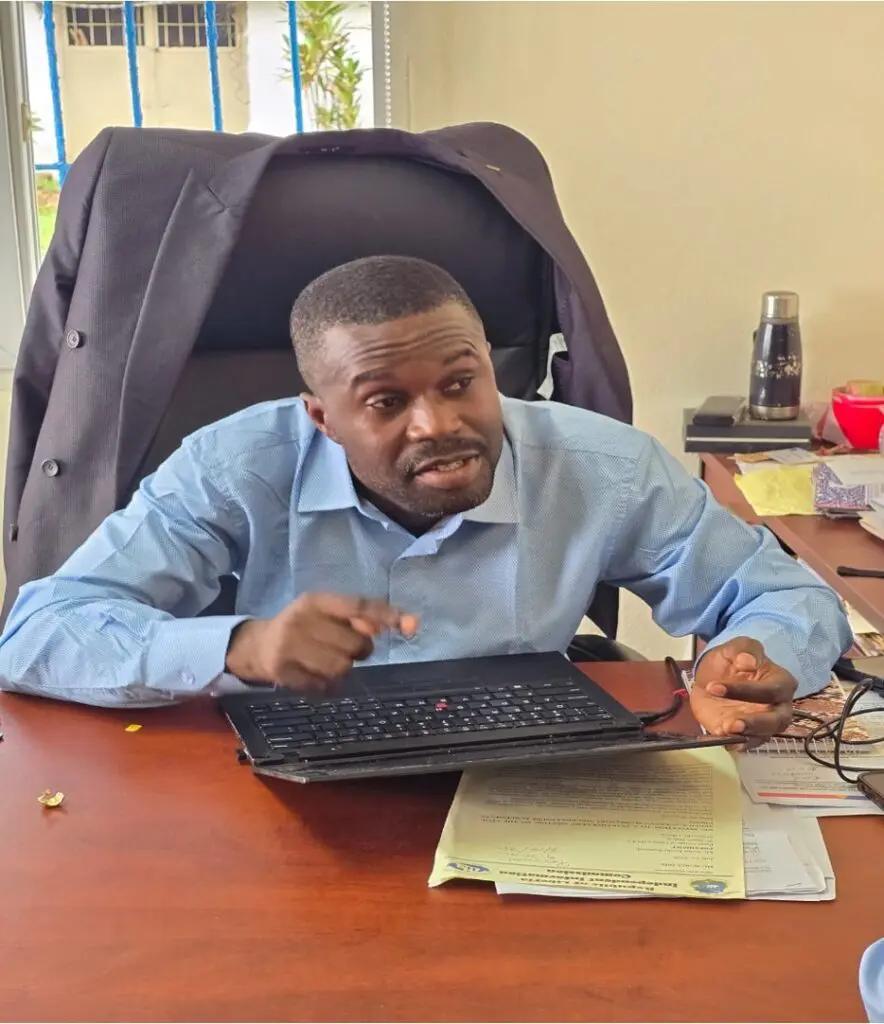
“That process never moved forward,” Kanubah said. “We now have a responsibility to revive it and reach agreement on a national framework for media workers.”
He also said the PUL had launched a journalists’ welfare survey intended to establish reliable information on salaries and working conditions across the country.
“We want clear data: how many earn US$10, how many earn under US$50, and so on,” he said. “That will guide our advocacy and negotiations.”
What does the law say?
Liberia’s Decent Work Act of 2015 provides a legal framework for employment conditions, wages and workers’ rights. It is particularly relevant to the distinction between a genuine volunteer or trainee and a person performing work under an employment arrangement.
Section 1.5(d) of the Act provides that a person who works for, or renders services to, another person is presumed to be an employee, until the contrary is proved, if one or more specified factors are present. These include being subject to another person’s control or direction, having working hours controlled by that person, being part of an organization, working at least 40 hours a month over the previous three months, being economically dependent on the organization, using equipment provided by it, or providing services to only one person or institution.
The Act also establishes minimum wage provisions for different categories of workers. Section 16.1 provides for a minimum of US$0.68 per hour or US$5.50 per day for formal-sector employees, and US$0.43 per hour or US$3.50 per day for domestic or casual workers. In a public statement in March 2026, the Ministry of Labour described US$143 as the monthly minimum wage for private-sector workers.
Moses B. Dennis, a Director at the Ministry of Labour, told this investigation that the applicable monthly figure was US$143. He said the ministry could investigate complaints from workers who believe they are being paid below the legally required minimum.
“The minimum wage is 143. That should be your lowest earning,” Dennis said.
According to Dennis, once a complaint is filed, the ministry’s inspection team can investigate the workplace and require an employer to comply where a violation is established. He also said the ministry had not received a specific complaint from journalists alleging that they were being paid below the minimum wage at the time of his interview.
The gap between the working conditions described by journalists and the limited use of formal complaint channels raises an important question about how effectively existing protections are understood and accessed by media workers.
Beyond the promise of exposure
The findings from this investigation suggest that the practice of working for exposure deserves closer scrutiny within Liberia’s media industry.
The Press Union has a role to play in strengthening collective representation, improving awareness of workers’ rights and providing accessible channels for journalists to raise concerns. The Ministry of Labour must also ensure that workers understand how to seek redress and that complaints are assessed fairly. Media owners, meanwhile, must recognize that sustainable journalism depends not only on the stories their reporters produce but also on the conditions under which those stories are gathered.
For young journalists like Kollie, the desire to inform the public and build a career in journalism may begin with passion. But passion cannot pay transportation costs, purchase internet data or sustain years of professional work without a reliable income.
As the Liberian Investigator’s Dodoo put it:
“The profession owes you a wage, not gratitude.”
Story credits
This story was produced by Stephanie M. Duncan, Evelyn P. Wion, Dorothy F. Kokolie, Aaron Sumo and Kwame Nana Azalu, students of the Mass Communication Department at the African Methodist Episcopal University (AMEU).
Support was provided by the Center for Media Studies and Peacebuilding (CEMESP) through the EU-funded Liberia Media Empowerment Project (LMEP)





Discussion about this post