


Published: July 22, 2026
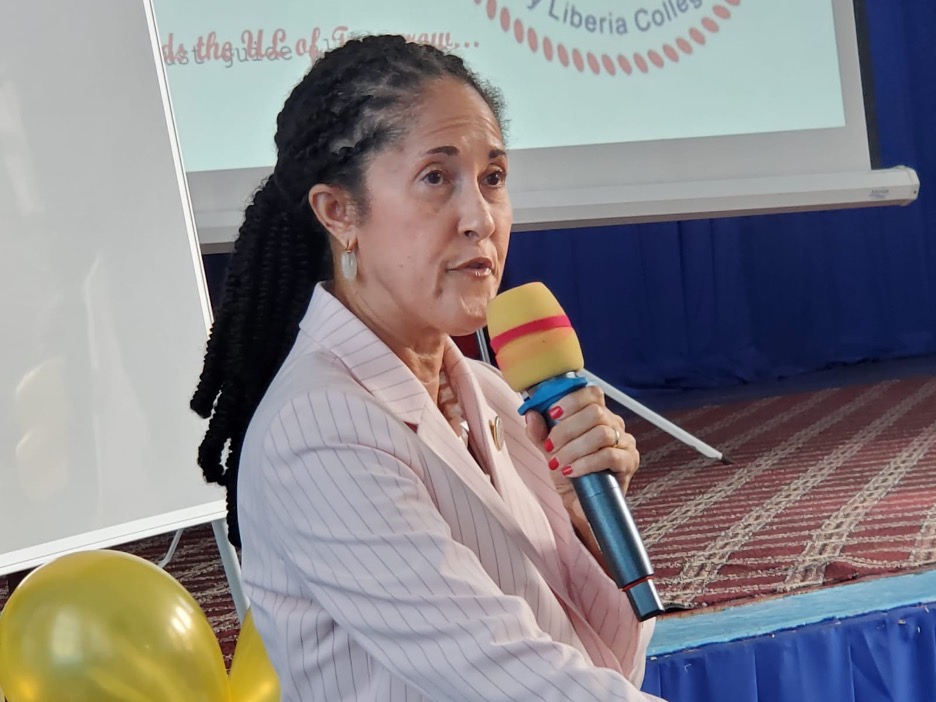
MONROVIA — No institution symbolizes Liberia’s hopes for national recovery and human capital development more than the University of Liberia (UL). For decades, the country’s oldest and largest public university has produced presidents, legislators, judges, doctors, lawyers, journalists, engineers and thousands of professionals serving both the public and private sectors.
Yet beneath its proud history lies an institution weighed down by chronic underfunding, deteriorating infrastructure, low employee morale, overcrowded classrooms, inadequate research facilities and recurring labor disputes. Those longstanding problems have now culminated in one the most significant governance crises of recent years after both the University of Liberia Faculty Association (ULFA) and the University of Liberia Staff Association (ULSA) adopted votes of no confidence in the leadership of UL President Dr. Layli Maparyan.
There have been and continue to be challenges confronting the University for which disenchantments range from go-slow or boycotting of work to declaration of vote of no confidence, leaving students at a critical academic juncture.
As ULFA and ULSA have gone out of patience and declared a joint-vote of no confidence in Dr. Marpayan and her Vice Presidents for Human Resource and Fiscal Affairs, the President opted not to respond to the situation the regular Liberian way, but expressed empathy and assured commitment to working with all stakeholders in finding solutions to the existing problems confronting the university.
Rather than dismissing the concerns, however, Maparyan has publicly acknowledged the legitimacy of many of the complaints and has pledged to work alongside the Government of Liberia, the University’s Board of Trustees, faculty and staff to address what she described as deep-rooted institutional challenges.
An Unusual Presidential Response
In an official statement issued Tuesday, Maparyan struck a conciliatory tone. Instead of attacking her critics or questioning the legitimacy of the no-confidence votes, she acknowledged that the concerns raised by ULFA and ULSA reflect genuine challenges confronting employees every day.
“As President of the University of Liberia, I acknowledge and affirm the concerns raised by the University of Liberia Faculty Association (ULFA) and the University of Liberia Staff Association (ULSA),” she said.
She noted that the issues extend beyond employee welfare and include infrastructure deficiencies and broader institutional weaknesses that have persisted for years. Maparyan disclosed that the UL administration has already begun discussions with the University’s Board of Trustees, senior government officials and university employees in an effort to find workable solutions.
According to her statement which is in the possession of The Liberian Investigator, emergency Cabinet and Board meetings were convened on Capitol Hill to examine the concerns and develop practical responses. While admitting that progress has not been sufficient to satisfy employees, she reaffirmed her commitment to improving conditions.
“I assure UL’s faculty and staff of my commitment to achieve results that feel like progress and make UL a better workplace,” she said.
The statement also appealed to faculty and staff not to disengage from academic and administrative responsibilities, arguing that disruptions would ultimately hurt students whose futures depend on uninterrupted education.
Her response has sparked a broader national conversation—not merely about one university president’s leadership—but about whether Liberia has invested sufficiently in its flagship public university and whether all stakeholders have equally contributed to the institution’s current predicament.
Why Employees Lost Confidence
The votes of no confidence did not emerge overnight. Faculty members and administrative staff have for years complained about delayed salaries and benefits, inadequate working conditions, insufficient teaching resources, poor maintenance of university facilities and limited investment in professional development.
Many lecturers continue teaching under difficult conditions. Several academic buildings require rehabilitation. Laboratories remain poorly equipped. Libraries require modernization.
Student enrollment has expanded considerably while infrastructure growth has failed to keep pace. Employees argue that successive administrations have struggled to reverse these trends.
The recent votes therefore reflect accumulated frustrations that extend well beyond the tenure of the current administration.
While Maparyan has become the immediate face of the crisis, many observers believe the underlying problems have existed across several presidential administrations at the university. The UL President noted in her statement of reconciliation the same concern, careful, though of casting blames on anyone.
Government Funding Remains the Fundamental Challenge
Perhaps the greatest obstacle confronting the University of Liberia remains inadequate public financing.As Liberia’s premier public university, UL depends heavily on government appropriations.Yet year after year, education stakeholders have argued that national budget allocations fall far below what is required to operate a modern public university.The consequences are visible across nearly every campus.
Buildings require renovation as many of them on the campuses of the University continue to be in extreme deplorable conditions. Laboratories need modern equipment. Internet connectivity remains inconsistent. Faculty offices often lack essential teaching resources. Research funding is minimal. Student accommodation remains inadequate. Maintenance budgets frequently fall short, complicating situations more and more.
Public universities around the world require sustained investment to compete academically. Without predictable financing, even the most capable administrators face enormous constraints. Maparyan herself appears to recognize this reality. Her statement indicates that discussions are underway not only within the university but also with officials of the Government of Liberia, suggesting that many solutions lie outside the exclusive authority of the university president.
As indicated in her statement and agreed to by many following the UL crisis, major improvements involving salaries, infrastructure expansion, capital projects and employee benefits will almost certainly require stronger financial commitments from the national government.
Leadership Under Pressure
University presidents often inherit institutional problems created over decades. That does not exempt them from accountability. Employees naturally judge leaders based on whether conditions improve under their watch. For Maparyan, expectations are exceptionally high.
Her appointment generated optimism among many academics who viewed her international experience and scholarly credentials as assets capable of transforming the institution.
However, structural realities have proven far more difficult to overcome in a short period of time, especially with inadequate resources serving as the major challenge.
Employees increasingly demanded tangible improvements rather than long-term strategic plans. The no-confidence votes therefore represent both dissatisfaction with current conditions and impatience regarding the pace of reform.
Yet leadership during institutional crises is frequently measured by how leaders respond to criticism. Rather than escalating tensions, Maparyan has chosen dialogue. She acknowledged employee concerns. She accepted that more work remains to be done. She appealed for collaboration instead of confrontation.
Whether that approach succeeds now depends largely on the willingness of all parties to remain engaged.
Workers Also Share Responsibility
While inadequate government funding has undeniably contributed to UL’s problems, it would be incomplete to suggest that every institutional challenge originates outside the university.
Over the years, reports have periodically surfaced alleging absenteeism among some lecturers, delayed submission of grades, inconsistent classroom attendance and resistance to administrative reforms.
Students have sometimes complained that scheduled lectures are cancelled without notice. Others have criticized prolonged delays in grading examinations.
Administrative inefficiencies have occasionally slowed registration processes and student services.
Some employees have also been accused of politicizing university operations or allowing internal rivalries to overshadow academic priorities. These realities complicate public perceptions of the current dispute.
Many students sympathize with faculty demands for improved salaries while simultaneously expressing frustration over interrupted classes and delayed academic calendars.
Likewise, taxpayers often acknowledge the difficult working conditions at UL but expect employees to maintain professional standards regardless of institutional constraints.
Improving the university therefore requires accountability across every level—not only from management and government but also from faculty, administrative staff and students.
Adjunct Faculty Disagrees with ULFA and ULSA, Supports Maparyan
Amid the crisis, the Adjunct Faculty Association also spoke disagreeing with ULFA and ULSA as they termed the both associations’ move as self-centered. For them, Dr. Maparyan has done a lot in less than two years, even with limited resources and support. According to adjunct, while the concerns are valid, there is also a need to be reminded of how situations have been exploited over the years by both ULFA and ULSA, leading to closure of the university for a long period even though their individual respective salaries and benefits continued to be paid by the University.
The Association outlined the regularization of the academic calendar in line with global standard, the launch of three PhD programs, the near completion of the construction of a solar oasis student utility park and the attraction of grants and donations and the signing of several memorandum of understandings (MoUs). The faculty was also particular about the regularization of their payment of salaries by the University, something they said has not be the case in the past.
With all these, Dr. Maparyan has chosen to play the twin mother role, ensuring that everyone feels happy at work and ensures the goals of the university are met, especially keeping the academic calendar regularly functioning.
Students Caught in the Middle
Perhaps the greatest victims of recurring labor disputes are the students. Thousands depend on UL as their primary opportunity for higher education. Many come from low-income families unable to afford private universities.
Whenever academic activities are disrupted, graduation timelines extend. Professional opportunities are delayed. Families bear additional financial burdens.
Maparyan referenced this concern directly in her statement. She warned that disengagement from academic and administrative duties is not in the best interests of students or the nation.
“The University of Liberia is a beacon of hope for thousands of young people,” she said.
Her appeal reflects an important reality. Every prolonged dispute risks undermining public confidence in Liberia’s largest institution of higher learning.
The Need for National Commitment
Liberia has repeatedly declared education a national priority. Successive governments have emphasized human capital development as essential to economic growth. Yet public investment has often failed to match those aspirations.
Universities require more than annual operating budgets. They need sustained capital investment. They require digital transformation. They need competitive faculty salaries capable of attracting and retaining qualified academics. They require research grants that encourage innovation. Without these investments, institutional crises become inevitable.
The current UL dispute therefore raises broader policy questions. Should Liberia reconsider how it finances higher education? Should public universities receive multi-year infrastructure funding? Should faculty compensation be reviewed to reflect professional qualifications? These questions extend beyond any individual university president.
Dialogue not Deadlock
Maparyan has emphasized dialogue as the preferred path forward.Her administration is engaging government officials, the Board of Trustees, faculty representatives and staff associations.Constructive dialogue offers the best opportunity for negotiated solutions.
However, dialogue alone cannot replace concrete action. Employees will ultimately judge leadership based on measurable improvements.
Similarly, government commitments must translate into budgetary support rather than public promises.
Faculty and staff, for their part, must balance legitimate labor advocacy with their obligation to students. Sustainable reform requires shared responsibility.
A Test for Higher Education
The University of Liberia’s recurring crises have become defining moments for Liberia’s higher education system.
The votes of no confidence represent serious concerns that deserve thoughtful attention rather than political rhetoric. Maparyan’s response signals an acknowledgment that institutional weaknesses exist and that reform cannot be postponed.
Whether history remembers her presidency as one of meaningful transformation or missed opportunity will depend on what follows in the coming months.
If government substantially increases support, if university leadership implements effective reforms, and if faculty and staff fully recommit themselves to academic excellence, UL could emerge stronger from the present crisis.
If those conditions are not met, however, the cycle of labor disputes, inadequate facilities and declining morale is likely to continue.
For now, one message stands out from Maparyan’s statement: she has publicly accepted that faculty and staff grievances are legitimate, admitted that more progress is needed, and pledged to continue working with government and university stakeholders to improve conditions rather than deepen divisions.
That commitment alone will not resolve decades of institutional neglect. But it may provide the foundation for rebuilding trust—provided that promises are followed by visible action, adequate public investment and a renewed commitment from every member of the University of Liberia community.
Ultimately, the future of the University of Liberia cannot rest solely on the shoulders of one president, one faculty association or one government administration. It requires a national consensus that Liberia’s flagship public university deserves sustained investment, responsible leadership and collective accountability. Only through that shared commitment can the institution fulfill its historic mission of educating the leaders who will shape Liberia’s future.






Discussion about this post